

Estimated reading time: 4 minutes
As healthcare systems around the world continue responding to the humanitarian fallout from the war in Gaza, one nurse practitioner brought a highly specialized skill set to one of the world’s most challenging clinical environments.
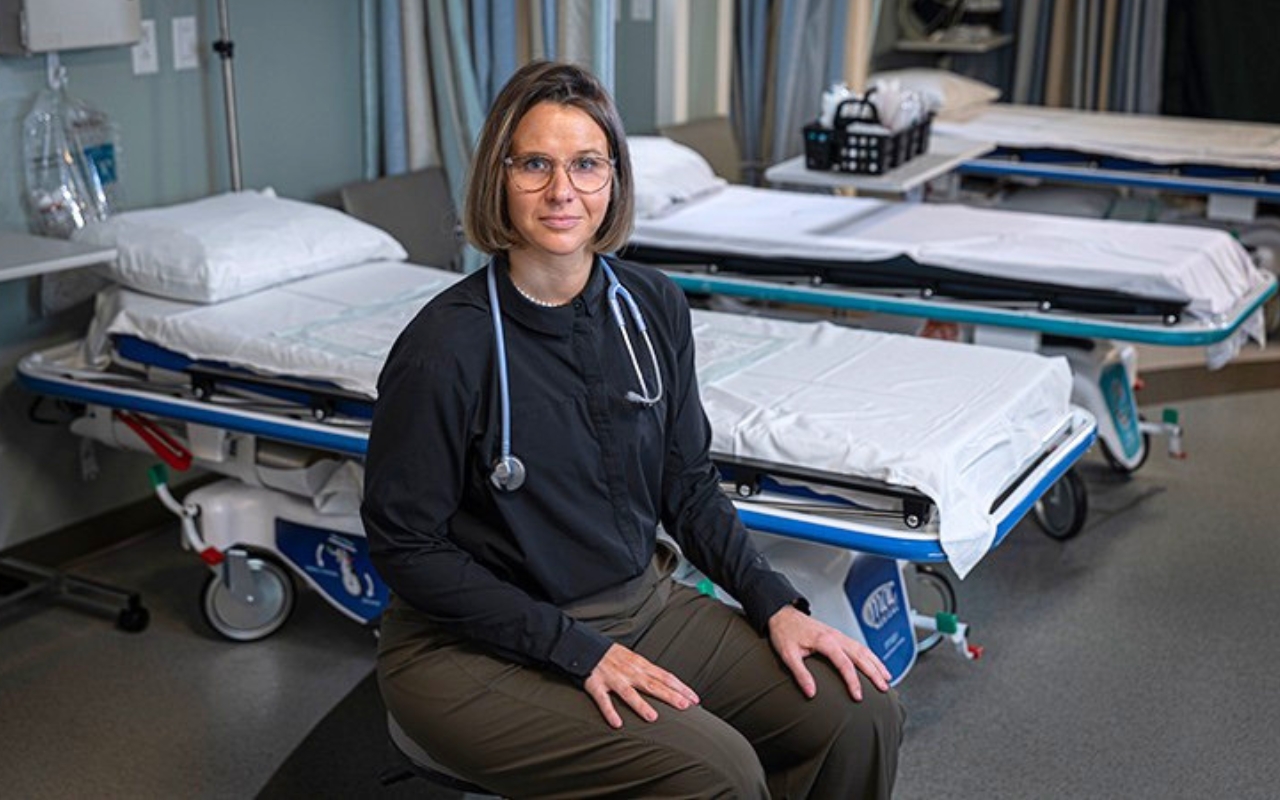
Laura Swoboda, DNP, NP, a wound care specialist and graduate of the University of Wisconsin-Milwaukee’s Doctor of Nursing Practice program, traveled to Gaza in 2024 with an international medical team caring for civilians injured during the conflict.
Working with surgical nonprofit FAJR Scientific at Gaza European Hospital, Swoboda spent three weeks caring for patients with severe physical injuries and psychological trauma while navigating limited supplies and ongoing security threats.
“I was the only nurse practitioner and wound care specialist (on the team),” Swoboda said.
Why Wound Care Specialists Are Critical in Humanitarian Crises
Wound care nurses and nurse practitioners play a critical role in disaster and conflict settings by treating complex injuries, preventing infections, supporting healing, and managing long-term complications. In Gaza, Swoboda’s specialized expertise helped meet a critical need as medical teams cared for patients with war-related injuries.
Advanced Practice Nurses Filling Critical Humanitarian Care Gaps
Swoboda is no stranger to international medical missions. Their wound care expertise made them especially valuable in a conflict zone where traumatic injuries are common and resources are scarce.
The challenges extended beyond clinical care. Medical volunteers slept inside the hospital after nearby bombings threatened their safe house.
“My main job was just to help people and let them know that there were people abroad that still cared,” Swoboda said.
The experience highlights how advanced practice nurses contribute to international humanitarian responses through specialized expertise that is often difficult to find in crisis settings.
A Career Shaped by Wound Care and Health Equity
Long before traveling to Gaza, Swoboda’s nursing career was shaped by questions of access and equity.
While working as a home care nurse in Scottsdale, Arizona, they witnessed dramatic differences in living conditions and healthcare access in the same region.
The experience sparked an interest in both wound care and the social factors that influence healing, leading Swoboda to ask why some wounds heal while others persist.
“Wounds are (often) a symptom of a disease,” Swoboda said.
Conditions such as diabetes and peripheral artery disease can cause recurring wounds that worsen when patients lack access to timely treatment, disproportionately affecting underserved communities.
Swoboda is a certified wound, ostomy, and continence nurse whose work combines clinical expertise with a broader focus on health equity.
Looking Beyond the Wound
Their work also includes regenerative medicine, a field focused on helping the body repair or replace damaged tissue.
Regenerative medicine includes approaches such as stem cell therapies, tissue engineering, and skin replacement techniques designed to improve healing outcomes.
Swoboda believes nursing care must extend beyond clinical interventions to address the social, environmental, and policy factors that influence health, and this perspective has led them to engage in advocacy work.
“When I’m going and bothering my congressperson about something, I see that as part of my professional work, too,” Swoboda says.
Swoboda has advocated for issues ranging from environmental safety to healthcare access. While living in Wisconsin, they pushed for the removal of lead pipes from local water systems.
For nurses frustrated by systemic challenges, advocacy can be a meaningful way to create change, Swoboda said.
“If you’re able to advocate in any way, you feel less despair just doing something.”
Nursing Beyond Borders
For Swoboda, volunteering in Gaza was rooted in a belief that healthcare is a fundamental human right.
“I’m a humanitarian,” Swoboda said. “I don’t see national borders, socioeconomic status, sex, religion — those things shouldn’t impact your ability to be healthy.”
That philosophy continues to guide both clinical work and advocacy efforts.
As humanitarian crises and health inequities continue to challenge healthcare systems worldwide, Swoboda’s experience shows how nursing expertise can reach far beyond the bedside, from treating traumatic injuries in a war zone to advocating for healthier communities at home.
