


Estimated reading time: 8 minutes
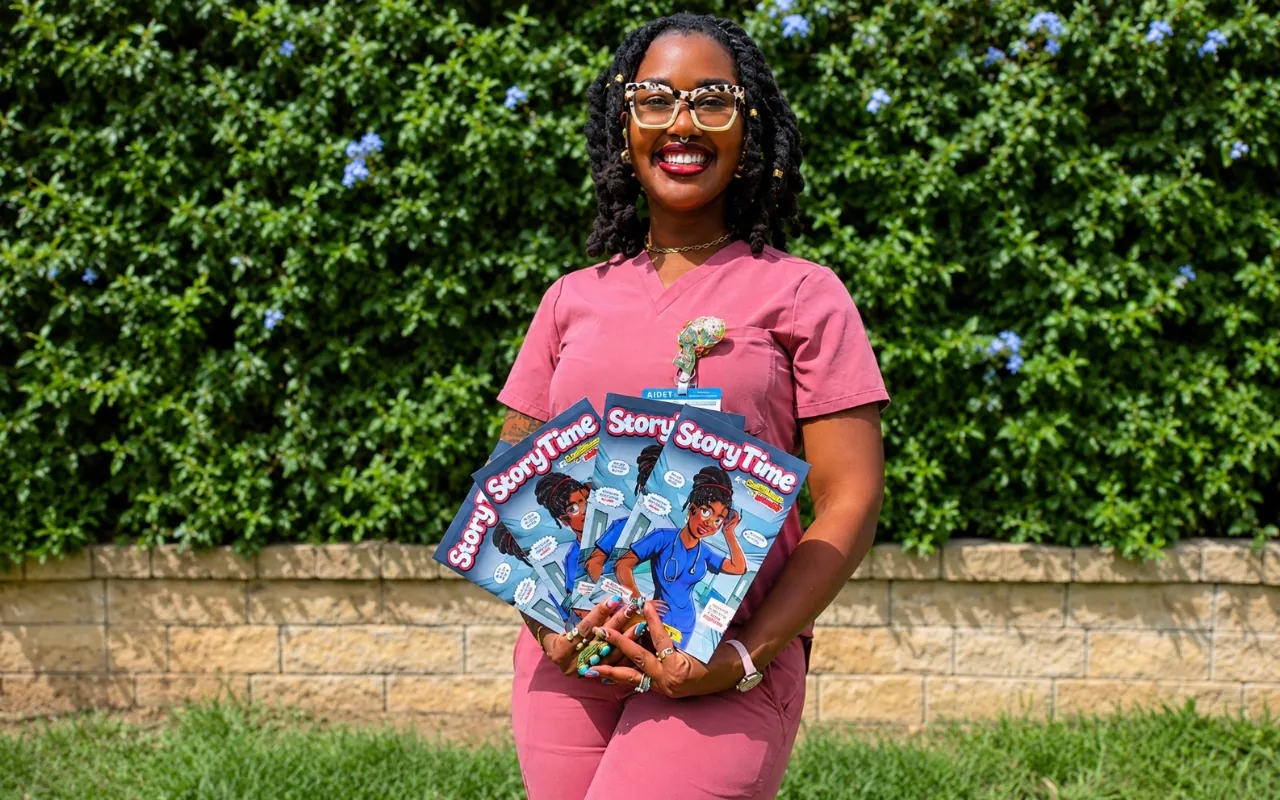
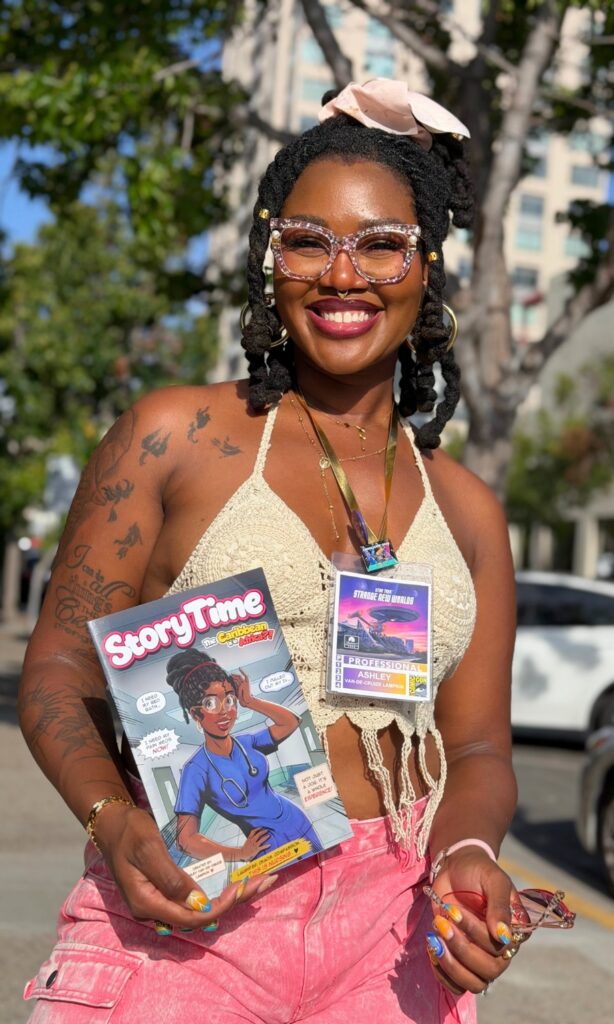
Los Angeles RN and graphic storyteller Ashley Van-De-Cruize Lampkin has found an unexpected way to capture the emotional highs, heartbreaking moments, humor, and unpredictability of nursing: through comics. As she launches the first digital issue of Storytime: The Caribbean Is in Africa?!, she hopes her work reminds nurses they’re not alone and offers a few moments of laughter after difficult shifts.
Inspired by years of nursing experience, Lampkin intentionally removes identifying details about patients, coworkers, employers, and healthcare facilities, demonstrating how nurses can create from lived professional experience while respecting confidentiality and protecting their licenses.
Her comics explore the humor, stress, compassion, and unexpected moments of nursing while showing how meaningful stories can be shared without compromising patient confidentiality.
Can Nurses Share Stories From Work Without Violating Patient Privacy?
Yes, but only if patient confidentiality remains the priority. According to Lampkin, nurses should remove identifying details, avoid naming patients or facilities, allow time to pass before sharing experiences, and change nonessential details when necessary. If a story cannot be shared without protecting patient and facility privacy, she says it should not be told.
Why This Nurse Chose Comics to Tell Nursing Stories
Lampkin said comics allowed her to celebrate an often-overlooked side of nursing: the humor that helps nurses cope with one of the most emotionally demanding professions.
“I chose the comic route because I wanted nursing to feel fun again,” she said. “There are so many sides to this profession, but one of the best parts is being able to laugh with people who truly understand what you’ve been through. Maybe it’s a little bit of that ‘misery loves company’ mentality, but when we look back on the hardest shifts, we usually do it with laughter. Those shared experiences become the stories we tell for years.”
Although nursing demands professionalism and responsibility every day, Lampkin said moments of laughter are equally important.
“I completely understand that nursing is a serious profession. In fact, being a good nurse requires you to embrace that responsibility every single day. But that’s exactly why I wanted these comics to exist. They offer an escape, a chance to step away from the pressure, the stress, and the emotional weight of the job, if only for a few minutes.”
She said comics also allow readers to experience nursing differently than a memoir or essay would.
“A memoir or an essay naturally sets the expectation for a much more serious, reflective experience. That wasn’t what I wanted to create. I wanted something that reminds nurses that it’s okay to have a personality outside of nursing. Their entire identity doesn’t have to be wrapped up in their profession. They can be compassionate caregivers while still laughing at the wonderfully chaotic, unbelievable, and sometimes downright absurd moments that come with the job.”
For Lampkin, success isn’t measured by sales or readership alone.
“If these comics can make a nurse smile after a long shift and remind them that they’re not alone, then they’ve done exactly what I hoped they would.”
Ethical Storytelling
While real nursing experiences inspire her comics, Lampkin said some stories never make it into print because they are simply too identifiable.
“I absolutely had to scrap some stories because it was way too close to a situation that was a bit too specialized. And while a lot of my stories do touch on less common topics, those stories were still easier for me to conceal information that would reveal both the facility and the patient’s information.”
“So while I do love creating, writing, storytelling, and the comic world, I’m still a nurse first. My storytelling ability and talent is what allows me to tastefully conceal information that should not be revealed.”
How Nurses Can Share Stories Ethically
Lampkin believes nurses shouldn’t be afraid to tell meaningful stories from their careers, provided they are willing to adapt details that could identify patients or healthcare organizations.
“I think that it’s important to remember the components that reveal too much, and that is a patient’s name, date of birth, and facility,” she said. “Providing any information, even about the facility, makes the retelling of the situation too close to violations.”
Lampkin said ethical storytelling often requires changing nonessential details while preserving the heart of the experience.
“There needs to be a degree of storytelling. And what I mean by that is, you have to be ok with changing certain parts of the story, and the order in which it took place.”
She also recommends allowing enough time to pass before sharing stories publicly.
“There also needs to be an appropriate amount of time between when your story took place and when you choose to share it.”
“At the end of the day, it is still our priority (our number one priority) to protect our license and our patients’ privacy.”
Her advice to other nurses is simple.
“I would encourage them to maintain the patient’s and the facility’s privacy. And remember that every story needs time.”
She also encourages changing details that don’t alter the overall meaning of a story.
“A simple example would be stating that an individual had a broken leg when they actually had a broken arm. That doesn’t affect the trajectory of the story, but it does help to protect the patient.”
“Ultimately, if you cannot tell a story without protecting the patient and the facility, don’t tell the story.”
Finding Inspiration Beyond Patient Care
Lampkin said inspiration doesn’t come only from patient care. Sometimes it comes from interactions with coworkers and the realities of working in high-pressure healthcare environments.
“Sometimes, the most unfortunate components of your job or your shift can be your coworkers and their lack of open-mindedness.”
She believes many workplace tensions stem less from individuals than from the stress nurses face every day.
“I try to stress that some of the tension on some of the nursing units or in some facilities is really more associated with the lack of support that we get in general, so unfortunately that can sometimes mean that we turn on one another when we need one another the most. While on the other hand, it’s really just dealing with unfortunate personalities.”
Why Humor Matters in Nursing
Lampkin believes humor isn’t simply part of nursing culture. It helps nurses endure the emotional realities of the profession.
“I truly believe that without humor, nurses won’t make it. It’s far too emotionally tolling a profession to get through it without any semblance of humor.”
She said people outside healthcare often misunderstand nurses’ sense of humor because they experience tragedy far less frequently.
“For us, it is our everyday job. Even people that work in labor and delivery; that specialty celebrates the beginning of life, but unfortunately, there is a component that acknowledges things like stillbirths, and the moms passing during childbirth. Every part of Nursing requires you to be prepared for tragedy. And part of being prepared is being able to find the humor.”
Storytelling as a Form of Reflection
Beyond entertaining readers, storytelling has become an important form of reflection for Lampkin.
“Absolutely. The storytelling allows me to connect with other nurses who have gone through similar experiences, and it allows me to self-reflect in a way that removes some of the negative components, but it also allows self-reflection in a way that helps me embrace some of the negative components. In full transparency, it’s very therapeutic. Every nurse has their thing. Storytelling is mine.”
“Sometimes, as I tell the story, the situation becomes clearer, and I become grateful for the experience.”
She believes reflection is essential for professional growth.
“A lack of self-reflection equates to a lack of growth. It’s like going through a series of courses without doing any sort of knowledge check. How are you supposed to know that you are getting better?”
What Lampkin Hopes Patients Understand About Nurses
Lampkin hopes readers outside healthcare gain a better understanding of the constant prioritization nurses perform throughout every shift.
“So if it seems that we’ve forgotten something like a warm blanket, a cup of water, juice, or graham crackers, it’s not because we are deliberately trying to make your experience unpleasant. It’s because, as nurses, we have to prioritize someone’s health over your snack preference.”
She also hopes patients remember that nurses are professionals whose goal is to help people heal.
“We are nurses. We are not here to hurt you.”
“So yes, please do advocate for yourself, but also respect the fact that we are nurses, we have been educated, we have been trained, and we are prepared to help you get better. We’re not here to argue with you. We’re here to fix you. We are not waiters, maids, or personal assistants. We are nurses.”
A Nurse First, Always
For Lampkin, creative storytelling will always remain secondary to the profession that inspired it.
“I love the storytelling world, I love the creative world, and I absolutely love creative writing. However, I am a nurse first.”
That commitment shapes not only every story she chooses to tell, but also every story she chooses not to tell.
