


Estimated reading time: 4 minutes
Engineered probiotic bacteria successfully delivered an immune-stimulating therapy directly into pancreatic cancer tumors and slowed tumor growth in a new preclinical study, offering a potential new strategy for treating pancreatic cancer. Researchers at the University of Chicago reported the findings in Science Advances, where the experimental treatment also enhanced the effects of chemotherapy, radiation therapy, and immunotherapy in animal mod
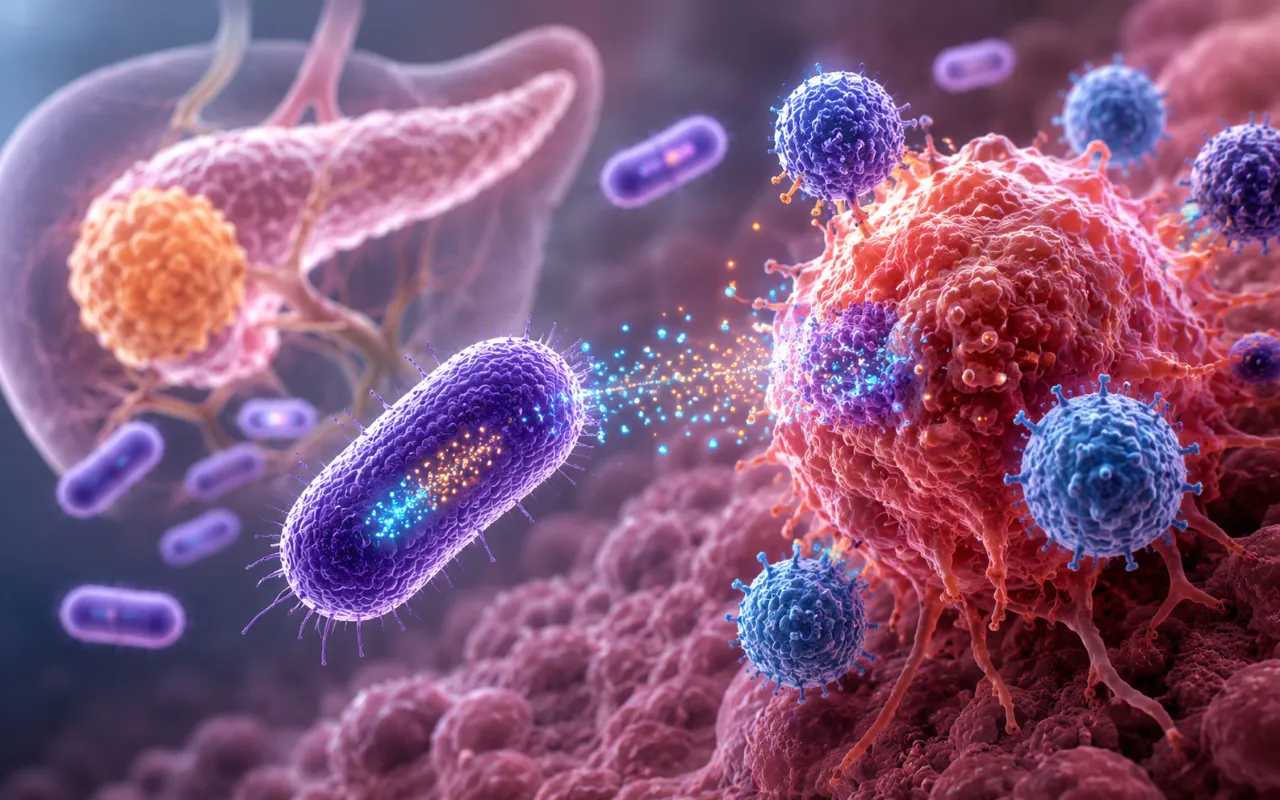
Pancreatic cancer remains one of the deadliest cancers, in part because its tumors often create a “cold” tumor microenvironment that prevents the immune system from mounting a strong attack. The approach uses an engineered strain of Bifidobacterium longum, a probiotic bacterium naturally found in the gut, to deliver an immune-stimulating protein precisely where it is needed.
The experimental treatment, called BifidoSumIL-2, slowed tumor growth by activating cancer-fighting T cells and became even more effective when combined with chemotherapy, radiation therapy, or immunotherapy. The findings add to growing interest in using engineered bacteria to deliver cancer therapies directly to tumors.
Targeting One of Cancer’s Toughest Challenges
“A big unmet medical need has been pancreatic cancer, and so that was going to be our mountain to climb,” said Ralph Weichselbaum, MD, the Daniel K. Ludwig Distinguished Service Professor and Chair of Radiation and Cellular Oncology at the University of Chicago.
Rather than delivering treatment throughout the body, researchers engineered Bifidobacterium longum to transport a modified form of interleukin-2 (IL-2), an immune-signaling protein that activates T cells, directly into tumors.
The modified molecule, called SumIL-2, was designed to selectively stimulate cancer-fighting T cells while limiting activation of regulatory T cells that can suppress immune responses.
Using Probiotic Bacteria as Drug Factories
Researchers selected Bifidobacterium longum because it naturally thrives in the low-oxygen conditions found within many solid tumors, including pancreatic cancer. After injection, the bacteria are cleared from healthy oxygen-rich tissues but remain active inside tumors, where they produce the immune therapy only where it is needed.
“This was a highly interdisciplinary effort,” said Mark Mimee, PhD, Assistant Professor of Microbiology at the University of Chicago. “We had to bring together people who understand bacteria, people who understand tumors, and people who understand the immune system to make something like this possible.”
Although Bifidobacterium is widely recognized as a probiotic and commonly found in yogurt, engineering the organism presented significant challenges.
“Bifidobacterium is not the easiest organism to work with,” Mimee said. “It’s anaerobic, it grows slowly, and the genetic tools for manipulating it are much more limited compared to model bacteria like E. coli. A lot of the work was just figuring out how to reliably engineer it.”
Combination Therapy Produced Stronger Results
In animal models, BifidoSumIL-2 accumulated within pancreatic tumors, activated CD8-positive T cells, and slowed tumor growth.
BifidoSumIL-2 produced even stronger results when paired with standard cancer treatments. Combining it with chemotherapy, radiation therapy, or anti-PD-L1 immunotherapy improved tumor control and survival compared with individual treatments alone.
“This combination potential is one of the study’s most important findings; BifidoSumIL-2 not only works by itself, but it works with radiotherapy, chemotherapy, and immunotherapy,” Weichselbaum said.
What Nurses Should Know
While still experimental, the therapy reflects growing efforts to improve immunotherapy for cancers that have historically resisted treatment.
Although the findings are encouraging, the therapy remains in the preclinical stage and has not yet been tested in humans.
Future studies will evaluate long-term safety, potential off-target effects, the durability of immune responses, and whether the therapy could eventually be delivered orally instead of by injection. Researchers also plan to investigate combining the approach with newer pancreatic cancer treatments, including KRAS inhibitors.
For oncology nurses, the study highlights an emerging approach to cancer treatment that uses engineered bacteria to deliver therapies directly to tumors. If future clinical trials confirm these results, engineered probiotic therapies could help expand treatment options for pancreatic cancer and other difficult-to-treat solid tumors by making immunotherapy more effective.
