
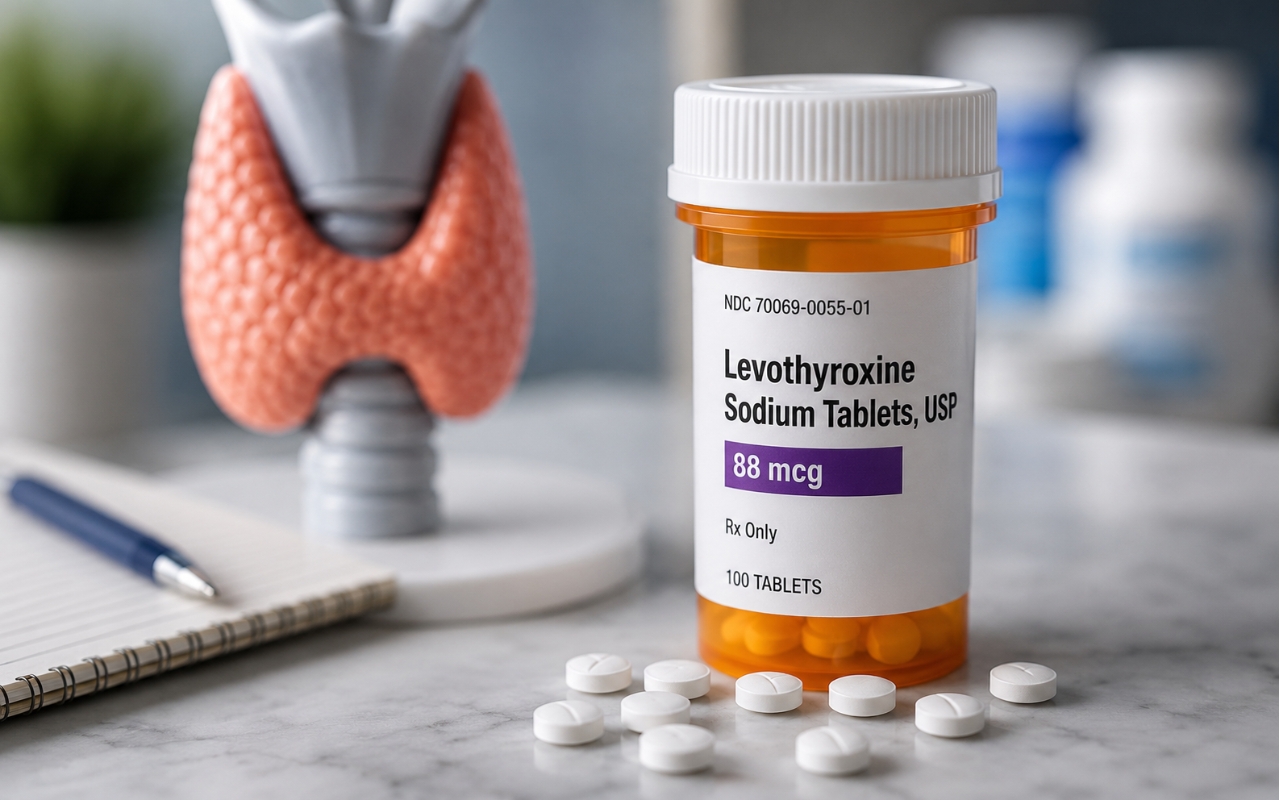

Patients who take levothyroxine are being urged to check their prescriptions after the U.S. Food and Drug Administration (FDA) announced a nationwide recall of certain Levothyroxine Sodium Tablets found to contain less active medication than labeled.
The voluntary recall, initiated by Major Pharmaceuticals, affects specific lots of Levothyroxine Sodium Tablets distributed nationwide. Cardinal Health also distributed some of the affected products. The FDA classified the action as a Class II recall after determining the tablets were subpotent, meaning they may not contain the full labeled amount of thyroid hormone.
Although the FDA considers the likelihood of serious adverse health consequences to be remote, the recall is significant because levothyroxine is one of the most commonly prescribed medications used to treat hypothyroidism and other thyroid disorders. Even small variations in potency can affect patients who depend on consistent thyroid hormone replacement.
What Healthcare Professionals Should Know
Levothyroxine is a synthetic form of the thyroid hormone thyroxine (T4) prescribed to treat hypothyroidism, suppress thyroid-stimulating hormone in certain patients with thyroid cancer, and help reduce the size of enlarged thyroid glands.
Unlike many medications, levothyroxine is considered a narrow therapeutic index drug. Small differences in the amount of active ingredient delivered can influence treatment effectiveness. According to the FDA, the recalled tablets contained less active ingredient than required, raising concerns that some patients may receive inadequate thyroid hormone replacement if affected products are taken over time.
According to the American Thyroid Association, approximately 20 million Americans have some form of thyroid disease, with hypothyroidism among the most common endocrine disorders encountered in primary care.
Potential Clinical Impact
Patients taking affected lots are unlikely to experience immediate symptoms after a single dose. However, continued use of subpotent medication may lead to declining thyroid hormone levels and a return of hypothyroidism symptoms.
Healthcare professionals should consider the possibility of a recalled product in patients who report new or worsening symptoms such as:
- Brain fog or difficulty concentrating
- Constipation
- Depression or mood changes
- Dry skin
- Fatigue
- Increased sensitivity to cold
- Weight gain
- Bradycardia
Patients who are pregnant, have underlying cardiovascular disease, or require thyroid hormone suppression following treatment for thyroid cancer may be more vulnerable to fluctuations in thyroid hormone levels.
Recalled Products
The recall includes 12 Levothyroxine Sodium Tablet products packaged by Major Pharmaceuticals, with some products also distributed by Cardinal Health.
Affected products include multiple tablet strengths packaged in 10-count blister packs sold individually and in cartons. The FDA said the products were distributed nationwide but did not specify the total number of tablets included in the recall.
Healthcare professionals should encourage patients to verify the manufacturer, lot number, strength, and expiration date listed on their prescription bottle or blister packaging. The FDA recall notice contains the complete list of affected National Drug Code numbers, lot numbers, and expiration dates.
Guidance for Nurses and Other Clinicians
Nurses are often the first healthcare professionals patients contact after learning about a medication recall. Patients should be advised not to discontinue levothyroxine without consulting their prescribing clinician. Clinicians should advise patients to contact their pharmacist to determine whether their prescription is part of the recall and whether an unaffected replacement product is available.
For patients who report new or worsening symptoms or who have received an affected product, clinicians should consider whether follow-up evaluation, thyroid function testing, or medication replacement is appropriate based on the individual’s clinical status. Patient education should emphasize the importance of medication adherence while reassuring patients that the recall is limited to specific lots and does not affect all levothyroxine products available in the United States.
Understanding the FDA Classification
The FDA defines a Class II recall as a situation in which use of the product may cause temporary or medically reversible adverse health consequences or where the probability of serious adverse health consequences is remote.
Although the overall risk is considered low, consistent thyroid hormone replacement remains essential for effective management of hypothyroidism and other thyroid conditions. Prompt identification of affected prescriptions and appropriate follow-up can help minimize interruptions in therapy.
Healthcare professionals can review the complete recall notice, including affected products and lot numbers, through the FDA’s Enforcement Report.
