


Pressure injuries (PIs) can develop rapidly—sometimes within hours—making prevention a critical, urgent challenge for nurses.
A new sensor-based fabric from Georgia Tech aims to transform prevention: it monitors pressure and moisture in real time, alerting clinicians precisely when patients need repositioning and supporting data-driven decision making.
Despite PIs affecting 2.5 million patients and contributing to 60,000 deaths each year, prevention still depends largely on routine repositioning, where even one missed turn can lead to serious complications.
A Persistent and Costly Challenge
PIs, previously known as pressure ulcers, remain one of the most difficult hospital-acquired conditions to prevent and treat. Once they develop, they can lead to infection, prolonged hospital stays, and in severe cases, death.
A key challenge is uncertainty. Clinicians do not know exactly how long it takes for a PI to form, making the precise timing of prevention difficult to predict.
The financial impact is also significant, with nearly $27 billion spent annually on PI care in the United States. As staffing shortages continue, the need for more efficient prevention strategies has become increasingly urgent.
A Fabric That Collects Critical Data
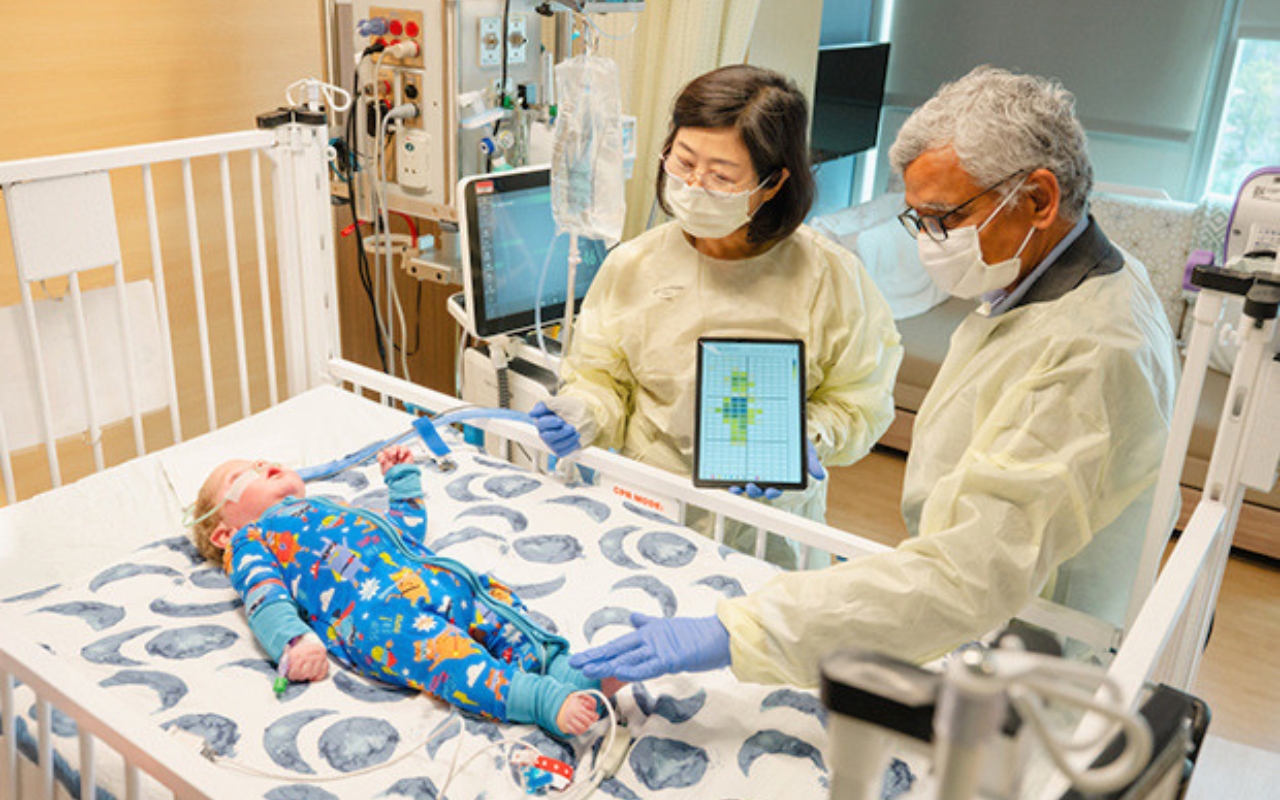
To address this gap, researchers developed a flexible, sensor-filled fabric that functions like a bedsheet placed beneath the patient. The system provides continuous, objective measurements of pressure and moisture—two key risk factors—allowing clinicians to better assess and respond to patient needs. This aims to reduce manual workload and improve early risk detection.
“I call this technology a paradigm shift,” said Sundaresan Jayaraman, a professor in the School of Materials Science and Engineering. “We’re using a fabric that acts like a bedsheet under the patient. It collects pressure and moisture data unobtrusively, whether you’re lying in bed or sitting in a wheelchair. From this, we can predict when a PI is likely to occur and, more importantly, understand how long it takes to form.”
This sensor system is now being piloted at Children’s Healthcare of Atlanta Arthur M. Blank Hospital, starting with four cribs and soon expanding to 50 beds to help prevent PIs in high-risk patients.
High-Risk Patients in Critical Care
Children in intensive care settings face elevated risk due to immobility, sedation, and the presence of multiple medical devices.
“In the PICU, we have many kids who are critically ill or injured, sedated, lying in bed with lots of devices on them, and all these things lead to a higher incidence of PI,” said Jana Stockwell, M.D., a pediatric critical care physician at Children’s. Stockwell collaborated with the researchers.
“PI occurs in about 10% of kids in PICUs, and it’s even higher in the neonatal intensive care units,” she explained. “Even something as minor as a folded sheet or misplaced IV tubing can lead to a pressure injury in a child.”
Designing a system for this population required careful attention to comfort and usability.
“We needed to make sure all the sensor data was streaming correctly and integrated into the bed, so the sensors don’t disturb either the physicians’ treatment or the baby’s movement,” said Sungmee Park, a principal research scientist on the project.
Earlier versions required multiple cables, but the current design uses a single connection, simplifying setup and making the system less intrusive for both clinicians and families.
“The idea that these sensors even exist, let alone be in fabric that isn’t as hard as a board under a patient, is pretty incredible,” Stockwell said.
From Monitoring to Prediction
The next development phase applies machine learning to enable the system to move from monitoring to accurately predicting pressure injuries, enabling timely and targeted interventions.
By analyzing how long pressure persists and how moisture accumulates, the system can identify when intervention is needed for each patient’s condition.
“The beauty of this system is that it adapts to the patient’s weight and condition,” Jayaraman said. “We are monitoring how long the pressure has not changed and how much moisture is there, so we can customize the response to it.”
Clinicians will be able to access personalized, real-time alerts through an app when patient repositioning is needed, allowing faster action and reducing the risk of PI development. Future EMR integration could streamline documentation and support workflow efficiency.
Implications for Nursing Practice
For nurses, PI prevention is a constant responsibility that requires time, coordination, and vigilance.
A system offering real-time alerts directly supports nursing decision-making, helping reduce workload while improving patient safety—moving toward technology that actively enhances preventive care.
Toward a Preventable Future
Researchers are working with the Georgia Manufacturing Extension Partnership to navigate regulatory requirements and prepare the technology for wider use.
“Penicillin revolutionized how we treat infections, and we want our technology to be similarly revolutionary,” Jayaraman said. “Just like penicillin made certain infections obsolete, we hope our sensors can make PIs a preventable relic of the past. That’s why we believe commercialization is very, very critical.”
If widely adopted, this system could revolutionize hospital PI prevention by replacing generic rotation schedules with targeted, data-driven interventions to eliminate preventable injuries.
