


Estimated reading time: 9 minutes
After learning she was carrying rare mixed triplets with odds estimated at 1 in 800,000, labor and delivery (L&D) nurse Maggie Shumate experienced firsthand the uncertainty of high-risk pregnancy, antepartum hospitalization, and a NICU stay. The experience gave her a deeper appreciation for the patients she cares for every day and reshaped her approach to patient care.
What began as a routine pregnancy confirmation appointment turned into a one-in-800,000 surprise for L&D nurse Maggie Shumate.
After first learning she was expecting twins, a follow-up ultrasound revealed something even more unexpected: she was carrying a rare set of mixed triplets consisting of identical twin girls and their fraternal brother.
The Children’s Memorial Hermann Hospital nurse and her husband, Trent, suddenly found themselves preparing for a high-risk pregnancy. That journey would ultimately reshape how Maggie views the patients she cares for every day.
For nurses caring for women with high-risk pregnancies, Maggie’s experience offers a rare perspective on what happens when the caregiver becomes the patient. Her journey through antepartum care, premature delivery, and the NICU left her with a deeper appreciation for the emotional support nurses provide during some of life’s most uncertain moments.
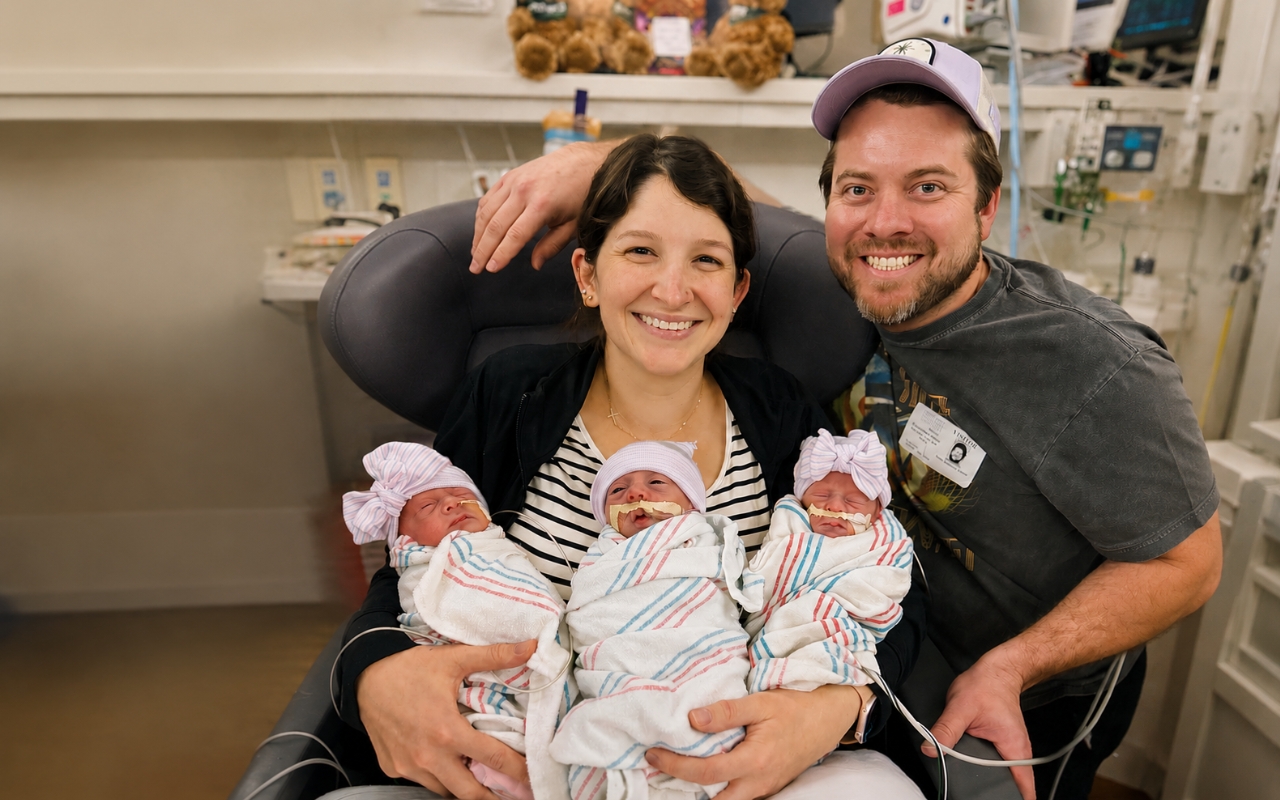
The triplets, Paisley, Callum, and Margot, were born at 32 weeks on February 11.

A Rare High-risk Pregnancy Brings New Perspective
As her pregnancy progressed, Maggie found herself experiencing the same fears, uncertainties, and loss of control that many of her patients face every day.
“It was definitely surreal to be on the other side of it,” she said. “The pregnancy and also the Antepartum stay in terms of not knowing exactly when the babies would come and always hoping that they were going to be okay was already so nerve-racking, but I was surrounded by so many people that I knew, whereas most patients don’t have that.”
The experience gave her a new appreciation for women facing prolonged hospitalizations, particularly those carrying multiples. It also deepened her respect for their strength.
“I definitely have a lot more respect for the long-term patients on antepartum, especially the moms of multiples. They are so strong.”
From Twins to Triplets
Even as a L&D nurse familiar with complicated pregnancies, Maggie struggled to process the unexpected news.
“I was in utter disbelief,” she recalled. “We had just wrapped our brains around having twins. I could clearly see that there were three babies on the ultrasound screen, but I just thought this could never happen to me, there’s just no way!”
The rare pregnancy quickly transformed the couple’s expectations for parenthood. It also set them on a journey that included antepartum care, a premature delivery, and weeks in the NICU.

Supported by the Nurses She Calls Family
One of the most meaningful parts of Maggie’s experience was being cared for by the same nurses she works alongside every day.
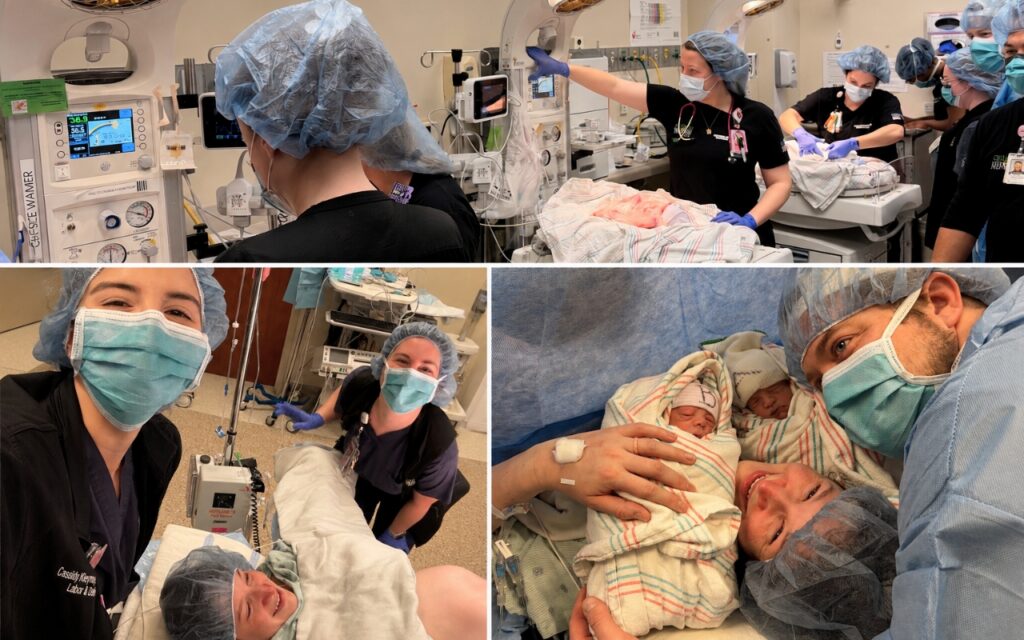
Shortly after a baby shower organized by her fellow L&D nurses, Maggie was admitted to the hospital. Her colleagues remained by her side throughout labor and delivery, helping safely bring the triplets into the world while supporting their friend through one of the most important moments of her life.
“It was truly the most amazing experience,” she said. “I think about it every day, and it brings me such joy. I felt so safe and cared for the entire time.”
The experience reinforced the unit’s close-knit culture and Maggie’s gratitude for her colleagues.
“Our unit already feels like a family, but it just made me even more thankful than I already was to work where I do with the incredible people that I do.”
Trent experienced that support firsthand as well.
He joked that he “felt like a mob wife” because of the constant attention and support the family received from Maggie’s coworkers.
“It was surreal watching her be cared for and taking the role of the patient,” he said.
Lessons Learned in the NICU
After their premature birth, Paisley, Margot, and Callum spent several weeks in the NICU before gradually going home.
Like many parents of premature infants, Maggie and Trent quickly learned how much they would rely on the NICU team during moments of uncertainty.
“I wouldn’t say there was one specific moment, but rather a million tiny moments,” Maggie said. “Anytime their heart rate would drop, or they would stop breathing momentarily, or the team would need to run tests to rule out something more serious, the nurses, doctors, and respiratory therapists were always right there to offer explanation, comfort, and reassurance.”
She credits the NICU team with helping turn a frightening experience into one filled with support and hope. That care made the transition home feel less overwhelming.
“We seriously can’t thank each person that we came into contact with in the NICU enough. Nobody wants their babies in the NICU, and it’s not where you picture having your first moments with them, but the NICU staff made a scary and unideal time not so.”
Life at Home With Three Newborns
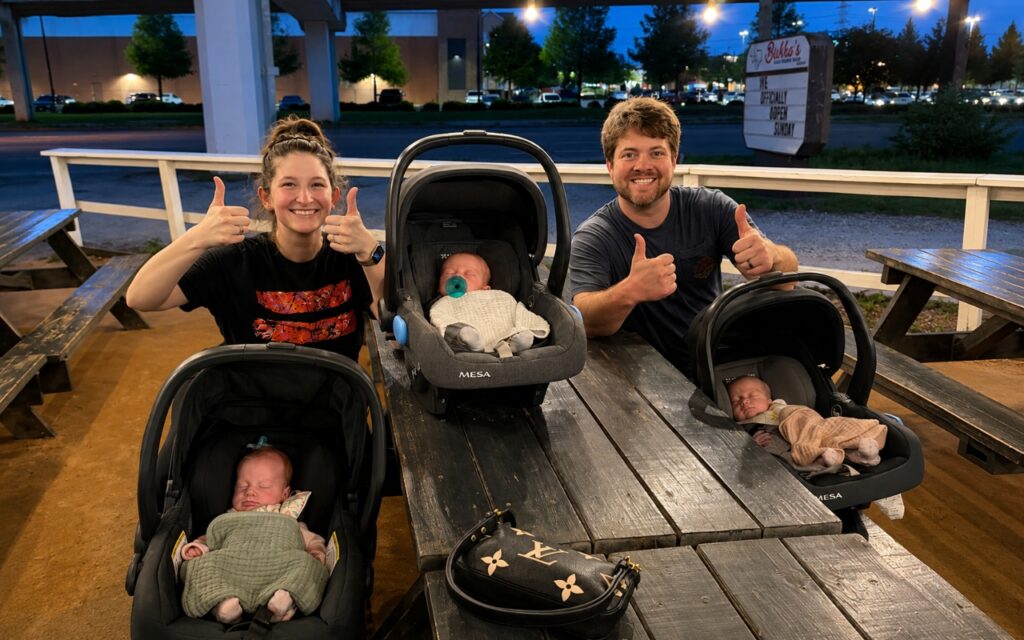
By April, all three babies had joined each other at home, and life for the new family of five had changed completely.
The reality of caring for triplets, Maggie says, has been far different from what she initially imagined.
“There is never a dull moment!” she said. “I think I pictured the initial first months with one newborn to be calm with lazy days and lots of snuggles, but that’s not the case at our house.”
“Someone is always hungry, crying, or wants to be held, and usually all at the same time! It’s total chaos, but it’s beautiful, and I wouldn’t change it for anything.”
As for the most unexpectedly chaotic part of raising triplets?
“My husband and I quickly realized how outnumbered we were. I really think they band together and gang up on us on purpose!” she joked. “Bath time is also a hoot. It’s a high-speed, military-style assembly line run by three little and very demanding generals.”
A Father’s Day Reflection
As Father’s Day approaches, Trent says becoming a father to triplets has revealed strengths he didn’t know he possessed. The experience has also shown him how much the family has taken on together.
“I don’t think I ever fully mentally prepared myself for being a dad to triplets,” he said. “But through our stay in Antepartum, remodeling our new home, back and forth trips to our previous house and the hospital, all while maintaining a full-time job, I unknowingly trained myself to juggle multiple tasks, and that’s the biggest part of raising triplets. You are part of a three-ring circus!”
He also believes the experience strengthened their relationship. Together, they have had to adjust, communicate, and stay focused on one another.
“The thing that has surprised me most is how resilient Maggie and I have been able to become and how much I believe it has solidified our relationship with one another while also allowing our hearts to overflow for our 3 incredible babies,” he said.
“It took us a while to get the hang of things, and we felt like passing ships in the night. But we are good about talking things through, taking steps to get back to us, and not losing sight of being best friends and now parents. With our incredible support system, we have been able to take time for ourselves and not feel like we are constantly drowning.”

Why This Story Matters to Nurses
For Maggie, the experience reinforced a lesson nurses often teach but do not always experience themselves: a reassuring explanation, a few extra minutes at the bedside, or simply being present can make all the difference for a patient facing uncertainty. It also carries into how she now sees her own work.
After navigating a high-risk pregnancy, weeks in antepartum care, and the emotional challenges of having three babies in the NICU, she returns to the bedside with a deeper appreciation for the resilience of the patients she serves.
Now, as a mother of rare mixed triplets, she returns to the bedside with a deeper understanding of the strength, resilience, and reassurance many families need during their most vulnerable moments.
