
Estimated reading time: 7 minutes
A nursing student can understand English and still struggle to give an SBAR report, interpret a complicated NCLEX question or confidently explain a patient’s condition to a provider.
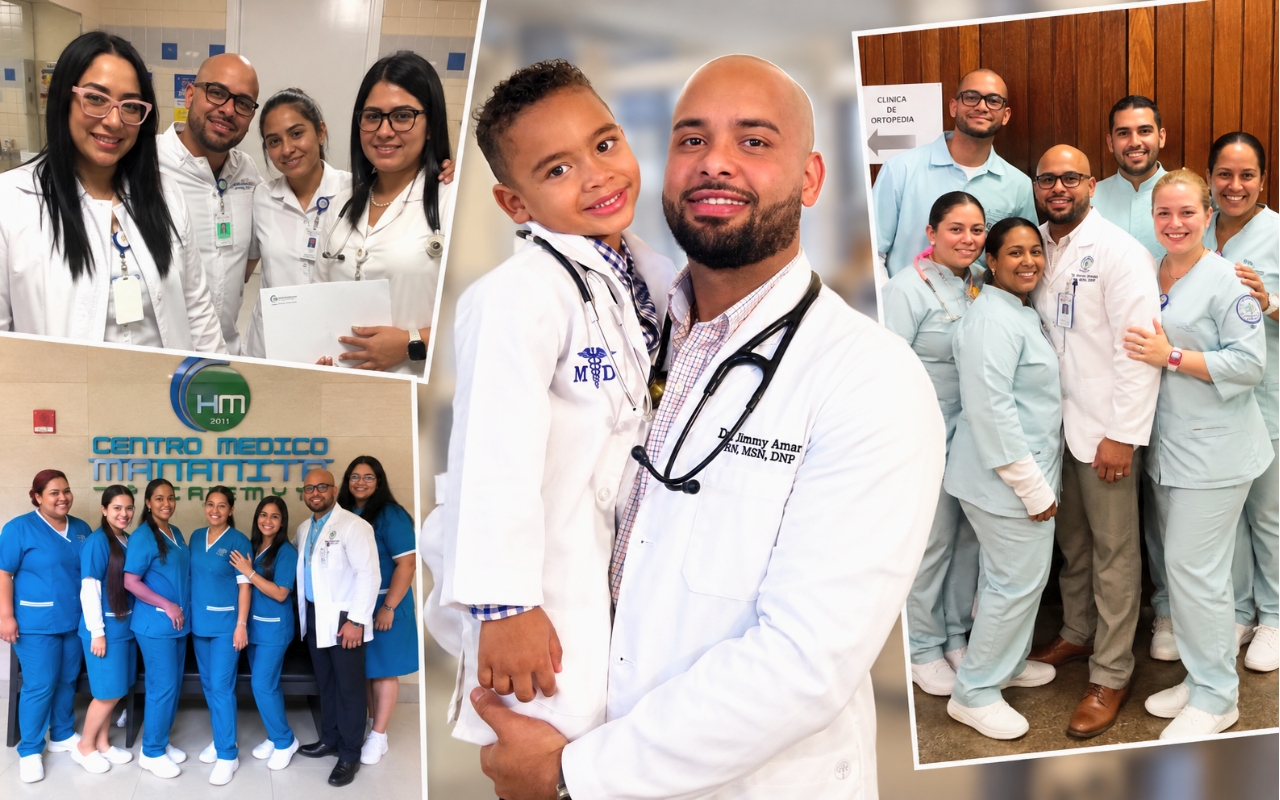
Jimmy “Dr. J” Amaro, DNP, MSN-CNS, RN, a Puerto Rican nurse educator and nursing faculty member in Nightingale College’s undergraduate programs, says he has seen that distinction among Hispanic and Latino nursing students and believes nursing schools should do more to address it.
“There are many Hispanic and Latino students who understand English but are afraid to speak it, especially in academic or clinical environments,” Amaro told Nurse Approved. “There is a tremendous difference between conversational English and the English required to interpret a complex NCLEX question, provide an SBAR report, document an assessment, explain informed consent, communicate with a provider, or educate a patient.”
These aren’t simply classroom language skills. They are tied to the communication, clinical judgment and patient education nurses use in practice.
As Nurse Approved recognizes National Hispanic Heritage Month, celebrated Sept. 15 through Oct. 15, Amaro’s experience also points to a larger issue facing the profession: Hispanic nurses remain underrepresented in the U.S. nursing workforce. In 2024, 7.2% of registered nurses reported their ethnicity as Hispanic, according to data from the National Nursing Workforce Survey cited by the American Association of Colleges of Nursing.
For Amaro, increasing the number of Hispanic and Latino students entering nursing matters, but recruitment and representation are only part of the equation.
“Sometimes the student already has tremendous potential,” he said. “What they are missing is confidence and structured preparation.”
Building a Bridge Into Nursing
Amaro believes nursing schools could provide targeted preparation for students who need more experience using English in academic and clinical settings.
One of his long-term ideas is a pathway that combines English-language development with healthcare and nursing education. Students could work on medical terminology, patient interviewing, nursing documentation, professional communication, pharmacology language, clinical conversations and NCLEX-style questions before transitioning into increasingly immersive nursing education in English.
Instead of telling a student, “Your English is not good enough,” Amaro would change the message: “We see your potential, and we are going to prepare you to succeed.”
Amaro sees potential for such an approach in Puerto Rico, particularly for nursing graduates interested in practicing in the continental United States. He also believes nursing programs should reconsider how they communicate with prospective students who understand English but worry they cannot succeed academically or clinically in the language.
“Being bilingual should never be framed as a deficit,” Amaro said. “Spanish is beautiful, and bilingual nurses bring enormous value to healthcare. At the same time, students who want to practice in English-speaking environments need the professional language skills to communicate safely and confidently.”
From Puerto Rico to Nursing Education
Amaro’s path into nursing began in 2008, when he enrolled in a practical nursing program at a vocational school in Guayama while beginning high school at Dr. María Socorro Lacot High School.
He grew up in Maunabo, a small coastal town in southeastern Puerto Rico, where he was raised by his grandparents, Eusebio and María. His grandmother had wanted to become a teacher but never had the opportunity, an unrealized ambition that would eventually influence his career.
“Long before I understood what being a professor would mean, I understood that education represented an opportunity that my grandmother had wanted but had not been able to pursue,” Amaro said.
He completed his practical nursing program in 2011 and began working after passing his board examination. His early nursing experience included hospice and emergency care.
Amaro continued his education, completing an associate degree in nursing in 2014, a bachelor’s degree in nursing in 2015 and a master’s degree in nursing with a specialization in adult care in 2017. He completed his Doctor of Nursing Practice in 2024.
His progression into teaching was less a single career decision than an extension of something he was already doing as a nurse.
“Nursing involves education constantly. We teach patients about medications, procedures, diagnoses, lifestyle changes, warning signs, and what to expect when they return home,” he said. “I discovered that I enjoyed the moment when someone went from being confused or frightened to saying, ‘Now I understand.’”
He eventually recognized the same transformation in nursing students.
“At first, they may be afraid to speak to a patient, perform an assessment, give report, or answer a clinical question,” Amaro said. “Then one day, you watch them walk into a patient’s room and suddenly you can see the nurse they are becoming.”
Representation Beyond Visibility
Amaro’s teaching spans different levels of nursing education. In addition to teaching undergraduate students at Nightingale, he teaches online in an Adult-Gerontology Acute Care Nurse Practitioner (AGACNP) program at Escuela de Salud HIMA San Pablo in Puerto Rico.
At Nightingale, where Amaro has taught for nearly four years, 3,520 of the college’s 10,568 learners identify as Hispanic/Latino, or approximately one-third, according to data provided by the college.
For Amaro, sharing aspects of his students’ language and cultural background can help make professional possibilities feel more attainable.
“When a Hispanic or Puerto Rican student sees a nurse, professor, nurse practitioner, researcher, or doctoral-prepared educator who shares aspects of their language or culture, something becomes possible psychologically,” he said. “The student does not have to imagine that role completely from scratch because someone who resembles part of their experience is already standing there.”
Amaro remembers professors, nurses and colleagues who did that for him. He also remembers people questioning why he continued his education.
“Why do you keep studying? Nobody is going to pay you for all those degrees,” he recalls hearing.
“I want students to see me and think, ‘If someone from Maunabo, Puerto Rico, could find his way into these spaces, perhaps there is space here for me too.’”
But he believes representation carries responsibility.
“Representation cannot end with simply being visible,” Amaro said. “Once you reach a position of influence, you have a responsibility to create opportunities for others.”
Amaro has seen that influence in his own students.
Around 2017, while teaching in a Bachelor of Science in Nursing program at Universidad Ana G. Méndez, Amaro taught Anthony Romano, a student he remembers for his humility and determination.
Over the years, Amaro watched Romano become a nurse practitioner, work in the treatment and management of patients with cancer, continue his education and progress toward doctoral preparation.
“That is when you understand that education has a ripple effect,” Amaro said.
“It is not simply about seeing someone Hispanic in front of a classroom. It is about creating a cycle in which students become professionals, professionals become mentors, mentors create new opportunities, and another generation sees more possibilities than the generation before it.”
Preparing Nurses for the Patient Who Doesn’t Match the Textbook
Amaro’s concerns about nursing education extend beyond language and representation.
He is particularly interested in simulation, critical thinking and clinical judgment, and wants students prepared for patients whose needs are far more complicated than textbook scenarios.
“A patient may have five diagnoses, twelve medications, abnormal laboratory values, family concerns, social barriers, and a subtle change in condition happening simultaneously,” he said.
Knowing clinical facts is necessary, Amaro said, but facts alone do not tell a nurse what needs to happen first.
He uses simulation to push students beyond recalling information and toward explaining their reasoning. What concerns them? What is the priority? What information is missing? What happens if the patient’s blood pressure drops? Who needs to be called, and what should the nurse do while waiting?
“That is nursing,” Amaro said.
He is particularly interested in virtual simulation as nursing programs incorporate more technology-supported education.
“As nursing education continues incorporating online and technology-supported learning, we must ensure that convenience does not come at the expense of clinical reasoning,” he said. “Technology should make students think more, not less.”
“I want excellent students, but more importantly, I want excellent nurses.”
When the Pace of a Dream Changes
Amaro’s own education has not followed an uninterrupted path.
He began his DNP in 2017 and completed it in 2024. Significant health challenges slowed his progress and changed how he thought about persistence.
“Sometimes continuing does not mean moving quickly,” he said. “Sometimes continuing means taking one course, finishing it, recovering, and then taking the next one.”
His children, Justine and Matías, became another reason to continue.
“I wanted them to see that difficult circumstances can change the pace of a dream without necessarily changing the dream itself,” he said.
More than 15 years after entering practical nursing school as a teenager in Puerto Rico, Amaro sees nursing education as a way to extend his impact beyond the patients he could care for himself.
“As a nurse, I can care for the patient in front of me,” Amaro said. “As an educator, I can help prepare nurses who may care for thousands of patients throughout their careers.”
“That realization made nursing education feel like home.”
