
Estimated reading time: 7 minutes
For emergency nurses managing critically ill patients, multiple IV medications and limited available lines can create an urgent compatibility challenge.
Want to see more Nurse Approved articles in your Google results? Add us as a preferred source.
Add Nurse Approved as apreferred source on Google
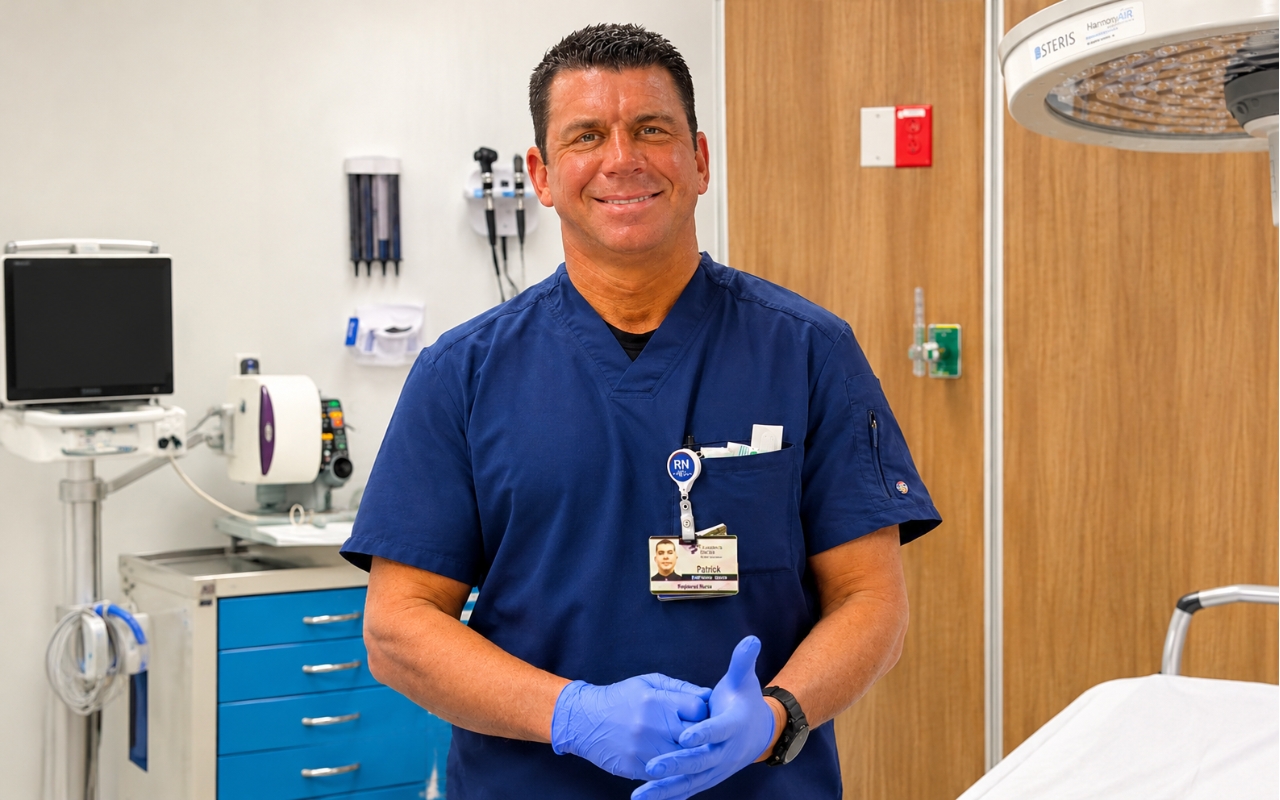
Patrick Gartner, RN, HCQM, an emergency department nurse at CHRISTUS Spohn Health System in Corpus Christi, Texas, knows the problem firsthand. When patients need eight or nine IV infusions but have only two or three available lines, determining which medications can safely run together can take valuable time away from bedside care.
“I lost real time at the bedside doing that, over and over, with a reference that was never designed to be used one-handed next to a sick patient,” Gartner said.
That recurring challenge inspired him to develop Infusion Ready, a mobile application that helps clinicians check IV medication compatibility, identify potential conflicts, and determine which infusions can share a line.
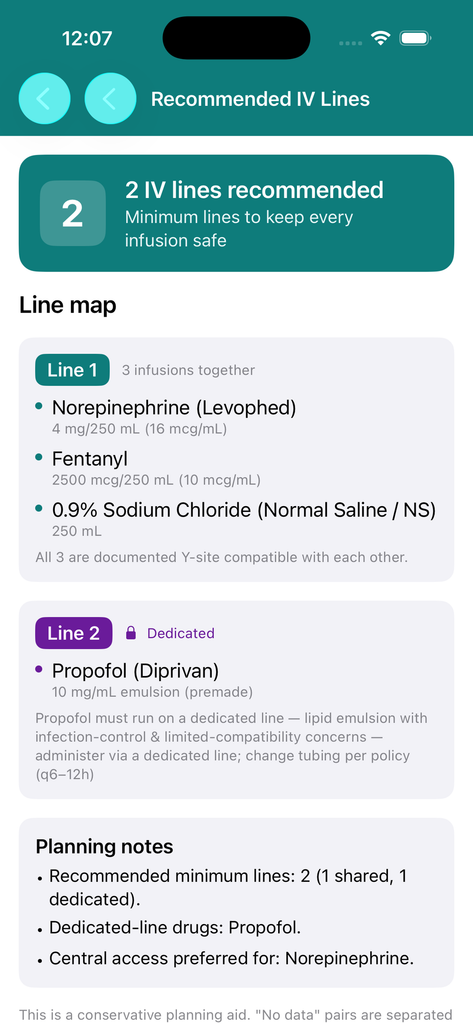
Gartner, who has spent 20 years in nursing, has since developed seven clinical reference applications and five exam-preparation tools through his company, BlackFox Media LLC. The applications address clinical needs ranging from resuscitation and stroke management to mass-casualty triage and nursing education.
With no formal software development background, Gartner taught himself to code. He now uses artificial intelligence tools to speed development while remaining responsible for clinical content.
His work shows how nurses can combine bedside experience with emerging technology to address clinical challenges, while highlighting the importance of accuracy and independent review when digital tools support patient care.
From Emergency Nursing to Healthcare Technology
Gartner spent five years as an emergency medical technician with the California State Fire Marshal’s office before becoming a nurse in 2006.
He initially became a licensed vocational nurse and later completed an LVN-to-RN bridge program because traditional RN programs in Los Angeles had lengthy waiting lists.
His career has included acute care at the Department of Veterans Affairs, travel nursing, house supervision, and hyperbaric medicine. Since 2023, he has worked in emergency nursing at CHRISTUS Spohn.
“The through-line from the fire service to the ED to the apps is the same: the information you need in an emergency has to be where you are, right now, and it has to be right,” Gartner said.
Another application, MCI Triage Ready, grew out of his experience as an EMT and the emergency preparedness training he received following the September 11 terrorist attacks.
The tool brings together published information on chemical, biological, radiological, nuclear and explosive incidents, including triage algorithms, toxidrome recognition and antidote references.
Gartner said the challenge is not necessarily a lack of clinical information, but how difficult it can be to access it quickly.
“The toxidromes, the triage algorithms and the antidotes are all published by CHEMM, REMM and the CDC, but they’re spread across sites and PDFs nobody is going to read in the first ten minutes of an incident,” he said.
His other applications include adult and pediatric resuscitation references, acute stroke management, anesthesia references, and a differential diagnosis and work-up tool. He has also developed exam-preparation applications for the NCLEX-RN, NCLEX-PN, NREMT and Trauma Nursing Core Course.
How AI Helps a Bedside Nurse Develop Clinical Apps
Although Gartner has a bachelor’s degree in business and an associate degree in nursing, he has no formal education in software development.
He learned programming independently, spending nights and days off studying coding languages and development frameworks.
More recently, AI-assisted coding tools have changed how he approaches the work.
“I’ll be straightforward about the recent part, because I think it matters to the story: the advances in AI tooling over the last couple of years changed what one person can do,” Gartner said.
He uses AI coding assistants for tasks including bug fixes, software testing, and maintaining consistency across applications.
However, he distinguishes between using AI to develop software and relying on it to make clinical decisions.
“What they don’t do is the nursing,” Gartner said.
He determines which clinical problems the applications should address, identifies the guidelines supporting their content, and reviews medication calculations and other clinical information before release.
Gartner said one of his biggest challenges has been navigating app store reviews, particularly demonstrating that his products are educational references rather than medical devices.
Several applications initially were rejected before receiving approval after he provided additional documentation about their clinical sources and intended use.
Why Offline Access Matters in Emergency Care
Gartner designed his applications around three priorities: rapid access to information, traceable clinical references, and the ability to function without an internet connection.
The applications are available for iPhone, iPad, and Android devices. They require a one-time purchase rather than a subscription and, according to Gartner, do not require accounts or collect user data.
Offline functionality was particularly important because emergency care does not always take place in environments with reliable connectivity.
“A reference you use at the bedside or in the field shouldn’t depend on a network that may be down, overloaded, or simply not there, and it shouldn’t be a channel for anyone to collect data about where you are and what you looked up,” Gartner said.
The applications cite published clinical guidelines and reference materials, including American Heart Association resuscitation guidelines, stroke management recommendations and emergency response resources.
For nurses working in emergency departments, critical care and prehospital settings, readily accessible reference information may help address the challenge of locating clinical guidance during time-sensitive situations.
However, clinical decision-support tools must also provide accurate, current information appropriate to the patient and care setting.
Clinical Accuracy and the Need for Independent Review
Gartner said he personally reviews the clinical content against published guidelines, conducts automated testing of medication calculations and audits the applications before release.
“I don’t yet have independent physician sign-off; I’m working on that now and expect to have it, and I’d rather say so plainly than imply a review that hasn’t happened,” Gartner said.
The applications are intended as clinical references, not replacements for professional judgment or institutional protocols.
Gartner said he uses the applications in his own clinical practice, but he did not provide independent evidence of improved patient outcomes.
The distinction matters most for applications involving medication compatibility, weight-based dosing, and clinical decision support, where inaccurate information could affect patient safety.
Balancing Emergency Nursing With Entrepreneurship
Gartner continues to work as an emergency nurse while developing and maintaining his applications.
He said managing both responsibilities has come at a personal cost.
“If I’m honest, my work-life balance has suffered,” Gartner said.
He does development on his days off and around his nursing shifts. He acknowledged that the pace has affected his social life and is not sustainable indefinitely.
“A shift tells me what’s wrong with a reference; a quiet night building fixes it; the next shift tells me whether the fix was right,” he said.
While Gartner said feedback from nurses and other clinicians has been positive, he acknowledged that the applications are still in the early stages of promotion and do not yet have a large established user base.
That feedback has nevertheless influenced development. Requests from nurses, medics and students prompted him to expand into exam-preparation applications and add comprehensive lessons alongside practice questions.
What Nurse-Led Innovation Can Look Like
Gartner believes other nurses can apply that same thinking without becoming software developers.
“Nursing is, all too often, about time management, and every nurse carries around ideas for doing a thing faster or safer that never leave the break room,” Gartner said.
Those ideas might involve improving a handoff sheet, reorganizing a medication room or creating a more accessible clinical reference.
His advice is to identify the problem clearly before pursuing a solution, whether that involves technology or a simpler change in clinical practice.
“If you have one, act on it; it doesn’t have to be an app,” Gartner said.
