
Estimated reading time: 4 minutes
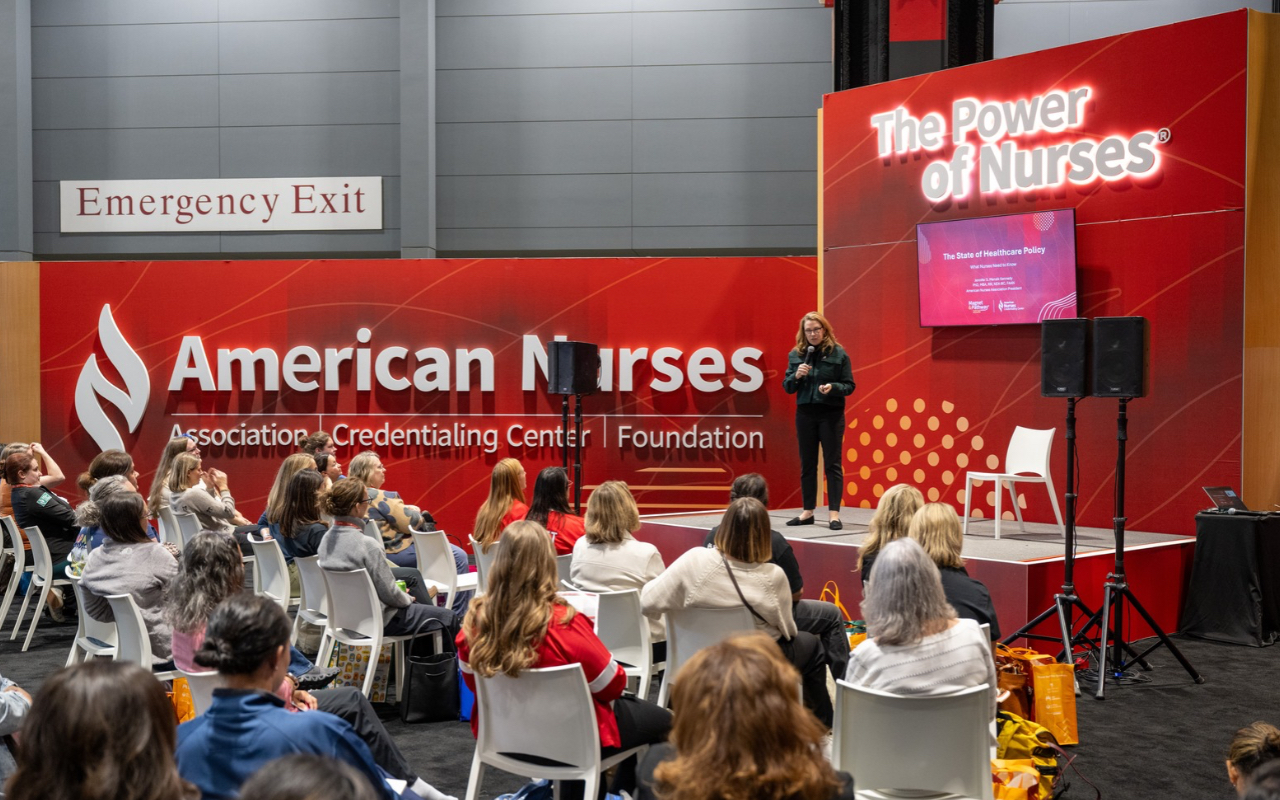
The legal battle over federal student loan limits for graduate nursing programs is headed to a December 2 court hearing, American Nurses Association (ANA) President Jennifer Mensik Kennedy told attendees at the 2026 ANCC Magnet & Pathway Conference in Chicago last week.
Want to see more Nurse Approved articles in your Google results? Add us as a preferred source.
Add Nurse Approved as apreferred source on Google
Kennedy, PhD, MBA, RN, NEA-BC, FAAN, discussed the pending litigation during a presentation on federal nursing policy, highlighting the profession’s efforts to challenge the U.S. Department of Education’s decision to exclude graduate nursing degrees from its definition of professional degree programs.
“We’re hoping by the end of the year, possibly, we’ll have a summary judgment on this,” Kennedy told conference attendees.
The hearing before U.S. District Judge Patti B. Saris in Massachusetts comes as nursing organizations continue their legal efforts to protect access to higher federal student loan limits for nurses pursuing advanced degrees.
The outcome could significantly affect federal loan access for nurses pursuing advanced degrees, including those preparing to become nurse practitioners, nurse anesthetists and other advanced practice registered nurses (APRNs).
Why Nursing Organizations Are Challenging the Rule
Under the federal student loan framework, graduate students generally face annual borrowing limits of $20,500, compared with $50,000 for students enrolled in qualifying professional degree programs.
Nursing organizations argue that excluding advanced nursing degrees from the professional category creates financial barriers for nurses pursuing graduate education and could ultimately affect access to patient care.
In May, ANA and other nursing and healthcare organizations filed a federal lawsuit challenging the Department of Education’s rule.
Kennedy told Magnet attendees that nursing organizations mounted an extensive campaign to oppose the classification, bringing together more than 90 organizations and generating more than 246,000 petition signatures and 18,000 letters.
Despite those efforts, the Department of Education proceeded with the rule.
The nursing organizations argue that the department exceeded its legal authority by establishing additional requirements for determining which degrees qualify as professional programs.
The department maintains that its definition is lawful and continues to defend the regulation.
Court Rulings Temporarily Protect Some Nursing Students
The litigation has produced several important developments affecting graduate nursing students.
In June, a federal court in Washington, D.C., temporarily blocked part of the Department of Education’s professional degree definition in a separate lawsuit involving the American Association of Nurse Practitioners.
In response, the department issued guidance allowing eligible students enrolled in Master of Science in Nursing (MSN), Doctor of Nursing Practice (DNP), and Doctor of Nursing Anesthesia Practice (DNAP) programs to continue accessing the higher federal loan limits while the court order remains in effect.
However, the temporary protection does not extend to nursing PhD programs.
In the Massachusetts case, Judge Saris denied a preliminary injunction on August 10, finding that protections from the separate litigation reduced the immediate risk of harm to MSN, DNP, and DNAP students.
The judge also found insufficient evidence at that stage to justify preliminary relief for nursing PhD students. The ruling left open the possibility of renewed arguments under certain circumstances.
The Department of Education’s updated October 30 guidance confirms that qualifying MSN, DNP and DNAP programs remain eligible for professional-degree borrowing limits while the relevant court order remains in effect.
Nursing Leaders Await December 2 Hearing
The National Association of Nurse Practitioners in Women’s Health (NPWH), one of the organizations involved in the Massachusetts lawsuit, confirmed in an October 26 update that the next hearing is scheduled for December 2.
According to NPWH, attorneys representing the plaintiffs have submitted declarations from nursing students describing how the federal loan policy could affect their ability to pursue advanced education.
The organization said plaintiffs are urging the court to issue a ruling before the end of 2026 and the beginning of the spring 2027 academic semester.
Kennedy told Magnet conference attendees that the legal challenge centers partly on the department’s authority to establish requirements beyond those outlined in federal law.
She pointed to the Supreme Court’s 2024 decision in Loper Bright Enterprises v. Raimondo, which overturned the longstanding Chevron doctrine governing judicial deference to federal agencies’ statutory interpretations.
The nursing organizations contend that the department’s additional requirements improperly exclude advanced nursing programs from the professional degree classification.
What’s at Stake for Graduate Nursing Students?
Although current court protections preserve higher borrowing limits for many MSN, DNP and DNAP students, the litigation’s outcome remains uncertain, and the stakes for future borrowing are still significant.
For nurses considering advanced education, the distinction between graduate and professional degree classifications could significantly affect how they finance their studies and whether they can afford to enroll.
Nursing organizations warn that reduced federal borrowing options could force students to seek private loans, delay enrollment, or reconsider pursuing advanced nursing degrees.
The December 2 hearing represents another step in determining whether the Department of Education’s classification can withstand legal scrutiny.
For now, nursing students and educational institutions must continue navigating federal loan requirements while the legal challenges proceed.
