
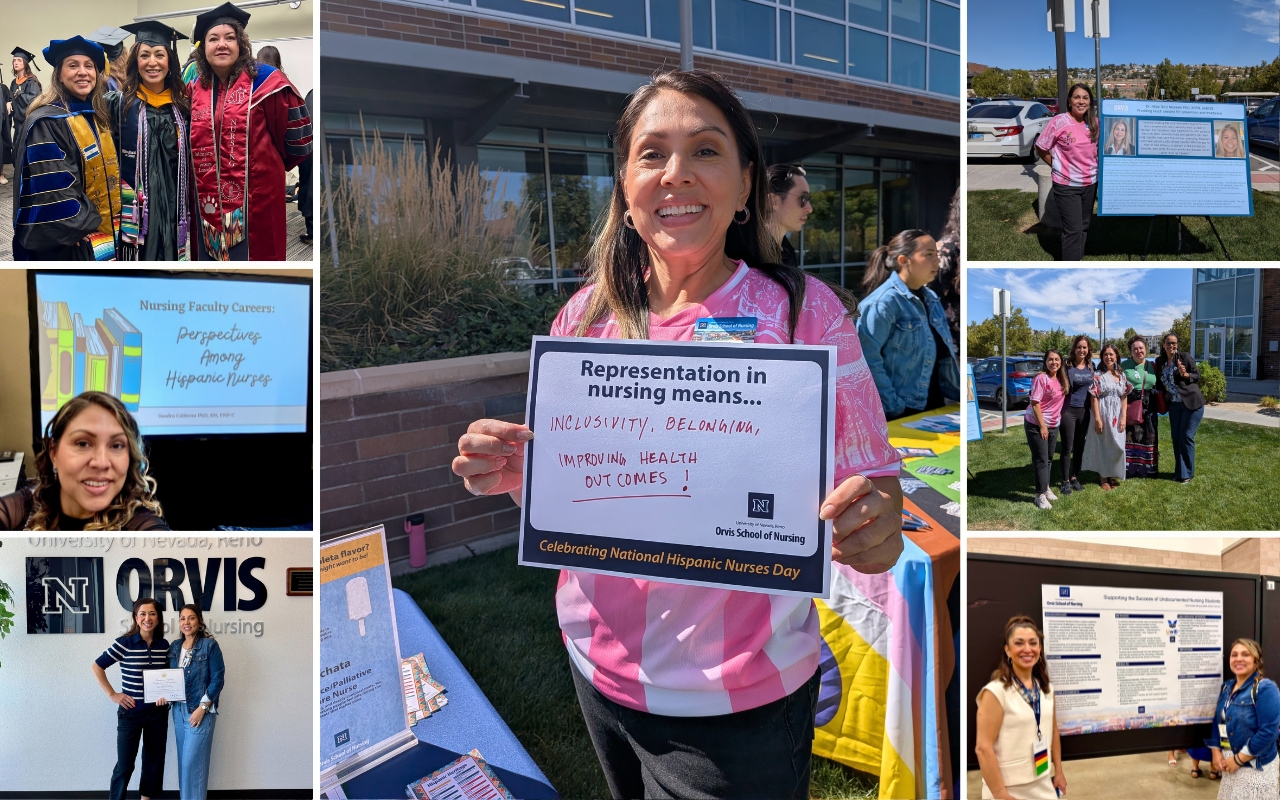

Some of the Hispanic nurses Sandra Calderon, Ph.D., RN, FNP-C, spoke with had been practicing for 10 to 20 years.
Yet when Calderon asked about becoming nursing faculty, many questioned whether they knew enough or had enough experience to teach.
For Calderon, now an assistant professor at the Orvis School of Nursing at the University of Nevada, Reno, those responses were among the most troubling findings from her doctoral research examining Hispanic nurses’ perceptions of becoming nursing faculty.
Another troubling finding was that 87.5% of the 16 Hispanic nurses in her study reported experiencing racism during their nursing careers.
“What was most disheartening was how many participants felt they did not ‘know enough’ or have ‘enough experience’ to become faculty—even nurses with 10 to 20 years of experience,” Calderon said. “Overall, many participants viewed becoming nursing faculty as something beyond their reach, despite having years of valuable nursing knowledge and experience.”
Her research identified additional barriers, including financial pressures, family responsibilities, and the potential pay cut that can accompany leaving clinical practice for academia.
For Calderon, the findings point to a problem with implications beyond nursing schools. If experienced Hispanic nurses do not see nursing education as accessible or attainable, the profession risks losing potential faculty members who could help prepare and mentor future generations of nurses.
As Nurse Approved recognizes National Hispanic Heritage Month, Calderon’s research raises a larger question: What will it take not only to bring more Hispanic and Latino nurses into nursing, but to make sure they can see themselves teaching and leading within it?
She Started Asking, “Where Are the Hispanic Nurses?”
Calderon did not initially recognize how underrepresented Hispanic nurses were in the profession.
She had been a nurse since 2013 and a nurse practitioner since 2016 when she discovered the National Association of Hispanic Nurses in 2019.
“I remember thinking, How did I not know this community existed?” she said.
Through mentors Dr. Elizabeth Rice and Dr. Mary Lou de Leon Siantz, Calderon helped reestablish NAHN’s Sacramento chapter and eventually served as chapter president.
Attending a national NAHN conference introduced her to a community of nurses who shared her culture and experiences. At the time, she was also the only Hispanic nurse practitioner on her unit.
“That made me begin asking: Where are the Hispanic nurses and NPs?” Calderon said. “Those questions ultimately shaped my research.”
Today, Calderon said she is one of three Hispanic nursing faculty members on her campus.
What 16 Hispanic Nurses Told Her
For her dissertation, Calderon spoke with 16 Hispanic nurses using pláticas, meaning “conversations” or “chats.”
Calderon said the methodology centers participants as co-creators of knowledge and creates space for culturally grounded, open conversation rather than relying on formal interview questions.
She spoke with the nurses about their careers and whether they had considered becoming nursing faculty.
Their responses revealed a disconnect between experience and how some nurses perceived their qualifications to teach.
Participants also described racism and exclusion throughout their nursing careers. They reported having contributions ignored during meetings, feeling dismissed or invisible, and being told they were not qualified for promotions while White colleagues were groomed for advancement.
Calderon is careful not to say those experiences directly prevented participants from pursuing faculty positions.
Instead, Calderon said those experiences affected participants’ confidence and sense of belonging over time. Some participants kept educational or career aspirations to themselves because they feared being discouraged or ridiculed.
“These experiences are important because they can shape how Hispanic nurses view their own potential for advancement, including whether they see academia as a place where they belong,” Calderon said.
The Financial Cost of Becoming Faculty
Financial concerns were among the most prominent barriers participants identified, Calderon said.
Moving from clinical practice into academia can mean earning less, particularly for nurse practitioners. Participants described potential differences of $10,000 to $40,000 between clinical and faculty roles, Calderon said.
Graduate education also costs money and can require nurses to reduce their working hours. At the same time, some participants had significant financial responsibilities within their families.
“For some participants, cultural expectations around prioritizing and supporting family added another layer,” Calderon said. “Many were significant financial contributors to their households, so earning less or working fewer hours simply was not realistic.”
For those nurses, becoming faculty could require more than deciding whether they wanted to teach.
“Advancing their education or becoming faculty was not just a career decision; it could mean choosing between new opportunity and meeting their family’s financial needs,” Calderon said.
The Representation Gap Has Narrowed, But It Remains Wide
Calderon sees the nursing faculty gap as one part of a larger representation problem.
The 2004 Sullivan Commission report Missing Persons: Minorities in the Health Professions cited federal data showing Hispanic registered nurses represented about 2% of the U.S. RN workforce in 2000.
More than two decades later, the 2024 National Nursing Workforce Survey found that 7.2% of RNs identified as Hispanic or Latino. By comparison, Hispanic and Latino people accounted for about 20% of the U.S. population in 2024, according to Census data.
For Calderon, the gap raises questions about barriers that begin long before someone considers becoming a nurse.
“Hispanic students may face barriers throughout their educational journey, including limited financial resources, language barriers, family responsibilities, and a lack of mentors who see their potential and encourage them to pursue higher education,” she said.
That is one reason Calderon believes Hispanic nursing faculty are important.
“Representation creates mentorship, belonging, and, most importantly, possibility,” she said. “When students see someone who shares their culture or background in a position they may never have imagined for themselves, they can begin to see that path as attainable.”
The Mentors Who Changed Her Path
Calderon knows what mentorship can do because her own route through higher education was not straightforward.
She said she did not have mentors to help her navigate college, and it took her seven years to earn her associate degree. Joining the Army removed a major financial barrier by supporting her education, and it also connected her with mentors who recognized her potential and encouraged her to pursue nursing.
Later, at UC Davis, Rice encouraged Calderon to pursue a Ph.D., while discovering NAHN helped solidify that decision.
Most of her mentors did not share her cultural background.
“But they saw something in me that I did not always see in myself,” Calderon said.
She sometimes wonders what might have been different if she had received that guidance when she first entered college.
“I may have saved years of time and money,” she said.
Calderon also points to a cultural dynamic that she believes can make seeking support more difficult.
“In the Hispanic culture, we are often discouraged from talking about our strengths and accomplishments and are told to be humble,” Calderon said. “That can be a barrier to asking for help or seeing the possibility in ourselves.”
When a Student Asked, “Me?”
Now that Calderon is the faculty member standing in front of nursing students, she has seen what helping someone recognize their own potential can look like.
During clinical rotations, she tries to learn how students are managing nursing school alongside work, family responsibilities, and their own well-being.
One conversation with a Hispanic nursing student stayed with her.
Calderon told the student that simply by being in nursing school, they were already making a difference in their community and serving as a role model.
The student responded, “Me?”
“When I said, ‘Of course,’ they smiled and told me they had never thought of themselves that way,” Calderon said.
For Calderon, that reaction captured what she wants students to understand.
“I want my students to understand that their presence matters,” she said. “They are not only becoming nurses, but they are also showing others in their families and communities what is possible.”
Creating a Path Instead of a Ceiling
If nursing wants to increase Hispanic representation, Calderon believes intervention needs to begin long before graduate school.
“It must start early, elementary school, middle school, and high school,” she said. “We need to expose Hispanic students to nursing and help them see registered nursing, advanced practice, leadership, and academia as attainable careers.”
Calderon said Hispanic nurses have told her they were encouraged to pursue careers as medical assistants, certified nursing assistants, or licensed vocational nurses rather than becoming registered nurses.
She emphasizes that those are valuable professions and can provide pathways into nursing.
But they should not define the limit of someone’s potential.
“They should not become a ceiling placed on someone else’s potential,” Calderon said.
Nursing schools can make diverse nurses and faculty visible in classrooms, recruitment materials, and community outreach, she said. Healthcare employers can also invest in workers already in the healthcare pipeline, including funding bridge programs for LVNs who want to become registered nurses.
“If we want to change representation, we must create pathways and then actively help people move through them,” Calderon said.
What She Hopes Nursing Looks Like in 2046
Calderon measures meaningful progress not simply by how many Hispanic nurses enter the workforce, but by where they can go once they get there.
She wants to see Hispanic nurses represented in the workforce at levels that better reflect the communities they serve, health inequities reduced, and more Hispanic nurses mentored into positions ranging from the bedside to academia and the C-suite.
And she wants the nursing classroom itself to look different.
“By 2046, I hope Hispanic nursing students walk into classrooms and see students and faculty who look and sound like them,” Calderon said. “I hope they have mentors, culturally responsive resources, and programs that help them navigate nursing school and feel that they belong there.”
Her research suggests reaching that future will require nursing to look beyond recruitment. It means examining who is encouraged to advance, who can afford to do so, who sees academia as a place where they belong, and who is there to tell them they can get there.
For Calderon, it comes down to opportunity.
“Hispanic and Latino students do not need a handout; they need a hand up, an opportunity, and someone who believes in their potential.”
