


Estimated reading time: 7 minutes
Preparing the next generation of nurses increasingly involves questions that barely existed when many of today’s nursing leaders entered the profession.
How should nursing students use artificial intelligence without allowing it to replace clinical judgment? How can schools protect academic and exam integrity as technology evolves? And how do educators prepare students for a healthcare environment that may look considerably different by the time they enter practice?
Those are among the issues filling the workday of Amber Kool, DNP, MBA, MSN, RN, associate vice president of assessment and development at Arizona College of Nursing.
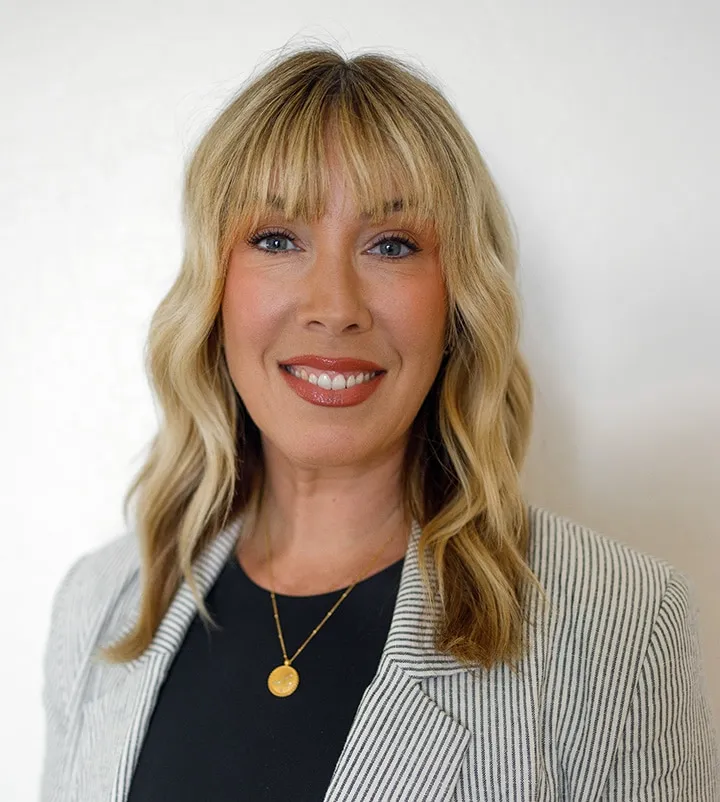
Kool indirectly supports all 24 of the college’s campuses and provides formal support to seven campuses in the Mountain and West region, each serving approximately 300 to more than 500 students. Her work spans faculty development, curriculum and program development, accreditation, assessment and student outcomes.
It is a role far removed from the bedside, where Kool began her nursing career in 2012. But she sees a direct connection between the two.
“The alignment with educating families and patients carried over into relationship building and educating from a leadership perspective. Just as families and patients were trusting me to care for them, those I lead are trusting me to care for their best interests and support them.”
Want to see more Nurse Approved articles in your Google results? Add us as a preferred source.
Add Nurse Approved as apreferred source on Google
6 a.m.: Preparation Before the Workday Begins
Kool starts her mornings with exercise, organization, and a review of the day’s calendar before meetings begin.
With responsibilities stretching across campuses and faculty, she rarely knows exactly what the workday will bring.
“One thing nursing taught me early on is the importance of being prepared. Whether you’re caring for patients or supporting students and faculty, preparation sets the tone for success.”
By 8 a.m., that preparation gives way to checking emails, connecting with team members, and determining which issues need immediate attention.
Some mornings center on student success. Others involve helping faculty navigate new initiatives or identifying ways to improve students’ learning experiences.
“One of the things I enjoy most about my role is that every conversation comes back to helping students become successful nurses.”
10 a.m.: AI and the Changing Nursing Classroom
One of the most immediate challenges Kool and her colleagues are confronting is artificial intelligence.
As AI becomes part of the professional environment nursing students will eventually enter, Kool said educators are working through how to incorporate the technology ethically while ensuring students develop their own clinical judgment.
“With the evolution of AI, we are working through best practices to use AI ethically and prepare students for a professional world that uses AI but also requires them to use their clinical judgment and not rely on AI.”
At the same time, nursing programs are confronting academic and exam integrity. Kool said the college continues to evolve its testing practices to align with the National Council of State Boards of Nursing while maintaining test security.
“Healthcare is always evolving, and nursing education must evolve with it. As leaders and educators, we have a responsibility to prepare students for both the challenges and opportunities they’ll encounter in practice.”
For Kool, keeping pace also requires continuing to learn herself.
“It never stops changing, so I can never stop growing. It means learning a new language, finding a way to communicate with others so they see the value, the change, the impact. Knowing that we are helping others find a passion in a profession that I feel so passionate about is one of the most enjoyable parts of my career.”
Noon: From Mental Health to the NICU to Nursing Education
Kool’s path into nursing education was not one she planned when she entered the profession.
She began her career in mental health nursing before moving into pediatrics and neonatal intensive care. In the NICU, mentoring newly graduated nurses ultimately changed her career direction.
“Working with newly graduated nurses in the NICU was a turning point for me. It helped me realize that teaching and mentorship could have a lasting impact on the profession.”
Kool later joined Arizona College of Nursing as an adjunct faculty member and went on to hold leadership positions including director of curriculum and associate provost.
She still misses parts of bedside nursing.
“I miss the nurses I worked bedside with; the collaboration is just different in this environment. We’re still collaborating, but not in the same way. I also really miss the ‘wins’ when you see a parent hold their neonate for the first time, the first bottle feeding, or when they move from one level of care to a less acute level. Being the partner to the family was always one of my favorites.”
2 p.m.: Supporting the Nurses Who Teach Nurses
Afternoons often turn to faculty support, program effectiveness, accreditation, and student outcomes.
One question, Kool said, helps keep those discussions focused: “How can we create better learning experiences that translate into better patient care?”
For Kool, nursing education leadership is as much about developing educators as directing programs.
“Our role is to support and grow others to become the best faculty to support nursing professionals. We are often in the trenches with our teams, working, driving, and supporting the program. This role is not about leading from the front but instead about helping others to learn and grow to continue the innovation and evolution of our industry.”
That work recently received national recognition. Arizona College of Nursing was named a 2026 National League for Nursing Center of Excellence in Nursing Education for promoting faculty pedagogical expertise, one of 20 nursing schools and programs selected for a 2026 designation.
Kool said she led the team behind the initiative, an accomplishment she considers a highlight of her career.
4 p.m.: Preparing Nurses for More Than Clinical Skills
Clinical knowledge is only part of preparing students for nursing practice.
Kool said her daily discussions often include nurse well-being and the transition from the classroom to clinical practice. Having witnessed the pressures nurses face throughout her career, she believes students also need strategies for sustaining themselves in the profession.
“Nurses spend their careers caring for others, but we also need to teach them the importance of caring for themselves. Self-care is essential to sustaining a long and fulfilling career.”
By 5:30 p.m., Kool reviews the next day’s priorities and follows up on ongoing projects.
“What motivates me most is knowing that the work we do today impacts the nurses who will care for patients and communities for years to come.”
A Nursing Career Does Not Have to Follow a Straight Line
Kool’s own career has moved from mental health nursing to pediatrics and neonatal intensive care, then from adjunct teaching into academic leadership.
For nurses and nursing students who believe they need to map out an entire career early, her experience offers another perspective.
“I never could have predicted that my path would take me from mental health nursing to the NICU and eventually into academic leadership. Every experience taught me something valuable.”
“My advice for aspiring nurses is to remain curious and open to where their career may lead. Growth happens when you are willing to embrace change.”
She also encourages nursing students to focus less on having every career move figured out and more on building a foundation that will help them grow.
“You don’t have to have every step of the way planned. Focus on building a strong foundation in nursing school, finding mentors that can help you along the way, embracing opportunities to learn, and building confidence in yourself. Most importantly, remember that caring for yourself is just as important as caring for your patients if you want a sustainable career in the nursing field.”
Away from work, Kool spends time with friends, travels, stays active through sports, and explores Arizona’s outdoor spaces.
“Balance is important! By spending time doing things I love with the people I love, I can bring my best self to work each day.”
Kool’s career also shows how leaving the bedside does not necessarily mean leaving patient care behind. Her influence now comes through the faculty and learning experiences that help shape nurses before they enter practice.
