


Estimated reading time: 5 minutes
There’s a new option for colorectal cancer screening, and it’s already generating a lot of conversation in healthcare.
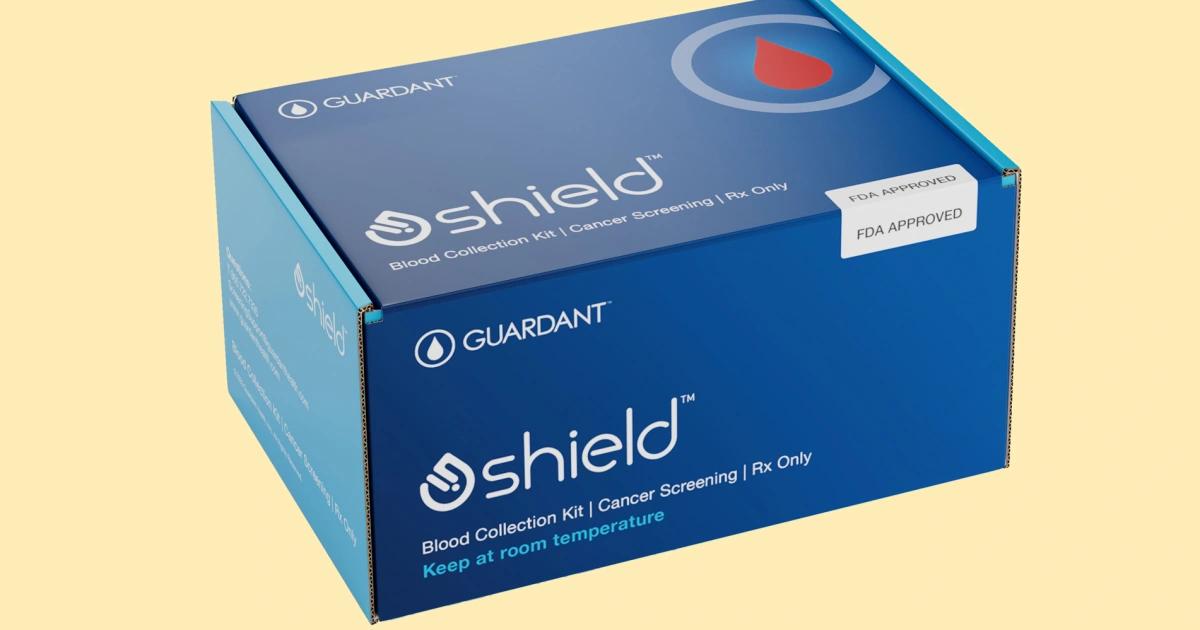
The American Cancer Society recently updated its colorectal cancer screening guidance to include Shield, a new colon cancer blood test designed to detect signs of colorectal cancer through a routine blood draw. The FDA-approved test, developed by Guardant Health, is being positioned as another option for average-risk adults who may be reluctant to complete traditional screening methods like colonoscopy or stool testing.
And honestly, this comes at an important time.
Colorectal cancer is no longer considered a disease primarily affecting older adults. Healthcare professionals across specialties are seeing more younger patients diagnosed with colon cancer, often after symptoms were brushed off, minimized, or attributed to something less serious.
According to the American Cancer Society, colorectal cancer cases in adults younger than 55 have nearly doubled over the past few decades. At the same time, screening rates still lag, with millions of eligible adults remaining unscreened.

So naturally, a blood test sounds appealing.
No bowel prep.
No sedation.
No taking a day off work.
No mailing stool samples.
But before patients start assuming this replaces colonoscopy, there are a few important things healthcare professionals should understand and be prepared to explain.
What Is the New Colon Cancer Blood Test?
The Shield test looks for abnormal DNA fragments in the bloodstream that may be associated with colorectal cancer.
Unlike colonoscopy, which directly visualizes the colon, or stool-based tests that analyze shed DNA and microscopic blood in stool, this test relies on circulating tumor DNA found in a blood sample.
The test is intended for adults 45 and older who are considered average risk for colorectal cancer and who do not have symptoms.
That distinction matters more than people realize.
Patients with rectal bleeding, unexplained weight loss, persistent changes in bowel habits, iron deficiency anemia, inflammatory bowel disease, prior adenomatous polyps, or a strong family history of colorectal cancer still need more comprehensive evaluation, typically with colonoscopy.
This is screening. Not diagnosis.
So Is This Better Than Cologuard or Colonoscopy?
Not necessarily. It’s different.
And this is where nuance matters.

Colonoscopy is still considered the gold standard because it can both detect and remove precancerous polyps during the same procedure. In other words, it doesn’t just find cancer. It can help prevent cancer from developing in the first place.
That’s one of the biggest concerns experts have with blood-based screening right now.
The Shield blood test performs significantly better at detecting established colorectal cancers than detecting advanced precancerous polyps.
Clinical trial data published in The New England Journal of Medicine showed the test detected about 83% of colorectal cancers, but only around 13% of advanced precancerous lesions.
That’s a pretty important limitation.
Because ideally, we want to catch abnormal changes before they become cancerous.
By comparison, stool DNA tests like Cologuard can detect some advanced precancerous lesions because abnormal colon cells and microscopic blood can shed directly into stool. Blood tests, however, rely on those abnormal cells shedding enough DNA into circulation to be detected in the bloodstream, which smaller lesions may not do consistently.

So while the colon cancer blood test may improve screening participation, especially among people avoiding colonoscopy altogether, it’s not necessarily the strongest option for prevention.
Why This Matters for Nurses and Healthcare Professionals
Patients are going to have questions, and many of them are going to sound something like this:
“So if I can just do a blood test, why would I still need a colonoscopy?”
That’s where healthcare professionals play a critical role.
This is not about convincing every patient to undergo colonoscopy at all costs. It’s about helping patients understand the strengths and limitations of each screening option so they can make informed decisions.
For some patients, a blood test may absolutely be the screening option that finally gets them through the door. And from a public health standpoint, some screening is generally better than no screening at all.
But clinicians should also reinforce:
- a positive blood test still requires colonoscopy,
- a negative blood test does not guarantee the absence of precancerous lesions,
- and symptoms should never be ignored simply because a screening test was negative.
Why Cost and Access Matter
At a time when many Americans remain uninsured, underinsured, or delaying preventive care because of healthcare costs, the appeal of a simpler screening option is easy to understand.
That may ultimately be where the Shield colon cancer blood test finds its place, not necessarily as a replacement for colonoscopy, but as another option for patients who otherwise may delay screening altogether.
Still, convenience and capability are not always the same thing. While blood-based screening may improve participation, colonoscopy remains the gold standard because it can detect and remove precancerous polyps before they become cancerous.
Because when it comes to colorectal cancer, early detection matters. But prevention matters even more.
