
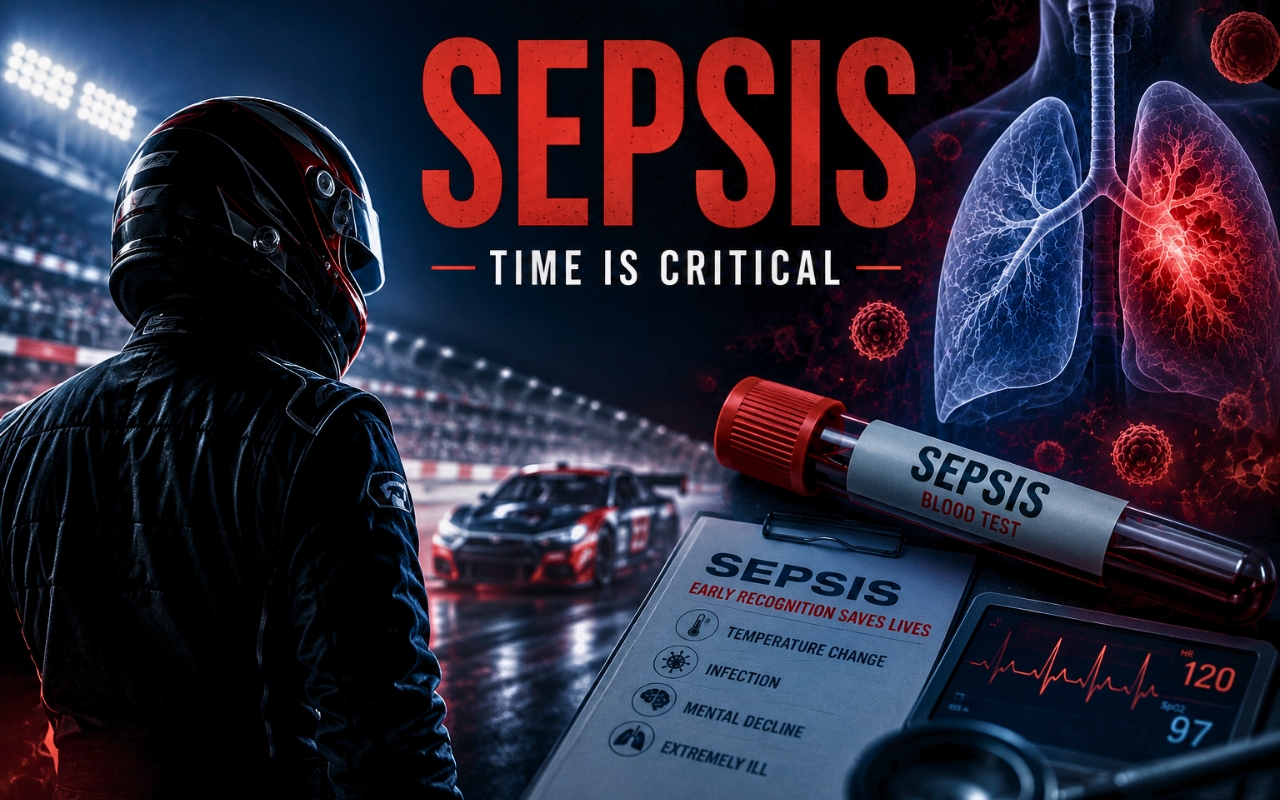

Experts urgently warn that early recognition and immediate treatment of sepsis remain a critical nursing challenge for saving lives.
The sudden death of NASCAR legend Kyle Busch at age 41 after complications from pneumonia and sepsis spotlights the critical and urgent threat posed by delayed sepsis recognition in healthcare.
Despite being widely misunderstood by the public, sepsis affects more than a million Americans each year and is associated with a minimum of 350,000 adult deaths in the United States annually, according to recent estimates.
Sepsis is the body’s overwhelming and life-threatening response to infection. Experts say early recognition, rapid treatment, and evidence-based care can dramatically improve survival, especially in patients with pneumonia and other serious infections.
Busch’s sudden death stunned fans as pneumonia swiftly turned into a fatal, misunderstood sepsis emergency—demonstrating how little time there is to intervene.
“Moments like this are painful reminders of how quickly serious infections can become life-threatening,” said Stephanie Parks Taylor, M.D., M.S., Chief of the Division of Hospital Medicine at University of Michigan Health and a longtime sepsis researcher and specialist.
“Pneumonia can progress rapidly, and in some cases, it can trigger sepsis — a medical emergency caused by the body’s overwhelming response to infection. Early recognition and rapid treatment are critical, and they can make the difference between recovery and tragedy.”
Why Sepsis Remains a Major Nursing Concern
Sepsis occurs when the body’s immune response to infection spirals out of control, triggering widespread inflammation and organ damage. Pneumonia is one of the most common causes.
University of Michigan experts note that pneumonia and sepsis are major causes of hospitalization, serious illness, and death worldwide; globally, sepsis is estimated to contribute to roughly 13 million deaths each year, based on the latest available international data.
“While every individual’s medical situation is unique, and the specifics of Kyle Busch’s situation aren’t known, this tragic situation underscores the importance of taking symptoms seriously, especially difficulty breathing, persistent fever, confusion, extreme weakness, chest pain, or a sudden worsening of illness,” Taylor said.
“Awareness of these symptoms is critical because early recognition and timely treatment save lives.”
The Symptoms Nurses Want the Public to Recognize
The Sepsis Alliance urges the public to remember the acronym TIME to identify sepsis
T for temperature that is higher or lower than normal
I for infection symptoms
M for mental decline including confusion or sleepiness
E for extremely ill, including pain, discomfort, and shortness of breath
Nurses are often the first clinicians to identify these warning signs during triage, bedside assessments, and ongoing monitoring.
Experts insist that only the fastest possible diagnosis, aggressive antibiotics, and immediate supportive care can give patients a fighting chance against sepsis.
Michigan Researchers Push Evidence-Based Sepsis Care
Researchers and clinicians at the University of Michigan have spent years working to improve sepsis diagnosis and treatment systems at the state and national levels.
Their efforts helped develop a free Sepsis Toolkit that has now been implemented in 68 Michigan hospitals through the Michigan Hospital Medicine Safety Consortium.
According to recent data, the initiative has helped reduce sepsis-related deaths by about 350 patients in Michigan hospitals over the past three years.
The HMS Sepsis Initiative is led by Hallie Prescott, M.D., M.Sc., a University of Michigan critical care physician who has led multiple studies focused on improving sepsis care.
Prescott also co-led the development of the latest international sepsis treatment guidelines released this spring.
The updated guidelines place increased focus on ambulance-based screening and treatment because approximately half of sepsis patients arrive at hospitals by ambulance. Experts believe earlier identification by EMS providers could accelerate lifesaving care.
The guidelines also emphasize appropriate antibiotic use to reduce overuse and help prevent the emergence of antibiotic-resistant “superbugs.”
Prevention Still Matters
Experts say preventing infections remains one of the most effective ways to reduce sepsis risk.
Vaccinations against flu, COVID-19, RSV, pneumococcal disease, and other severe infections can help lower the chances of developing pneumonia and subsequent sepsis.
Taylor also stressed the importance of wound care and infection prevention practices, particularly for skin injuries that may allow bacteria to enter the bloodstream.
For nurses, Busch’s death delivers an urgent message: sepsis can accelerate in anyone—no matter how healthy they seem—and swift action is always essential.
Healthcare leaders urgently hope that this tragedy compels everyone to recognize signs earlier and seek care before infection turns deadly—seconds matter.
