

As climate change accelerates worldwide, nurses and healthcare professionals increasingly see its effects at the bedside.
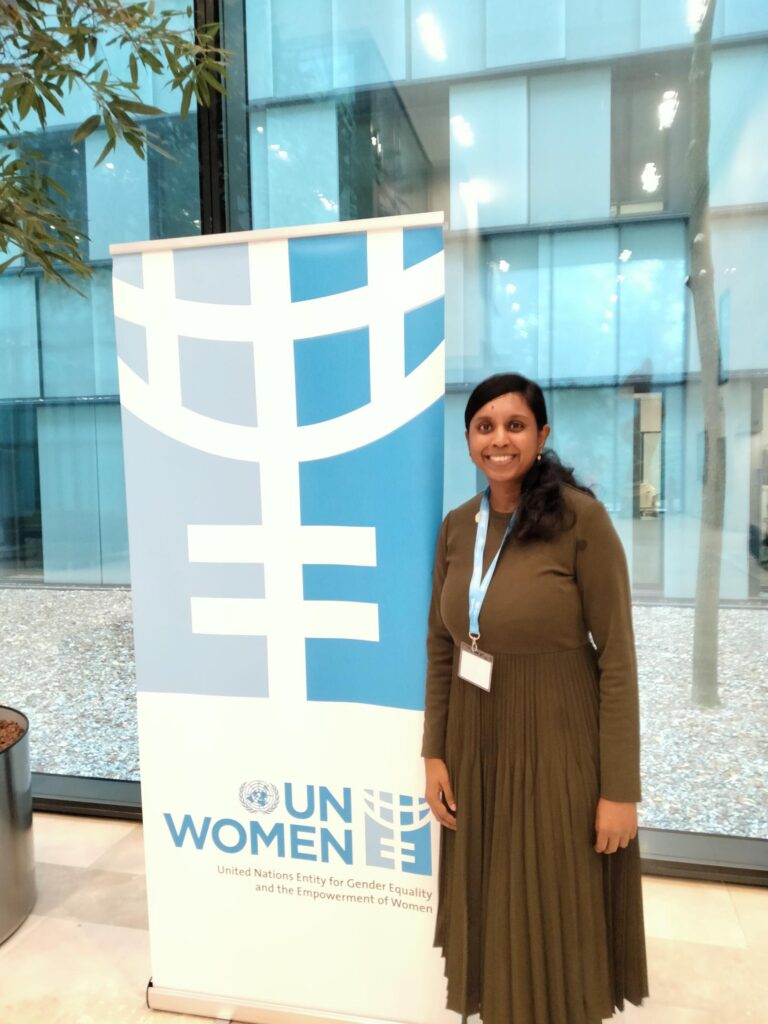
For Dr. Sheena Ramazanu, RN, Climate for Health Climate Ambassador and Certified Global Nurse Consultant based in Singapore, the connection between climate and health became impossible to ignore through her clinical work.
“My entry point into climate-health work was clinical,” Ramazanu said. “Increasingly, I observed patterns in patient presentations that could not be explained by individual pathology alone, heat exhaustion among outdoor workers, worsening respiratory conditions during haze periods, and rising anxiety linked to environmental instability.”
Ramazanu said the cases pointed to a broader systemic issue.
“These were not isolated events but systemic signals,” she said. “Climate change, in this sense, became a ‘silent amplifier’ of existing health inequities.”
Today, Ramazanu serves as a Visiting Research Fellow at the National University of Singapore and Visiting Assistant Professor at Universitas Serang Raya in Indonesia, where she works alongside academics, students, and community partners to address the growing health consequences of climate change, particularly among vulnerable populations.
Climate change is increasingly affecting patient health through heat-related illness, respiratory disease, food insecurity, mental health strain, and worsening chronic conditions, according to nurse leaders working in climate-health research and community care.
This focus spans the professional community. The growing conversation around climate change and health is also gaining attention within organizations such as Sigma Nursing, where nurse leaders and researchers continue to explore the profession’s role in advancing climate resilience, health equity, and community-based prevention strategies.
Climate Change Is Already Showing Up in Clinical Care
Ramazanu says climate change’s health impacts are no longer theoretical, but already daily healthcare realities, especially in vulnerable communities.
“The impacts are already embedded in daily clinical realities,” she said. “Vulnerable populations, especially low-income, rural, and outdoor labor communities, experience disproportionate exposure to environmental stressors.”
Among the most common issues she sees are dehydration, kidney strain, worsening chronic illnesses, and vector-borne diseases.
“We see more dehydration, kidney strain, vector-borne diseases, and chronic illness exacerbations,” Ramazanu said.
She also emphasized that the burden extends beyond physical illness.
“There is a psychosocial dimension; uncertainty in farming yields, displacement risks, and financial strain all translate into mental health challenges,” she said.
“Climate change intensifies existing disparities rather than creating entirely new ones,” Ramazanu said.
The Growing Threat of Heat-Related Illness
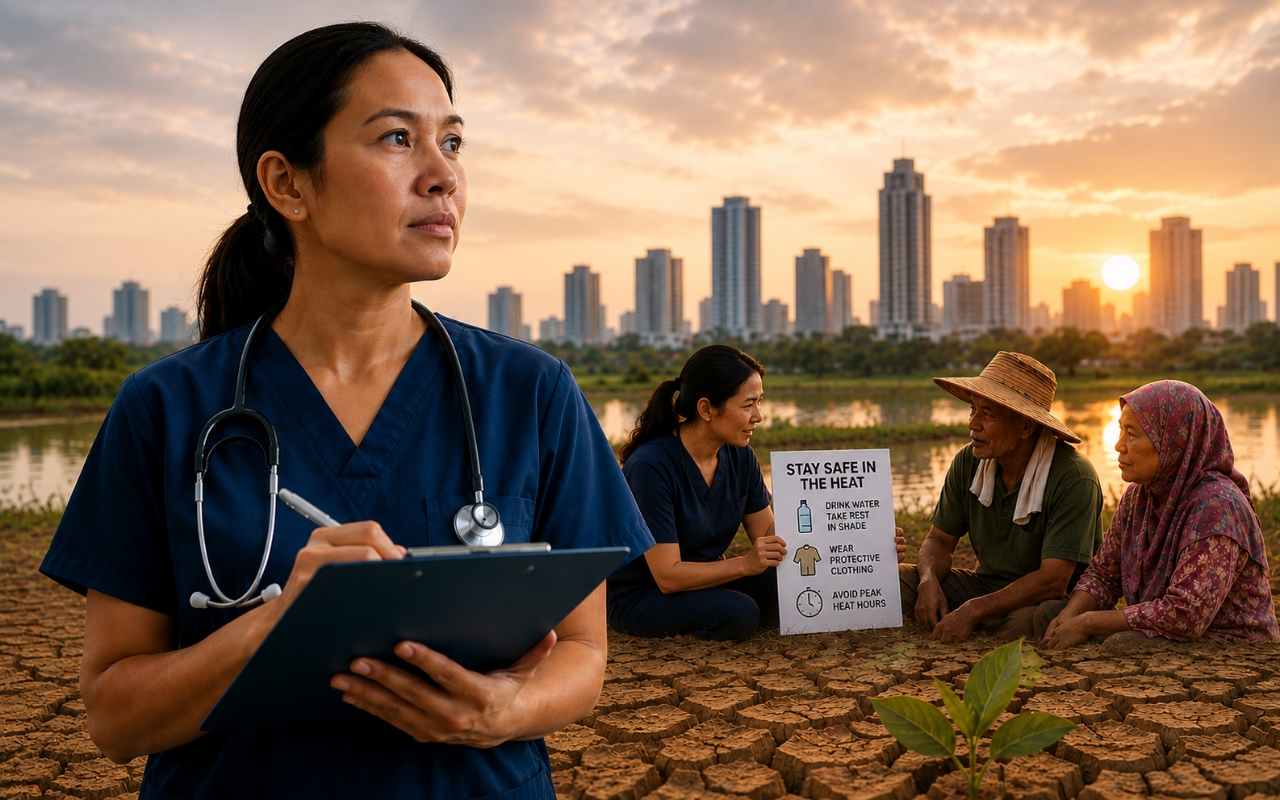
Much of Ramazanu’s work has focused on helping communities better recognize and respond to climate-related health risks, particularly heat-related illnesses affecting agricultural and outdoor workers.
She says some of the most urgent threats involve interconnected issues surrounding heat, food security, and water access.
“The most urgent risks tend to cluster around two domains: heat-related illness, particularly among agricultural workers, and water and food insecurity, leading to malnutrition and gastrointestinal illness,” Ramazanu said.
“For instance, prolonged heat affects crop yield, which affects nutrition, which in turn weakens immunity,” she explained. “Addressing them requires systems thinking rather than siloed interventions.”
Through partnerships and educational initiatives, Ramazanu has helped develop training programs that combine clinical education with environmental awareness and community resilience strategies.
“The training programs bridge clinical knowledge with environmental awareness,” she said.
The programs focus on early recognition of climate-related illness, preventive education tailored to local livelihoods, and leadership development for university professionals and community educators.
Building Community-Based Climate Resilience
Ramazanu says successful interventions require a deep understanding of the communities they serve.
“Context is everything,” she said. “Standardized health messaging often fails because it does not align with lived realities.”
Her work emphasizes collaboration with local leaders and culturally relevant education.
“We co-design interventions with community leaders, using local languages, culturally relevant examples, and practical demonstrations,” Ramazanu said.
In farming communities, timing and accessibility are also critical.
“For farming communities, timing interventions around agricultural cycles is critical,” she explained. “Education is integrated into daily routines such as local gatherings and peer-led sessions rather than delivered as external instruction.”
Ramazanu says some of the most effective strategies for preventing heat-related illness are relatively simple and behavior-focused.
“These strategies are simple and focus on behavior,” she said.
Those strategies include structured hydration routines, adjusting work schedules to avoid peak heat periods, community “heat watch” systems, and the use of shaded rest areas and cooling techniques.
“What stands out is that behavioral adaptation, when locally owned, often outperforms resource-intensive interventions,” Ramazanu said.
Challenges in Climate-Health Education
Despite growing awareness, Ramazanu says climate-health initiatives still face significant barriers.
“One key challenge is perception,” she said. “Climate change is often viewed as distant or abstract, rather than immediate and personal.”
Ramazanu says connecting climate change to recognizable health outcomes helps communities better understand its relevance.
“Bridging that gap requires reframing it through health outcomes people already recognize,” Ramazanu said.
Long-term sustainability also remains a challenge.
“Programs may start strong but require continuous engagement to maintain momentum,” she said.
Additional barriers include limited funding and competing healthcare priorities.
Why Partnerships Matter
Ramazanu credits partnerships between universities, organizations, and community leaders with strengthening climate-health initiatives and helping successful programs expand.
“Partnerships, such as with Universitas Serang Raya, create a vital interface between research, education, and community practice,” she said.
Ramazanu said universities contribute research expertise while field practitioners provide local insight.
“This synergy allows for interventions that are both evidence-based and locally relevant,” she said.
She added that partnerships also make it easier to adapt successful models for other communities facing similar climate-health challenges.
Nurses as Climate-Health Leaders
Ramazanu believes healthcare systems still underestimate both the speed and scale of climate change’s impact on health.
“Climate change is not a future threat; it is a current driver of disease burden,” she said.
She also says many healthcare systems fail to fully recognize the indirect consequences of climate-related health issues.
“There is also underestimation of its indirect effects, particularly on mental health, workforce productivity, and health system strain,” Ramazanu said.
Importantly, she says climate-related illness should not be viewed as an occasional emergency, but as an ongoing systemic challenge requiring long-term preparedness.
“Many systems still treat climate-related health issues as episodic rather than systemic, which limits long-term preparedness,” she said.
Ramazanu believes nurses worldwide are uniquely positioned to help communities respond.
“Nurses are uniquely positioned at the intersection of care, education, and community trust,” she said.
Their role, she explained, extends beyond bedside care into education, advocacy, and early identification of emerging health patterns.
“Globally, nurses can act as translators of climate science into actionable health practices, making resilience a lived reality rather than a policy concept,” Ramazanu said.
At the center of her work is a message she believes more people need to understand.
“Climate change is fundamentally a health issue, not just an environmental one,” she said. “It affects how we breathe, eat, work, and live.”
She also emphasized that the burden is not shared equally.
“Those who contribute least often suffer the most,” Ramazanu said. “The question is no longer whether we should act, but how quickly and how inclusively we can respond.”
