

Estimated reading time: 4 minutes
Certified Nurse-Midwives (CNMs) and Certified Midwives (CMs) play an important role in delivering care at a critical moment for American maternal health. Today, approximately 35% of U.S. counties are considered maternity care deserts, lacking hospitals, birth centers, or obstetric providers – a crisis that impacts an estimated 2.3 million women.
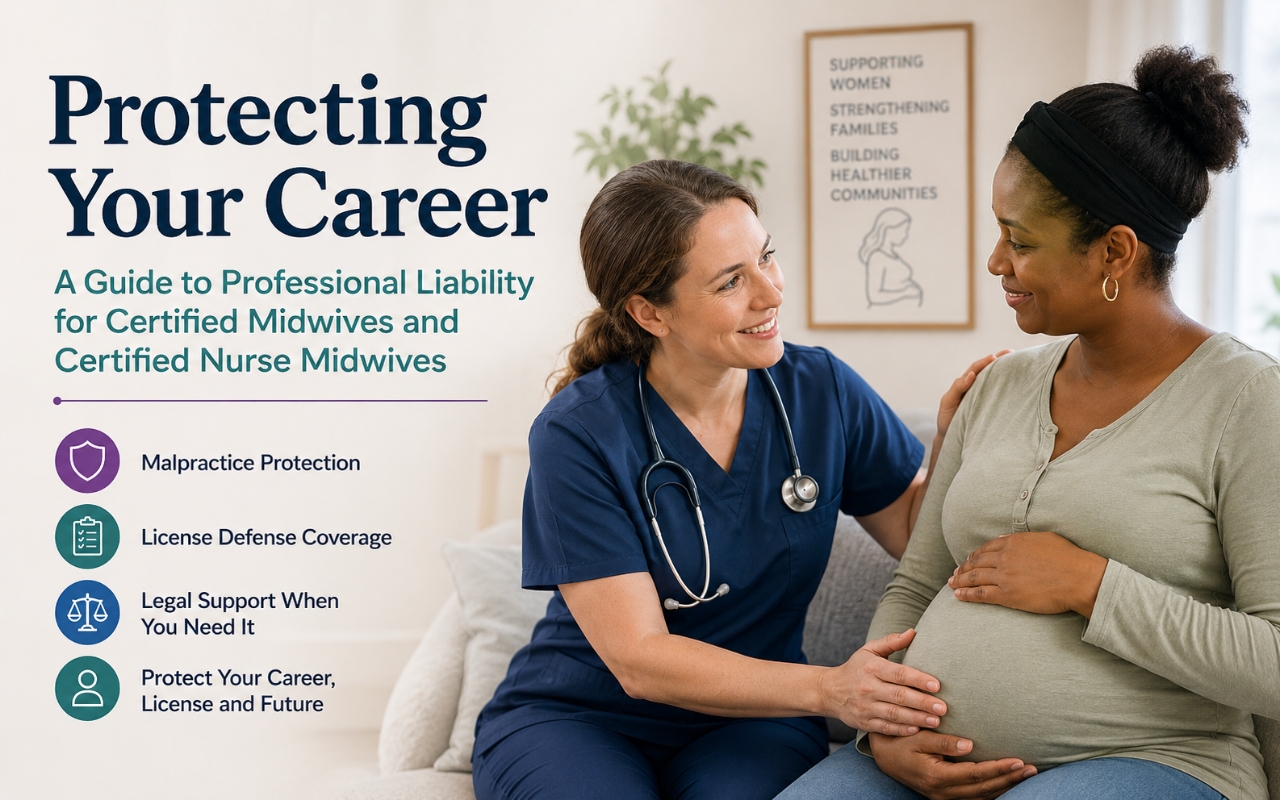
CNMs and CMs help ease some of those care gaps by providing access to pregnancy, childbirth, and postpartum services; sexual and reproductive health, gynecologic health, and family planning; and care for newborns during the first 28 days of life. This work keeps them highly involved in complex aspects of patient care and has the potential to result in exposure to allegations of malpractice.
Many CMs and CNMs are surprised to learn that even excellent clinical care can still result in a claim or board investigation. In today’s evolving healthcare environment, they need to understand how to help proactively safeguard their career.
The Role of Professional Liability Insurance
Professional liability insurance (also known as malpractice insurance) can help protect CMs and CNMs against allegations related to their care. Malpractice claims typically involve a physical injury, but they may also include some form of negligence, such as violating patient rights, verbal abuse, or unprofessional conduct. Whether negligence is real or perceived, a malpractice claim can have a devastating effect on a career, license, finances, and reputation.
While an employer may offer a CM or CNM some coverage, those policies are designed to help protect the organization and may not cover every situation. Many employer policies also do not include license protection coverage, which means a CM or CNM may not have legal support if their professional license is challenged or investigated. Additionally, employer-provided coverage typically does not extend to any part-time work performed on the side. This can leave gaps in protection that many CMs and CNMs may not realize exist.
An individual professional liability policy can help address some of these gaps. These policies may help cover costs associated with legal representation and claim investigation, and can provide guidance during a board investigation or malpractice lawsuit. Coverage can also help protect a CM or CNM’s personal assets. If a judgment is unsatisfied (unpaid) in a court case, a plaintiff may pursue personal assets. Even if a CM or CNM does not have significant personal assets, an unsatisfied judgment could be considered by a licensing board and may affect their reputation or career.
In addition to malpractice protection, a policy can include license defense coverage – an important benefit that is often not fully understood until it is needed. A license protection incident typically involves an inquiry by the licensing board arising from a complaint. Allegations may relate to professional responsibilities and clinical services, or be nonclinical, such as substance use or unprofessional conduct. When a complaint is made to a state board, CMs and CNMs must have the resources to adequately defend themselves. Being unprepared may represent the difference between retaining and losing their license.
How to Shop for a Policy
Policies can vary based on the provider, so CMs and CNMs should consider a few key questions to help ensure they secure coverage that adequately meets their specific needs:
- What are the policy’s features and how do they compare to their individual needs? For example, what settings does the policy cover? Is the policy designed to be standalone coverage, complement an employer policy, or both?
- Are there gaps that an individual policy would fill that my employer-provided coverage does not offer?
- What are the policy’s limits?
- What is the insurance carrier’s rating?
- Does the provider have strong customer reviews?
Closing Thought
CNMs and CMs play a vital role in caring for mothers and newborns, often in challenging and underserved environments. As they work diligently to protect others, they should also take steps to ensure their own protection. Professional liability insurance can help protect them and the important role they play in patient care.
This article is provided for general informational purposes only and is not intended to provide individualized business or legal advice.
