
Estimated reading time: 6 minutes
As Americans turn their clocks back this weekend, new research suggests that making daylight saving time permanent could mean billions more school commutes in the dark, with potential consequences for children’s pedestrian safety and sleep health.
Want to see more Nurse Approved articles in your Google results? Add us as a preferred source.
Add Nurse Approved as apreferred source on Google
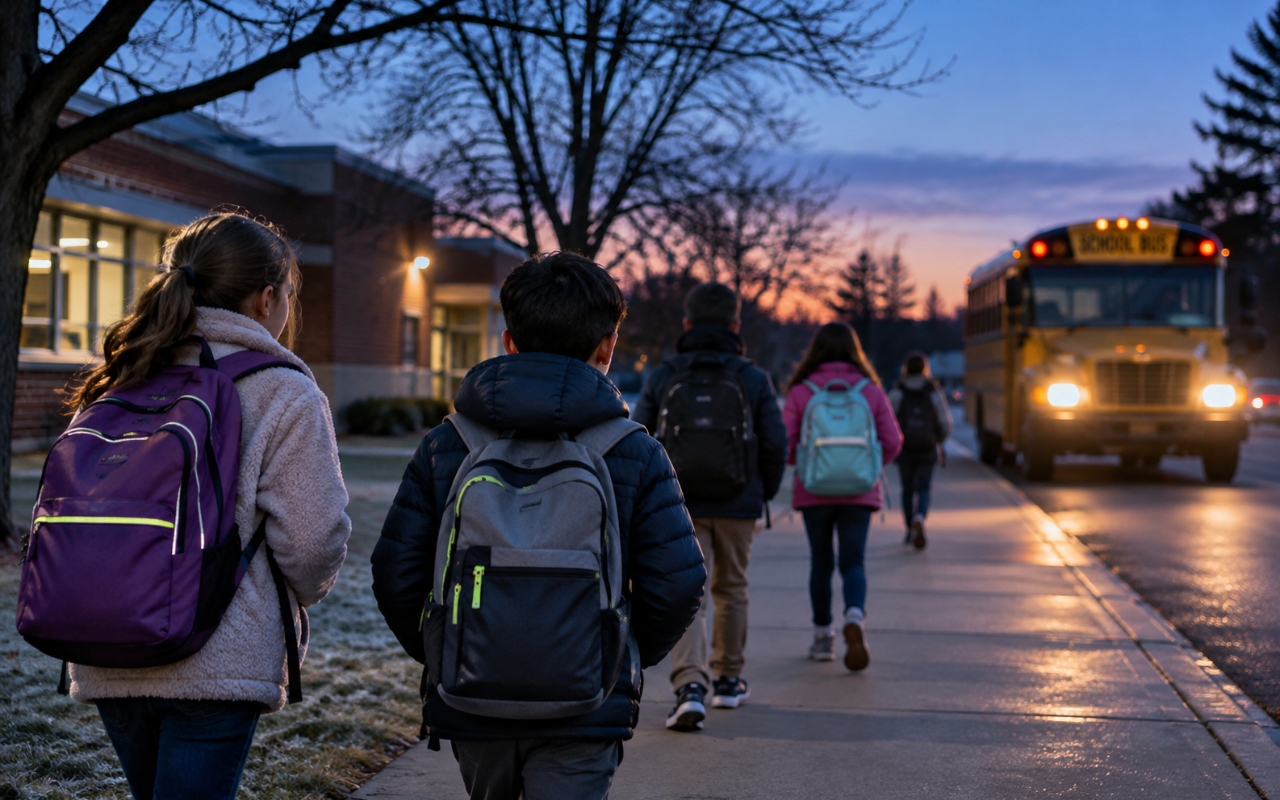
A University of Washington study published in Current Biology estimates that permanent daylight saving time (DST) could lead to at least 2 billion additional dark school commutes nationwide compared with the current system of changing clocks twice a year.
Researchers also found that fatal traffic crashes involving school-aged pedestrians were roughly twice as likely to occur during dark mornings as after sunrise.
These findings come as federal lawmakers consider legislation that would eliminate seasonal clock changes and keep the country on daylight saving time year-round.
For nurses and other healthcare professionals who care for children and adolescents, this research raises public health concerns involving pedestrian safety, sleep health, and the role of morning daylight in regulating the body’s internal clock.
Why Permanent Daylight Saving Time Could Affect School Safety
The proposed Sunshine Protection Act would eliminate the annual return to standard time, preserving an extra hour of evening daylight but leaving mornings darker during the winter months.
The U.S. House of Representatives passed legislation this summer that would make DST permanent, although the measure has stalled in the Senate. Meanwhile, 19 states, including Washington, have already approved measures supporting the change, contingent on federal authorization.
To understand how permanent DST would affect students, University of Washington researchers examined school start times, enrollment figures, and geographic coordinates in 14 of those states.
They calculated how many additional school commutes would occur before sunrise if daylight saving time remained in effect year-round.
In Washington, researchers estimated nearly 35 million additional dark school commutes compared with the current system. Georgia experienced the largest increase among the states studied, with approximately 71 million additional trips.
“It’s called the ‘Sunshine Protection Act’ because you get an extra hour of light at the end of the day. But you will take that hour from the morning. You could call it the Sunshine Destruction Act,” said senior author Horacio de la Iglesia, UW professor of biology. “These dark mornings will inequitably affect children who have to go to school at a certain time. It’s a very tangible metric that anybody from any state or socioeconomic background can relate to. Nobody wants their kids to go to school in the dark.”
Darker Mornings Could Increase Risks for Student Pedestrians
The researchers’ analysis of U.S. traffic collision data adds another dimension to the debate over permanent DST, raising questions about the safety of children who walk to school or travel to bus stops before daylight.
However, the study did not establish that permanent DST would directly increase pedestrian fatalities. Instead, it identified an association between morning darkness and fatal pedestrian crashes.
Those effects would also vary considerably by location and school schedule.
Communities near the western edges of time zones, where sunrise occurs later, would experience some of the greatest increases in dark commutes. Schools with earlier start times would also be disproportionately affected.
In Mississippi and Alabama, where average school start times are earlier than 8 a.m., dark school commutes would rise from approximately 2 million in each state under the current system to more than 20 million under permanent DST.
“Some districts probably never experience a dark commute under the current system, and, if this passes, suddenly they will wake up to this new reality that their kids are going to school in the dark,” said lead author Guadalupe Rodríguez Ferrante, a UW postdoctoral scholar in biology. “Keep in mind that we used the actual start time listed for each school, and a lot of schools offer breakfast or other things before school, so the kids could be getting there even earlier.”
How Morning Darkness Affects Children’s Circadian Rhythms
Beyond traffic safety, the researchers raised concerns about how reduced morning daylight could affect children’s biological clocks.
Morning light helps regulate circadian rhythms, the body’s internal timing system that influences sleep, mood, appetite and other biological functions. Without adequate exposure, the body can have greater difficulty maintaining these natural rhythms.
“When we send kids to school in the dark, we are depriving them of an opportunity to get that morning daylight,” Rodríguez Ferrante said. “We were asking what’s the cost for these children. We wanted actual numbers, a real number of kids based on the geographic location of each school.”
The researchers also questioned how permanent DST might affect adolescents, whose circadian rhythms naturally shift toward later sleep and wake times.
Delayed high school start times are intended to accommodate those biological differences, but permanent DST could undermine some of those benefits by shifting more morning activities into darkness.
The study did not directly measure changes in students’ sleep, mood or other health outcomes under permanent DST.
Why the Actual Number of Dark Commutes Could Be Higher
Although the nationwide estimate is substantial, the researchers believe it may understate the potential impact.
For their national projections, they assumed students would leave home around 8 a.m., potentially overlooking those who depart earlier to catch buses or attend before-school programs.
“For the estimation, we assumed students would be leaving home around 8 a.m.,” Rodríguez Ferrante said. “That’s pretty late, so our calculation is likely an underestimation of the real number.”
The researchers also questioned whether delaying school start times could offset the effects of permanent DST.
“I’ve heard the argument, ‘If we’re in permanent DST, we can just delay the school start time to address these issues,’” de la Iglesia said. “Well, if we do that, you will end up going to work later. And everything is going to get delayed. You will get out of work an hour later, and you will miss the opportunity to enjoy your evening light. And essentially, we’re just going to be realigning everybody to solar time. That, by definition, is Standard Time.”
What the Findings Mean for Nurses and Public Health
For school nurses, pediatric nurses and other healthcare professionals, the findings highlight how school schedules and exposure to morning daylight can affect children’s health and safety. They also underscore the potential disparities for students attending schools with early start times or living in communities where sunrise occurs later.
Although the study does not predict how many additional injuries or fatalities permanent DST might cause, it provides new data for policymakers weighing the benefits of longer evenings against the consequences of darker mornings.
As the debate continues, the findings raise a broader public health question: What would permanent daylight saving time mean for the millions of children who begin their school day before sunrise?
