
Estimated reading time: 5 minutes
A 50-year-old woman with early-stage breast cancer underwent a double mastectomy, breast reconstruction, lymph node biopsy, and nerve reconstruction through a single, 4-centimeter incision at MedStar Georgetown University Hospital. Within hours, she was recovering at home.
Want to see more Nurse Approved articles in your Google results? Add us as a preferred source.
Add Nurse Approved as apreferred source on Google
The procedure represents an emerging approach to breast cancer surgery that combines treatment and reconstruction while seeking to preserve breast sensation and minimize visible scarring.
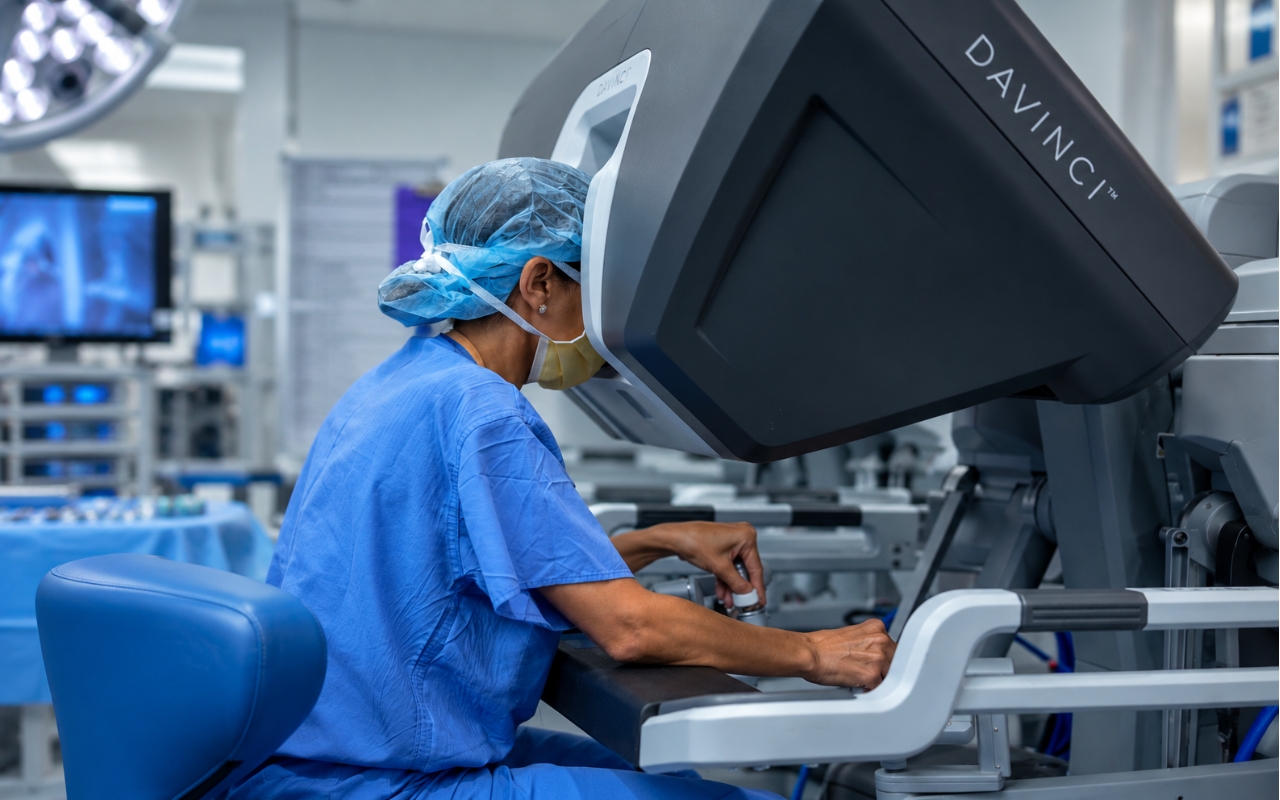
Since launching its robotic nipple-sparing mastectomy program in July 2026, MedStar Georgetown has treated seven patients using the da Vinci SP (Single Port) surgical system, and all seven have gone home the same day.
The hospital is among 10 nationwide performing nipple-sparing mastectomies using the single-port robotic system and, according to MedStar Health, the only hospital in the Washington, D.C., region offering the procedure.
Four Procedures Through One Small Incision
Lucy De La Cruz, MD, chief of the Breast Surgery program at MedStar Georgetown University Hospital and system chief of Breast Surgery at MedStar Health, performed the surgery with plastic surgeon Kenneth Fan, MD.
Through an incision concealed in the natural fold beneath the breast, surgeons removed breast tissue while preserving the nipples, performed a sentinel lymph node biopsy to determine whether cancer had spread, placed breast implants, and used nerve reconstruction techniques intended to restore sensation.
Unlike conventional nipple-sparing mastectomy, the robotic approach allows surgeons to work through a smaller opening using specialized instruments and a high-definition camera.
“One incision. One surgery. My patient woke up with her cancer treated and a scar she’ll barely see. Just hours later, she was back home recovering with her family,” said De La Cruz.
“This new approach allows patients to have their cancer treated, their breast reconstructed, their lymph nodes checked, and sensation preserved, all during one minimally invasive robotic procedure.”
Although the smaller incision may offer cosmetic advantages, researchers are still evaluating whether robotic mastectomy provides additional clinical benefits.
What Research Shows About Robotic Mastectomy
Early studies suggest robotic nipple-sparing mastectomy can achieve outcomes comparable to conventional surgery while potentially improving patient satisfaction and quality of life.
In a randomized trial involving 80 women, researchers found no significant difference in complication rates between robotic and conventional nipple-sparing mastectomy. However, robotic procedures took an average of one hour and 18 minutes longer.
Women who underwent robotic surgery reported significantly higher satisfaction with their breasts, along with better psychosocial, physical, and sexual well-being scores.
A separate U.S. multicenter randomized trial involving patients with early-stage breast cancer also found comparable short-term safety outcomes between robotic and open nipple-sparing mastectomy. Although some patient-reported outcomes favored robotic surgery, the differences were not statistically significant.
Despite these findings, evidence that robotic surgery reduces postoperative pain or shortens recovery remains limited.
“The strongest data so far support safety and quality of life, not pain or recovery time,” De La Cruz told Nurse Approved.
She noted that recovery at MedStar Georgetown is similar to that following conventional nipple-sparing mastectomy.
The hospital’s robotic program builds on an established surgical practice that performs more than 300 conventional nipple-sparing mastectomies annually.
Can Breast Sensation Be Preserved After Mastectomy?
One of the most promising aspects of the procedure is preserving or restoring breast sensation, which can be diminished or lost following mastectomy.
According to De La Cruz, breast sensation depends on several nerves, some of which surgeons can preserve during surgery.
“During mastectomy, open or robotic, we preserve the lateral and anterior intercostal nerve branches as much as possible,” she explained.
However, the central nerve branch supplying the nipple runs through breast tissue that must be removed during mastectomy.
To address this, the plastic surgery team uses a nerve graft to reconnect the nerve, with the goal of restoring nipple sensation.
Early research suggests the approach may help patients retain some sensation.
In a 2024 study published in JAMA Surgery, researchers at UT Southwestern Medical Center examined 20 women who underwent bilateral robotic nipple-sparing mastectomies. Researchers reported preservation of breast skin sensation in 95% of cases and nipple sensation in 55%.
MedStar Georgetown is measuring sensation in its own robotic surgery patients and plans to report findings as follow-up data become available.
Although the early results are encouraging, larger studies and longer follow-up are needed to determine how consistently sensation can be preserved or restored.
What Nurses Need to Know About Recovery
Despite the smaller incision, postoperative nursing care remains largely the same as for conventional nipple-sparing mastectomy and reconstruction.
Nurses play an important role in assessing surgical recovery, monitoring for complications, managing pain, and preparing patients for discharge.
According to De La Cruz, postoperative care focuses on pain management using primarily non-opioid medications, monitoring blood flow to the nipple and surrounding skin, and providing education about surgical drains, incision care, arm movement, and activity restrictions.
“The main difference is a smaller incision to care for,” she said.
Before patients can return home, their pain must be controlled with oral medication, vital signs must be stable, and they must be able to eat and walk. The nipple and surrounding skin must also demonstrate adequate blood flow.
Patients or their caregivers must be able to manage surgical drains at home.
These requirements underscore the importance of nursing assessments and clear discharge instructions, including when patients should contact their care team about potential complications.
Who Is Eligible for Robotic Nipple-Sparing Mastectomy?
The procedure is not appropriate for every patient undergoing breast cancer surgery.
According to MedStar Health, candidates generally include patients with small to moderate-sized breasts, a healthy body weight, and nipples positioned appropriately for the technique.
Patients with larger or significantly sagging breasts, as well as those diagnosed with inflammatory breast cancer, are not considered suitable candidates.
Understanding these eligibility requirements can help nurses educate patients about their surgical options and establish realistic expectations for treatment and recovery.
Although robotic nipple-sparing mastectomy offers a new surgical option for selected breast cancer patients, longer-term research is needed to evaluate cancer outcomes, sensation preservation, and patient satisfaction.
For nurses, the evolving technology reinforces the importance of postoperative assessment and patient education, particularly in helping patients understand the benefits and limitations of newer surgical approaches.
