

Estimated reading time: 5 minutes
Some of the hardest moments in Solomiya Veturys’ nursing career have been when nothing the medical team could do would change the outcome.
A child had died.
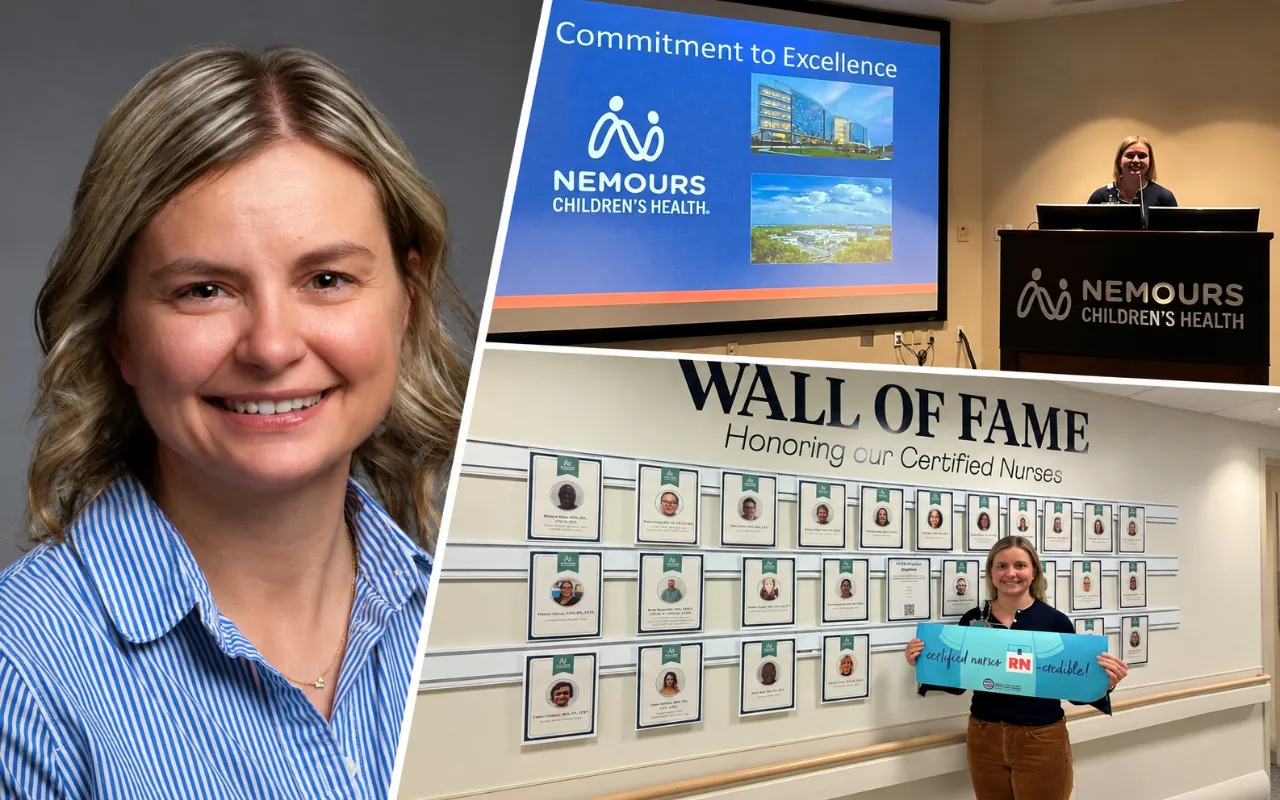
For Veturys, MSN, RN, CPEN, a pediatric emergency nurse who now serves as Trauma PI & Research Coordinator at Nemours Children’s Hospital in Wilmington, Delaware, those experiences changed how she thinks about caring for a patient and family.
“Some of the hardest moments I have had in my nursing career are traumatic deaths,” Veturys said. “These are especially hard because you can’t change the outcome, no matter how hard you try.”
But she realized there were still things a nurse could change.
“In these moments, I realized that while I may not be able to change the outcome, I can shape the family’s experience,” Veturys said. “I can stand by a parent’s side, bring them a cup of water, help make a phone call, or care for a sibling so the parents can grieve. In the worst possible time, you can still make a difference.”
That understanding gets at something Veturys believes makes pediatric emergency nursing unique: nurses care not only for a sick or injured child, but also for frightened parents and families navigating an experience they may never have imagined.
As Emergency Nurses Week is recognized Oct. 11–17, Veturys’ experience offers a look at a specialty that pairs clinical expertise with patience, trust, and support for an entire family during some of its most difficult moments.
Veturys was named the Board of Certification for Emergency Nursing’s 2026 Distinguished CPEN. Her career in pediatric emergency nursing, however, began after first caring for adults in the emergency department.
Once she made the transition, she knew she wanted to stay.
Want to see more Nurse Approved articles in your Google results? Add us as a preferred source.
Add Nurse Approved as apreferred source on Google
Caring for the Child Means Caring for the Family
Veturys moved into pediatric emergency care because she wanted to work in an environment where she felt supported to go above and beyond for patients.
She soon discovered that caring for children also meant caring for the people around them.
“Once I began working in pediatrics, I recognized how truly special this opportunity was,” Veturys said. “I was not only caring for the patient but also the family. It was a great feeling to help a family on their worst day, and I never wanted to leave.”
That family-centered approach can affect even routine aspects of emergency care.
A frightened child may not readily cooperate with an assessment, blood draw or other intervention. Before a nurse can complete the task, Veturys said, the nurse may first need to establish trust.
“I firmly believe that without developing trust it is difficult to care for your patients,” she said. “In the pediatric population, that may take time and patience.”
That can mean paying attention to a child’s interests while also listening to parents’ concerns and questions. Something as simple as noticing a stuffed animal or asking about a sport can help establish a connection.
“It is a great feeling to see a patient smile because I asked them about the sport they play for a stuffed animal they are carrying,” Veturys said. “When parents see that their child has formed a bond with their nurse, they feel more comfortable with the care they are providing.”
Why a Simple Task May Not Be Simple
People outside healthcare may not realize how much work goes into what appears to be a straightforward clinical task.
“What could be a seemingly easy task can take a lot of conversation and trust-building,” Veturys said.
Blood work is one example. Veturys said discussing the care plan and bringing in additional support for parents can make the experience less overwhelming.
“I think it’s difficult to truly understand how unique pediatric emergency nursing is,” she said. “There are so many special considerations in caring for the pediatric population.”
The work can also stay with nurses emotionally.
“It’s also a difficult job,” Veturys said. “There are situations that really stick with you and impact you as an individual and a nurse.”
For Veturys, traumatic deaths showed that when clinical interventions cannot alter an outcome, nursing care can take another form.
Helping Nurses Believe They Are Ready
Veturys has since moved into a leadership role, where supporting frontline nurses has become another part of her work.
She believes continuous learning and professional growth begin with leaders who invest in their teams.
One barrier she has heard from nurses considering specialty certification is the fear that they will not succeed. Veturys believes a leader’s encouragement can help change that perception.
“When a nurse is approached by leadership and is told ‘you are a phenomenal nurse, and you have the knowledge to be successful in obtaining certification,’ it lights a spark in them,” Veturys said.“They begin to believe that they can achieve this certification and work towards that goal.”
For her, mentorship includes providing that encouragement.
“I believe as a leader, a part of mentorship is being their cheerleader,” she said.
Veturys sees investments in skill development, critical thinking, continued education, and specialty certification as connected to patient care.
“These investments have direct impacts on the care provided to our patients and families,” she said.
What an Exceptional Pediatric Emergency Nurse Brings
For Veturys, pediatric emergency nursing requires more than technical ability.
“Exceptional pediatric nurses embody kindness, compassion, patience, and dedication to their profession,” she said.
She also sees continued education as part of that responsibility.
“These nurses understand the value of specialty certification beyond passing an exam,” Veturys said. “They are committed to ongoing improvements in quality, safety, and workflow to improve patient outcomes.”
Those qualities matter in an environment where nurses may need to move between clinical care, communicating with parents, and building enough trust with a frightened child to provide necessary treatment.
They also matter when there is no successful clinical outcome to celebrate.
‘I Am Only Successful When My Team Is Successful’
When Veturys considers what she wants colleagues and nurses she has mentored to remember about her career, she returns to how nurses support one another.
“One of the things I never understood is why nurses eat their young,” she said. “I believe that helping others grow in the profession and achieve professional goals is what makes a great mentorship.”
For Veturys, strengthening the nursing team affects the children and families at the center of pediatric emergency care.
“When everyone collaborates and works as a team, we learn from each other and improve the care we provide to our patients,” she said. “That is when we are strongest. I am only successful when my team is successful.”
