

Estimated reading time: 7 minutes
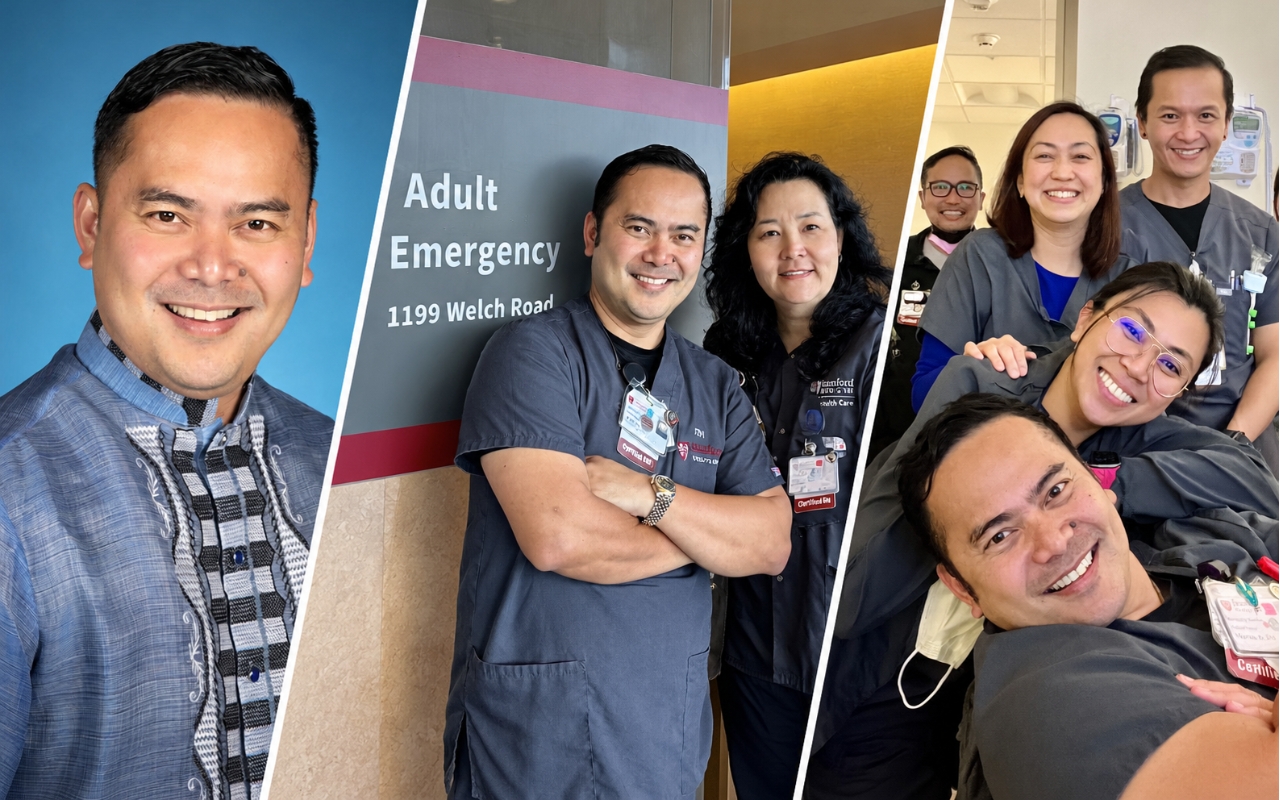
When Marvin Delfin, MSN, MAN, RN, CNRN, CPEN, CEN, CCRN, TCRN, CFRN, CTRN, CBRN, CNML, FSIEN, and his colleagues set out to encourage more emergency nurses at Stanford Health Care to pursue specialty certification, they did more than offer review courses.
They asked nurses what was stopping them.
In 2019, the emergency departments had 61 certified nurses. Delfin and his colleagues formed a certification champions team to identify barriers and help nurses prepare. They introduced review courses, study groups, shared resources, and “Testy Tuesday” emails. They also addressed financial barriers through the BCEN Voucher Program.
Then came a more individualized approach: “Certification Rounding.”
During emergency department downtimes, the team talked with nurses about their study habits, learning styles, and fears, then offered encouragement and study approaches tailored to each nurse.
Today, 185 nurses in the emergency departments hold specialty certifications, the highest number at Delfin’s facility.
For Delfin, a Clinical Nurse IV and Unit Educator in the Marc and Laura Andreessen Adult and Pediatric Emergency Departments at Stanford Health Care in Stanford, California, the effort reflects a larger philosophy about nursing education and mentorship.
“For me, mentorship is not about creating someone who becomes like me,” Delfin said. “It is about helping someone discover who they can become.”
Delfin’s work earned him the Board of Certification for Emergency Nursing’s 2025 Distinguished CEN Award. But his interest in developing other nurses began long before that recognition and extends beyond Stanford to internationally educated nurses worldwide.
As Emergency Nurses Week is recognized Oct. 11–17, his experience offers one example of how nurses can help build a culture of professional development in the emergency department by first understanding what may be preventing colleagues from taking the next step.
Want to see more Nurse Approved articles in your Google results? Add us as a preferred source.
Add Nurse Approved as apreferred source on Google
Asking Nurses What Was Holding Them Back
Before coming to the United States, Delfin was a clinical instructor in the Philippines. Later, as an internationally educated nurse entering a new healthcare system, he faced uncertainty of his own.
“When I first came to the United States, I carried more than my nursing experience,” Delfin said. “I carried fears, uncertainty, and self-doubt. I questioned whether I was good enough, whether I belonged, and whether I could truly succeed in a new healthcare system and a new country.”
Other people helped change that.
“Fortunately, people believed in me before I fully believed in myself,” he said. “Someone encouraged me. Someone answered my questions. Someone gave me an opportunity. Someone reminded me that being unfamiliar did not mean being incapable.”
Those experiences shaped the kind of mentor he wanted to become.
Today, Delfin said he tries to give other nurses what others once gave him: patience, encouragement, honesty, and someone who believes in them.
The impact can extend beyond one nurse earning a credential.
“And the most rewarding part is watching nurses I once mentored become certified nurses, leaders, advocates, and mentors themselves,” Delfin said. “That is when I know the investment has multiplied.”
What Emergency Nursing Demands
Delfin’s emphasis on continued learning is rooted in the realities of emergency nursing, where nurses may care for patients across the lifespan and with widely different conditions during the same shift.
“What I love most about emergency nursing is that no two moments are ever the same,” Delfin said. “In the Emergency Department, you never know who will walk through the doors—a frightened child, a critically ill older adult, a trauma patient, or someone whose condition is still a mystery.”
That unpredictability requires nurses to continuously assess, prioritize, and make decisions, sometimes without complete information.
“In emergency nursing, critical thinking is not simply knowing what to do—it is knowing what cannot wait,” he said.
Delfin also emphasizes teamwork. Emergency department clinicians may come from different backgrounds, cultures, disciplines, and levels of experience, but patient care depends on their ability to work together.
“Great teams are not built because everyone is the same; they are built because everyone brings something valuable to the table,” he said.
For Delfin, an exceptional emergency nurse combines that teamwork with clinical expertise, critical thinking, advocacy and compassion.
“Excellence in emergency nursing is not simply knowing what to do—it is noticing, caring, advocating, and standing together when it matters most,” he said.
Why Waiting Doesn’t Mean Forgotten
There is another part of emergency nursing Delfin wishes patients and families better understood: what is happening when they are waiting.
Emergency nurses may be administering medications, communicating with physicians, responding to changes in patients’ conditions, and caring for multiple people at once. Patients may not see how those priorities are determined.
“I also wish people understood that when a patient waits, it does not mean we are ignoring them or that we do not care,” Delfin said. “Emergency departments must prioritize patients according to the severity and urgency of their conditions.”
That can mean someone who arrived later receives care first because their condition is more immediately life-threatening.
“Waiting does not mean forgotten,” Delfin said. “Sometimes, it means we are making sure the sickest patient gets the care they need first.”
The work also carries an emotional weight that patients may not see.
“We see fear in a patient’s eyes. We hear a family’s worry. We experience the weight of difficult outcomes,” Delfin said. “We celebrate when someone gets better, and we carry the moments when things do not go as we hoped.”
Three Experiences That Changed How He Practices
Delfin’s approach to advocacy and mentorship has also been shaped by experiences that did not end the way he wanted.
While working in another country, he cared for a father who had promised his daughter he would get better and attend her graduation. Delfin recognized signs of serious deterioration and advocated for urgent intervention, including massive blood transfusion, but said his concerns were dismissed.
The patient later experienced cardiac arrest after being transferred to a regular bed. Despite resuscitation efforts, he died.
“It taught me that advocacy is not disrespect—it is responsibility,” Delfin said. “Today, when I teach nurses, I tell them, ‘If something does not look right, speak up. Your voice may be the voice your patient cannot use.’”
A second lesson came during COVID-19, when visitor restrictions separated critically ill patients from their families.
Delfin cared for a seriously ill mother whose family could not be physically present. He became the connection between the patient and her family and remained with her during her final moments.
“It reminded me that sometimes our most important intervention is simply being there,” he said. “Policies are necessary, but humanity must always have a place within them.”
A third experience came from losses within his nursing community. Delfin said three coworkers died by suicide, which led him to make a conscious effort to check on colleagues, listen without judgment, and remind people that they matter.
“Nursing is not only about saving lives,” Delfin said. “Sometimes, it is about giving people a voice, giving families a connection, and giving another human being the reassurance that they are not alone.”
For Internationally Educated Nurses, Experience Is an Asset
Delfin’s journey from the Philippines to emergency nursing in the United States also informs his message to internationally educated nurses.
Coming from the Philippines and working across different countries and healthcare systems required him to adapt and, at times, prove himself while learning a new environment.
“You do not have to forget where you came from to become who you are meant to be,” Delfin said.
He wants internationally educated nurses entering emergency nursing to recognize the value they already bring.
“Your accent, your journey, your previous experiences, and the challenges you overcame are not weaknesses,” Delfin said. “They are part of your strength. You may have to learn a new system, a new culture, or a different way of practicing—but you do not have to leave your identity behind to belong.”
For nurses beginning in emergency care, his advice is equally straightforward.
“Be brave enough to begin, humble enough to learn, and curious enough to keep growing,” he said.
Delfin remembers entering the U.S. healthcare system with both ambition and self-doubt. What helped, he said, was realizing he did not need to know everything immediately.
“Stay curious. Ask questions. Seek feedback. Read. Observe. Listen to experienced nurses. Never be afraid to say, ‘I don’t know, but I want to learn,’” Delfin said. “Curiosity keeps a nurse growing; humility keeps a nurse teachable.”
That philosophy circles back to the work Delfin and his colleagues began at Stanford years ago. The effort can be measured partly in numbers, from 61 certified nurses to 185, but for Delfin, its significance lies in what happens after nurses begin believing in their own potential.
“I do not measure my legacy by how many people I have helped—it is by how many people I have helped believe that they can help others, too.”
