


Estimated reading time: 3 minutes
Patients who leave a healthcare visit with a prescription in hand increasingly face another hurdle before they can start a new medication: getting it approved by their insurance plan.
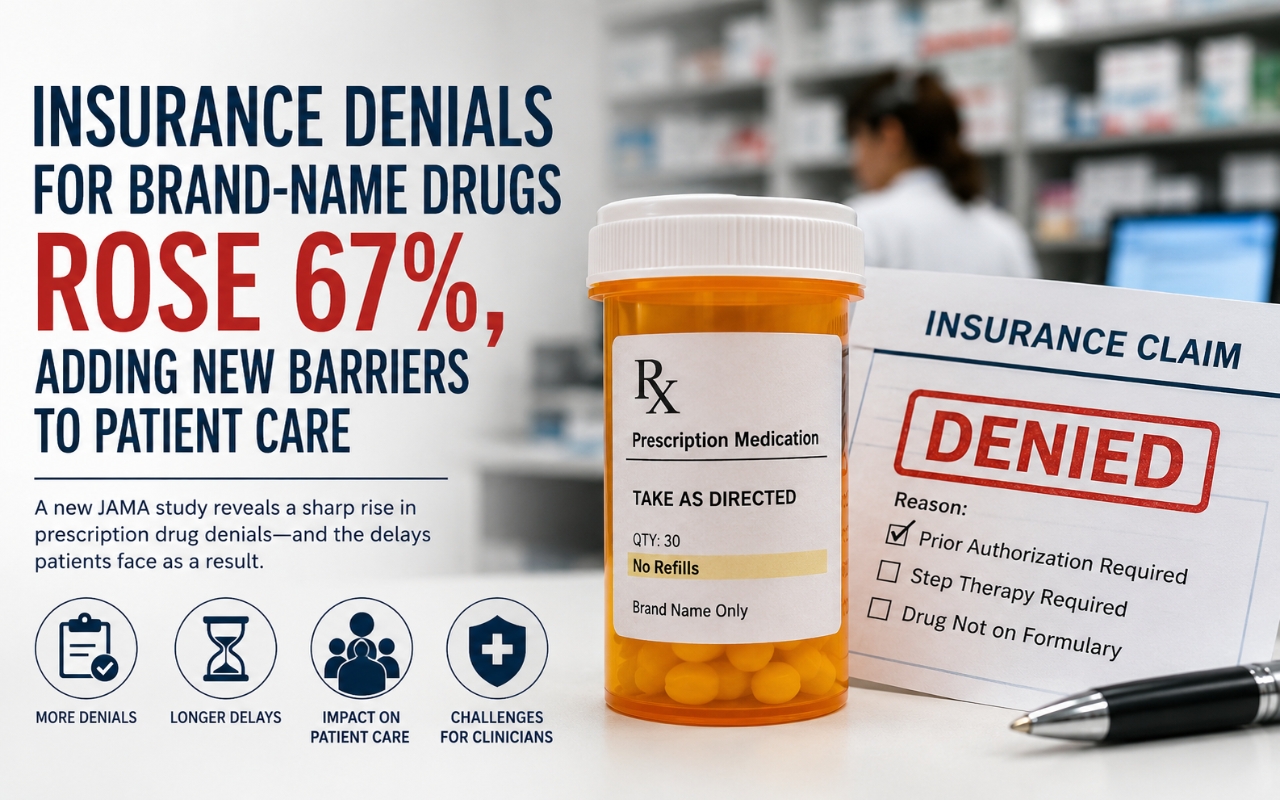
A new JAMA study found insurance denials for brand-name prescription drugs without generic alternatives rose 67% between 2018 and 2024, suggesting that prior authorization, formulary exclusions, and other coverage restrictions may delay access to prescribed medications.
Researchers from the Johns Hopkins Bloomberg School of Public Health and the American Enterprise Institute found insurers rejected more than four in 10 initial attempts to fill these prescriptions in 2024, up from about one in four in 2018.
The findings also highlight a challenge across the healthcare system. Patients often leave a clinic, hospital, or healthcare provider’s office expecting to begin therapy, only to discover at the pharmacy counter that additional coverage requirements stand in the way. For nurses, those delays can complicate patient education, care coordination, and follow-up.
Overall, initial rejection rates increased from 24.3% in 2018 to 40.7% during the study period. Among those denials, nearly half (48.4%) were not followed by a fill of either the prescribed medication or another drug in the same therapeutic class within 90 days. Patients who ultimately received treatment filled their prescriptions an average of 12 days after the initial rejection.
Nearly one-third of initial denials stemmed from formulary exclusions or utilization management requirements, including prior authorization and step therapy, which require patients to meet additional coverage requirements before the prescribed medication is approved.
Researchers identified expanding utilization management policies as the primary driver of rising denials, particularly in commercial insurance and Medicaid managed care plans.
“We found that insurance restrictions are increasingly shaping whether and when patients receive medications their clinicians prescribe,” said Joseph Levy, PhD, assistant professor in the Johns Hopkins Bloomberg School of Public Health’s Department of Health Policy and Management and lead author of the study. “While these policies may help control drug spending, they can also create meaningful barriers to timely treatment and place growing administrative burdens on patients, pharmacists, and clinicians.”
GLP-1 Weight Loss Drugs Saw the Highest Rejection Rates
Denial rates varied substantially across therapeutic classes.
Incretin-based therapies for weight loss, including GLP-1 receptor agonists and related medications, experienced the highest initial rejection rate at 85%.
By comparison, oral anticoagulants had an initial rejection rate of just 6.7%.
Rejection rates also varied by insurance type. Marketplace exchange plans and Medicaid managed care plans had the highest rejection rates, while Medicare plans had the lowest.
Among prescriptions that were initially denied, 39% were eventually filled with the originally prescribed medication within 90 days, while another 13% were filled with a different medication in the same therapeutic class.
Why the Findings Matter for Clinicians
Because the study examined what happened after prescriptions reached the pharmacy counter, the findings suggest clinicians may not always know whether a medication is excluded from a patient’s formulary or requires prior authorization when it is prescribed.
The authors said providing clinicians with better real-time coverage information during prescribing, along with simpler prior authorization processes, could help reduce delays in care. They noted, however, that those reforms involve trade-offs because formulary management tools also help insurers negotiate drug prices, encourage the use of preferred therapies, and support more cost-effective prescribing.
Researchers analyzed more than 2 million first-time prescription fill attempts among 1.17 million people between January 2018 and September 2024 using IQVIA’s Formulary Impact Analyzer, a national database of anonymized outpatient pharmacy claims representing all major U.S. insurance markets.
“As utilization management becomes more common, it’s important to better understand how these policies affect real-world treatment initiation and patients’ access to medicines,” Levy said.
