


Estimated reading time: 4 minutes
Senator Lindsey Graham, the longtime South Carolina Republican and one of the most recognizable figures in American politics, died Saturday at age 71, according to a statement from his office.
The statement said preliminary findings from the Office of the Chief Medical Examiner determined that his death was caused by “aortic dissection due to arteriosclerotic cardiovascular disease,” identifying underlying hardening and disease of the arteries as a contributing condition.
The Office of the Chief Medical Examiner said the death certificate remains pending while comprehensive toxicological and microscopic testing are completed. Officials noted that these tests are routinely ordered whenever an autopsy is performed in the District of Columbia and that the death certificate will be amended once the investigation concludes and the cause and manner of death are formally certified.
What Is an Aortic Dissection?
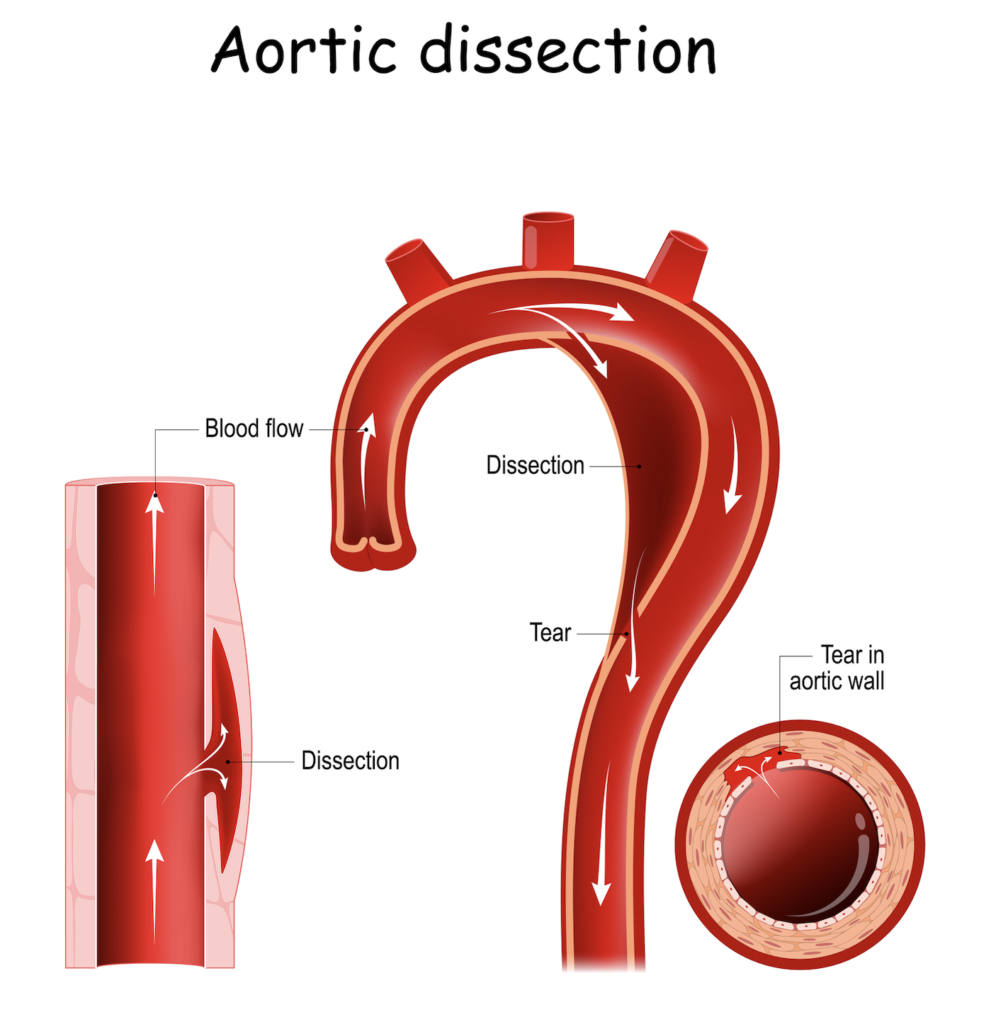
Illustration showing an aortic dissection. A tear in the innermost layer of the aorta allows blood to flow between the layers of the aortic wall. The image includes the aortic arch and longitudinal and cross-sectional views of the affected blood vessel.
The sudden nature of Graham’s death has drawn attention to one of medicine’s most dangerous cardiovascular emergencies. An aortic dissection occurs when a tear develops in the inner layer of the aorta, the body’s largest artery. Blood then forces its way between the layers of the vessel wall, potentially interrupting blood flow to major organs or causing the aorta to rupture.
How Common Is Aortic Dissection?
Although relatively uncommon, aortic dissections are among the most lethal cardiovascular emergencies. Recent epidemiologic studies estimate that acute aortic dissection affects approximately 4 to 5 people per 100,000 each year, making it a rare condition despite its high mortality. Meanwhile, advocacy organizations such as the John Ritter Foundation for Aortic Health estimate that roughly 20,000 Americans experience an aortic dissection each year. The condition occurs most frequently in adults between the ages of 60 and 80 years and is more common in men than women.
The prognosis can be grim if the condition is not recognized and treated quickly. Acute Type A aortic dissection is considered one of the deadliest cardiovascular emergencies. Data from the International Registry of Acute Aortic Dissection (IRAD) show that mortality increases by approximately 1% to 2% for every hour treatment is delayed after symptom onset, and about half of untreated patients die within the first 48 hours. Early recognition and emergency intervention are therefore critical.
Who Is Most at Risk for an Aortic Dissection?
At 71 years old, Graham fell within one of the highest-risk age groups for an aortic dissection. The medical examiner’s finding of arteriosclerotic cardiovascular disease suggests that changes in his blood vessels had likely been developing over many years.
Several factors are associated with an increased risk of aortic dissection, including uncontrolled hypertension, atherosclerosis, smoking history, pre-existing aneurysms, and certain inherited connective tissue disorders such as Marfan syndrome and Ehlers-Danlos syndrome. According to data from the International Registry of Acute Aortic Dissection (IRAD), approximately 72% of patients with acute aortic dissection have a history of hypertension, making high blood pressure one of the most significant modifiable risk factors.
What Are the Symptoms of an Aortic Dissection?
An aortic dissection often presents with abrupt, severe symptoms. Patients may experience sudden chest pain, severe back pain, shortness of breath, fainting, or stroke-like symptoms such as weakness or difficulty speaking. However, not every patient presents in a textbook manner. Some individuals may initially complain only of feeling unwell, experiencing unusual fatigue, or having a vague sense that something is seriously wrong.
The condition can also be mistaken for a heart attack or other medical emergencies, contributing to delays in diagnosis and treatment. For healthcare professionals, maintaining a high index of suspicion is essential, particularly in older adults with cardiovascular risk factors.
Why Lindsey Graham’s Death is a Reminder About Cardiovascular Health
Graham’s death is a sobering reminder that serious cardiovascular disease can remain silent for years before presenting as a catastrophic event. Conditions such as hypertension and atherosclerosis often progress gradually and may not cause symptoms until significant damage has already occurred.
For nurses and other clinicians, the senator’s sudden passing reinforces the importance of cardiovascular risk reduction, patient education, and early recognition of warning signs that require immediate medical evaluation. While aortic dissection is rare, it remains a true medical emergency in which every minute can make the difference between life and death.
