

Estimated reading time: 6 minutes
Kara Smith remembers standing outside a patient’s door with a master key, knowing she was required to enter but having no idea what she might find on the other side.
Her only safety tool was a phone.
“I was ill-equipped at the time with nothing but a phone that is difficult to access if stressed or under duress,” said Smith, LCMFT, owner of Maryland Marriage & Family Therapy Centers.
It was not her only encounter with danger during more than two decades working in homeless shelters, substance abuse programs and private practice. Smith has also called 911 in situations involving people who were intoxicated, delusional and threatening.
“Those experiences make you realize how quickly a helping professional can become the person who needs help,” she told Nurse Approved.
Smith’s experiences point to a workplace safety challenge that extends beyond therapists. Psychiatric nurses, social workers, home healthcare workers, substance use counselors, case managers, hospice workers and other clinicians may also provide care in private rooms, patients’ homes and community settings without immediate access to security or nearby colleagues.
Those experiences raise a broader concern about whether clinicians working without immediate backup have adequate protections when an encounter becomes unsafe.
The Safety Risks Behind the Therapy Room Door
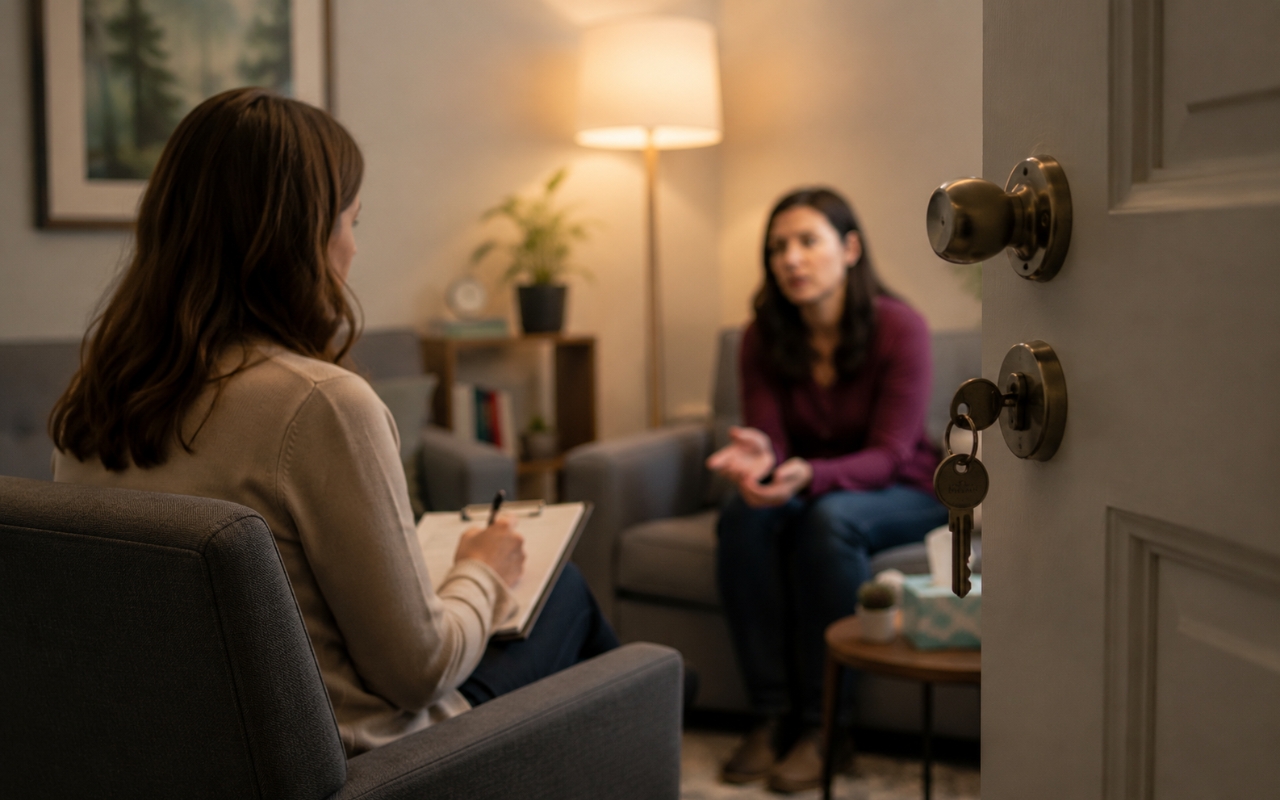
Therapy may be perceived as two people talking in a quiet office, and Smith said that accurately describes much of private practice. But clinicians also work with people experiencing psychiatric disorders, crises, intoxication and intense emotional distress.
Family and marriage therapy can become contentious, and someone experiencing a psychiatric crisis may arrive without an appointment. Risk can also increase during evening appointments, home visits or when clinicians work alone.
“In most situations danger does not arise, but this is not always going to be the case, and we need to be prepared,” Smith said.
Research suggests these experiences are not isolated. In a study of North American psychologists, 71% reported experiencing harassment by a client at some point in their professional careers. Twenty-one percent reported being threatened, 14% reported being stalked and 2.5% said they had been physically attacked.
Smith said younger and newer therapists are often in particularly vulnerable jobs and may not fully understand the risks they face.
Therapists are trained to recognize warning signs, assess risk, maintain boundaries and use de-escalation techniques. But Smith argues those skills cannot eliminate every threat.
“Even the best-trained clinician cannot control every person or every situation,” she said.
For years, Smith said one of the few safety instructions she received was to position her chair close to the door so she could escape if necessary.
“A chair near the door is not a safety plan.”
When De-Escalation Isn’t Enough
That distinction has implications beyond behavioral health practices.
Nurses and other healthcare professionals regularly care for people during periods of illness, stress, confusion and crisis. Smith believes healthcare organizations should examine what happens at the precise moment a situation moves beyond what an individual clinician can safely manage.
“The broader healthcare community is in the same boat as we are if not facing bigger safety challenges,” Smith said. “Nurses, social workers, home healthcare workers, substance use counselors, case managers, hospice workers, emergency department staff, physicians, nursing home employees and other healthcare professionals regularly work with people in vulnerable, stressful and unpredictable situations. Even when a worker does everything correctly, a situation can turn dangerous in seconds.”
For Smith, a safety plan should address several practical questions.
“Can they discreetly call for help? Will the right people know where they are? How quickly can someone respond?”
Safety Systems May Not Match Where Care Happens
One gap Smith sees is the difference between safety infrastructure in large healthcare facilities and the environments where many behavioral health and community-based clinicians actually work.
“Most workplace safety systems are built around large hospitals or facilities with security teams, nurses’ stations and other employees nearby,” she said. “They do not reflect the reality of a therapist sitting alone with a client behind a closed door or driving alone to someone’s home.”
Smith said organizations should assess risks associated with private offices, evening appointments, parking lots, home visits and employees working alone rather than relying primarily on individual vigilance.
“We have treated therapist safety as a matter of personal judgment: Sit near the exit. Stay alert. Trust your instincts. Those are precautions, not protections.”
She believes every safety plan should ultimately answer one question: When a clinician realizes they are in danger, how will they quickly and discreetly get help?
How One Practice Addressed the Gap
When Smith opened Maryland Marriage & Family Therapy Centers, she decided she did not want her employees to have the same experience she had earlier in her career.
“I feel very responsible for the safety of people who work for me, and I did not want them to have that same experience I had,” she said.
Smith began using a wearable panic button made by Silent Beacon and later provided them to therapists on her team. She now has a formal partnership with the company.
Smith said the device can call 911, alert designated emergency contacts and share the user’s live GPS location when activated. It can also initiate two-way communication, while a silent mode allows an alert to be sent discreetly.
“In an escalating situation, unlocking a phone, dialing 911 and explaining where you are may not be realistic,” Smith said. “It may also draw attention to what you are doing and make the situation worse.”
No one in Smith’s practice has had to use the device during an emergency, she said. For Smith, the device provides an additional layer of protection if a situation becomes unsafe.
“Thankfully, no one in my practice has had to use Silent Beacon during an emergency, but there is peace in knowing it is there for us.”
What Healthcare Leaders Should Ask
For healthcare organizations, the question is whether a workplace safety plan works everywhere employees actually provide care.
For nurses, that can include environments far removed from a traditional nurses’ station. Home healthcare, hospice, behavioral health and community-based care can put clinicians in circumstances where immediate backup may not be nearby.
Smith wants employers to assess the actual risks workers face, establish clear emergency procedures and make sure employees can summon help. She also believes professional organizations should make clinician safety a greater part of training and continuing education.
“We need to stop treating clinician safety as optional,” she said. “In my 25 years in the field, I have never heard a conversation about safety in any of the practices or centers I have worked at other than put your chair by the door so you can escape if needed.”
Her message to healthcare leaders is equally direct.
“Do not wait for a tragedy to expose the holes in your safety plan.”
Training, prevention and de-escalation remain essential, Smith said, but organizations also need a plan for when those measures are no longer enough.
“Every healthcare worker should have a fast, discreet and reliable way to call for help when a situation moves beyond what they can safely manage.”
