


Estimated reading time: 4 minutes
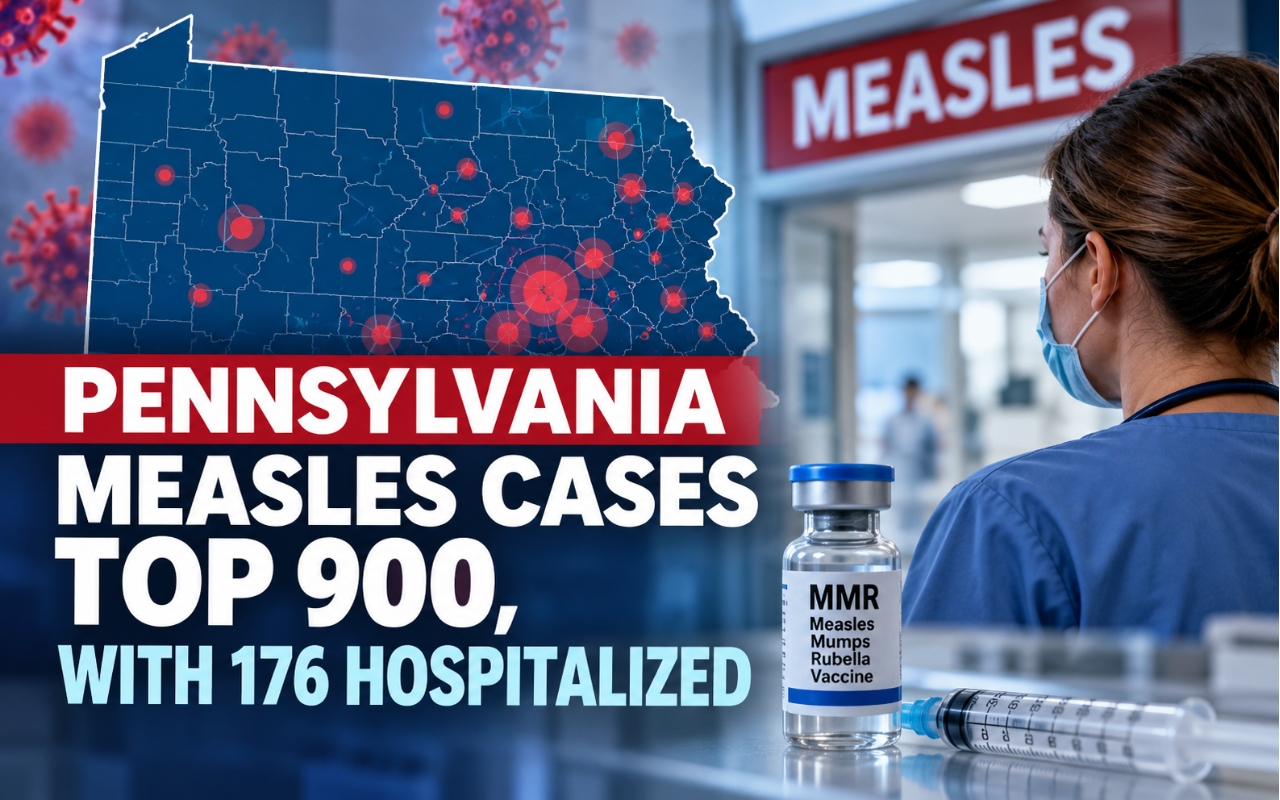
Pennsylvania has surpassed 900 measles cases this year, with infections reported across more than half the state’s counties and at least 176 people hospitalized. The outbreak is also raising concerns for nurses and other frontline healthcare professionals as community transmission expands.
The Pennsylvania Department of Health reported 13 new confirmed cases Monday, bringing the state’s 2026 total to 903 as of Sept. 28. Cases have been recorded in 39 of Pennsylvania’s 67 counties, and four measles-associated deaths have been reported.
For nurses and other frontline healthcare professionals, the growing outbreak raises another concern. At least 11 Pennsylvania counties show evidence of community transmission, meaning infections are spreading locally without a known travel history or identifiable source.
That makes recognizing potential cases and preventing additional exposures in healthcare settings increasingly important as the outbreak continues.
Four Deaths Reported in Pennsylvania
The four measles-associated deaths reported in Pennsylvania include two unvaccinated adults, ages 18 and 40, and two infants who were too young to receive the measles, mumps, and rubella vaccine, according to the state health department.
Just four of the state’s 903 cases, fewer than 1%, have occurred among people who were fully vaccinated with the MMR vaccine, according to the Department of Health.
Adults account for a substantial portion of the outbreak, with people ages 25 to 49 representing the largest group of cases, followed by those ages 18 to 24.
Lancaster County has recorded 363 cases, the highest total in the state, followed by Mifflin County with 105.
Nearly One in Five Pennsylvania Measles Cases Has Involved Hospitalization
At least 176 people with measles have been hospitalized in Pennsylvania so far this year, representing nearly one in five of the state’s reported cases.
The outbreak is part of a broader rise in measles infections nationwide. More than 3,600 cases have been reported across 45 states and Washington, D.C., in 2026, according to the Centers for Disease Control and Prevention.
The CDC has reported one measles death nationally this year, although the agency has not identified where it occurred and notes that the number may change.
MMR Vaccination Rates Remain Below Pre-Pandemic Levels
The Pennsylvania Department of Health has administered more than 8,300 doses of MMR vaccine so far this year. Vaccinations peaked in August, when approximately 3,500 doses were administered, before about 2,500 more were given in September.
The CDC recommends two doses of MMR vaccine, with the first routinely given at ages 12 to 15 months and the second between ages 4 and 6 years. Infants ages 6 to 11 months who are traveling internationally may need an additional dose.
According to the CDC, one dose of the MMR vaccine is 93% effective at preventing measles, while two doses are 97% effective.
National vaccination coverage, however, remains below pre-pandemic levels. During the 2025-2026 school year, 92.4% of kindergartners had received the MMR vaccine, compared with 95.2% during the 2019-2020 school year.
What Nurses Should Know About Possible Measles Exposure
As community transmission expands, healthcare professionals may encounter patients who have been exposed before they realize they are at risk.
ABC News medical contributor Dr. Alok Patel cautioned that people who know they have been exposed should contact a healthcare professional before showing up at a healthcare facility.
“If you’ve been exposed, it is important to talk to a healthcare professional, but don’t go into an urgent care or an ER because you may be inevitably spreading it to other vulnerable people,” Patel told ABC News Live on Friday.
“People who have been exposed may be instructed to quarantine or keep really close eye on their symptoms for up to 21 days because that’s how long it can really take for measles to show itself and you could potentially spread and infect others without even knowing it,” Patel said.
Pennsylvania health officials advise healthcare providers to immediately report suspected measles cases to the state or their local health department. The state also maintains infection-control and clinical guidance for healthcare professionals responding to possible cases.
For nurses, the latest numbers underscore the potential for measles to appear more often in routine patient care, especially as community transmission makes it possible for patients to have been exposed without a known connection to travel or an infected person.
Editor’s note: Measles case counts are changing rapidly as new infections are confirmed. For the latest Pennsylvania totals, visit the Pennsylvania Department of Health’s measles dashboard and outbreak information page.
