

Estimated reading time: 5 minutes
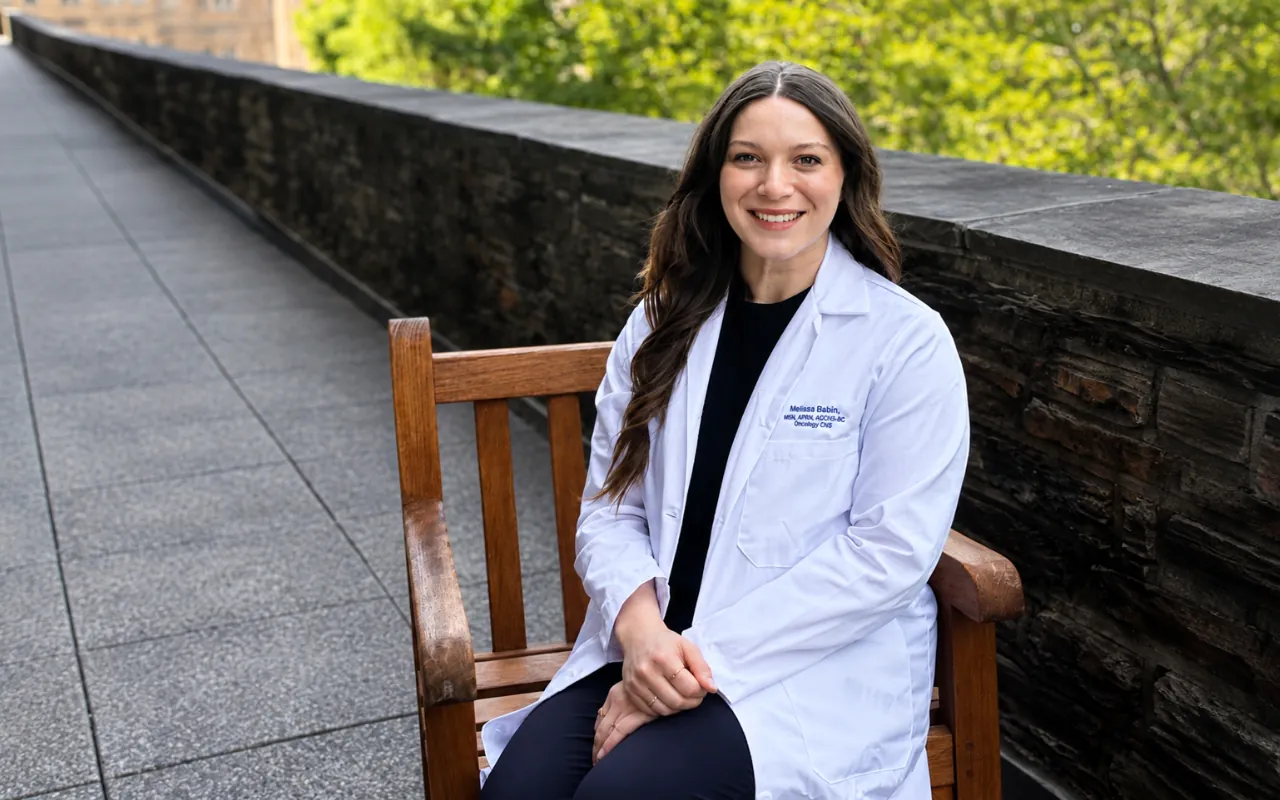
When Melissa Babin, MSN, APRN, AGCNS-BC, arrived at Duke Cancer Institute six months ago, she didn’t start by deciding what needed to change.
She began by watching nurses work.
For CNS Week, Nurse Approved is highlighting clinical nurse specialists whose work shows how the role can improve care in practice. Babin’s approach offers one example: examining nursing work at the bedside and across the healthcare system to identify barriers to patient care and opportunities for improvement.
Babin, an oncology clinical nurse specialist, spent 11 full shifts embedded in nursing departments, sometimes for eight hours and sometimes for 12. She met with 24 stakeholders, examined nursing and oncology literature, and studied workflows involving treatment delays, staffing, patient education, and pressure-injury prevention.
Her goal was to understand what made it harder for nurses to provide the care patients needed and where system changes could help.
In one project examining treatment delays, Babin said the team measured a substantial amount of nursing time being spent on a task that did not add value to patient care.
“Waste and overburden were huge!” Babin said. “We were able to capture a large measurement of time spent on a non-value-added task being completed by nurses.”
The findings are now being used to redefine who owns certain responsibilities, eliminate paper-based steps, and streamline communication and escalation pathways. The expected impact is fewer treatment delays, improved clinic readiness, and more nursing capacity for patient education, symptom management, and care coordination.
“Rather than asking nurses to work harder, we’re redesigning the system to work better, which is my favorite part of the CNS role,” Babin said.
Want to see more Nurse Approved articles in your Google results? Add us as a preferred source.
Add Nurse Approved as apreferred source on Google
Finding Problems Before Trying to Fix Them
Babin’s approach illustrates a less visible part of the clinical nurse specialist role: determining not only what is going wrong, but why.
“Assess first is the golden rule of nursing, and this is true for the CNS as well,” Babin said.
Before setting priorities at Duke, Babin conducted a current-state assessment. She first used artificial intelligence to identify 10 prominent topics in oncology nursing, instructing the tool to reference scientific publications and nursing oncology sources, including the Oncology Nursing Society.
With her team leader and preceptor, she met with stakeholders and asked about their roles, work environments, challenges, and strategic goals.
Next, she went to the frontline.
During 11 immersive nursing shifts, Babin observed staff and used predetermined questions to examine workflows, risks, patient-reported outcomes, shared decision-making, safe practice, and workplace culture.
She took detailed notes and later used AI to synthesize them, instructing the tool to identify recurrent themes, concerns, and gaps using only the notes she had collected.
The findings became an opportunities crosswalk that Babin continues to update as she works with leaders and learns more about the organization.
Her approach also shows one way a CNS can use AI while setting boundaries around what the technology analyzes. Babin limited the literature search to specified nursing sources and later instructed the system to identify themes only from the observations she had collected.
Looking Beyond the Numbers in Nurse Staffing
That assessment has also influenced conversations about how oncology nurse staffing needs are evaluated.
Traditional measures such as census and nurse-to-patient ratios can quantify workload, but Babin said they may not capture all the work involved in caring for patients with cancer.
“A CNS brings both systems and clinical practice perspectives that go beyond the census count and typically used ratios,” Babin said. “Numbers tell us how many patients are present, but they don’t fully capture the complexity of the work required to provide care for those patients safely, especially the psychosocial components that come with a disease group such as cancer.”
That includes symptom triage, urgent clinical issues, multidisciplinary care coordination, patient education, and helping patients navigate barriers to treatment.
Those responsibilities can be difficult to capture in traditional staffing metrics. At the same time, Babin said nurses may spend substantial time on operational or administrative work that could be standardized, delegated, or redesigned.
“Staffing challenges are not always solved by adding staff; sometimes they are solved by optimizing role utilization,” Babin said.
Working with a nurse manager, Babin said the team reframed the staffing discussion from “How many nurses do we have?” to “What work needs to be done, who is best positioned to do it, and what models or processes will produce the safest and highest-value outcomes for patients and staff?”
That helped identify opportunities to remove operational work from RN workflows and focus staffing discussions more closely on patient complexity, care coordination needs, and professional nursing practice.
Rethinking Pressure-Injury Risk in Oncology Patients
Babin has applied a similar approach to hospital-acquired pressure injuries on a mixed medicine unit that cares for many oncology patients.
Working with an inpatient nurse manager, she examined whether prevention practices adequately accounted for clinical risks affecting patients with cancer, including systemic inflammation, treatment-related skin changes, deconditioning, and poor physiologic reserve.
Through staff observations, data review, and coaching conversations, they identified opportunities to strengthen risk assessment and help nurses recognize how cancer diagnoses and treatments can affect skin integrity.
They can now incorporate those considerations into workflows and standard work.
“The change is a shift from simply checking whether prevention steps are completed to improving how nurses assess risk and make clinical decisions, creating a more reliable prevention process for a particularly vulnerable patient population,” Babin said.
Making It Easier for Nurses to Do Nursing Work
Babin is also working to standardize patient education across the cancer center so team members can access accurate information more quickly when patients need it.
Although the projects address different clinical and operational problems, Babin sees a common purpose behind them.
“I’d tell them that a CNS works on the problems that get in the way of great nursing care,” Babin said. “I look at patient outcomes, nursing practice, and healthcare systems all at the same time and ask, ‘What’s making it harder for nurses to do their best work, and what can we do about it?’”
For Babin, identifying the problem is only the beginning.
“The CNS difference is that we don’t stop at identifying what’s wrong,” Babin said. “We determine how that gap affects patient outcomes, nursing practice, and system performance, then work across all three domains to create change.”
“That’s where the CNS role is unique,” Babin said. “We connect systems improvement directly back to nursing practice and patient care.”
