

Estimated reading time: 7 minutes
Clinical nurse specialists often work at the intersection of bedside care, clinical evidence, and health system quality. For CNS Week, Nurse Approved is highlighting clinical nurse specialists whose work shows what that can look like in practice.
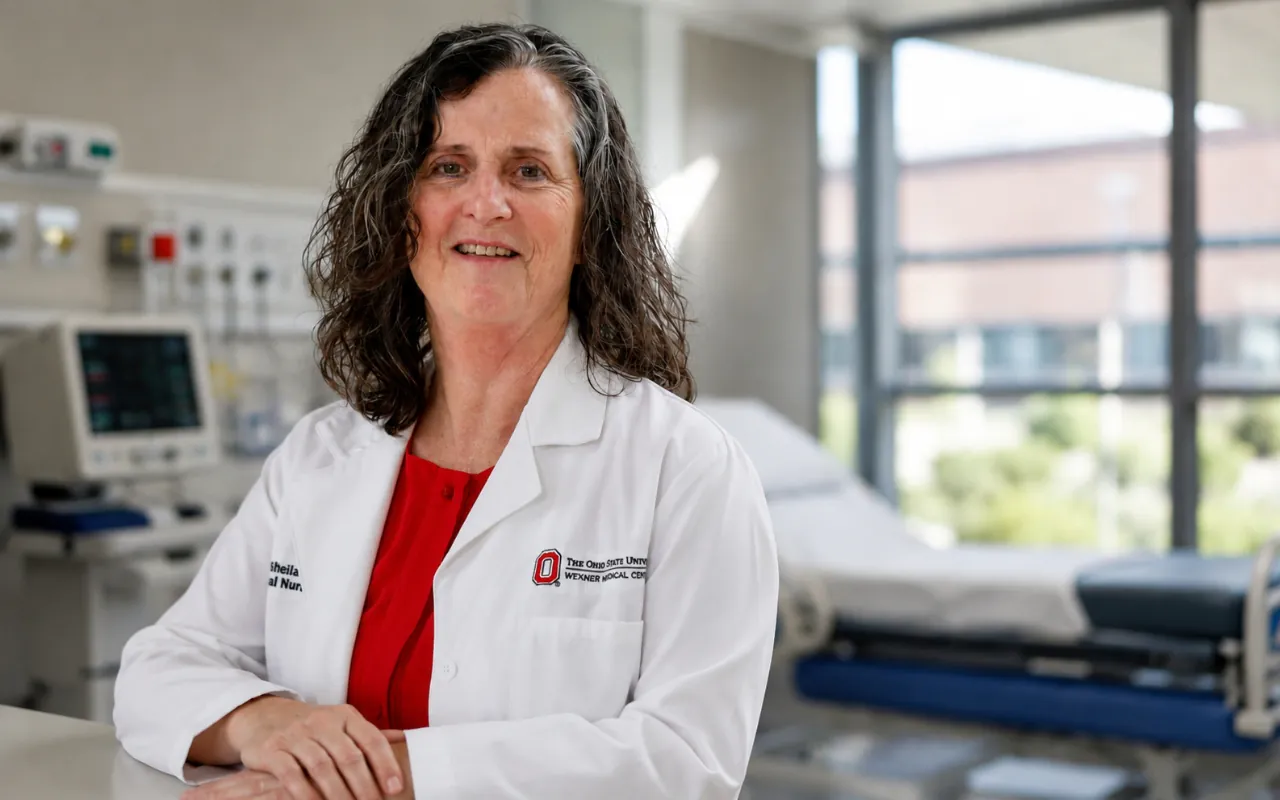
At The Ohio State University Wexner Medical Center, Sheila Chucta, DNP, APRN-CNS, CCRN-CSC, ACNS-BC, noticed a troubling pattern in the cardiovascular intensive care unit: Critically ill patients were developing wounds rapidly, sometimes despite efforts to prevent pressure injuries.
About a decade later, that observation has helped lead to a standardized process for evaluating and diagnosing skin failure within the health system. In fiscal year 2025, the CNS team completed 83 skin failure consultations and made 53 skin failure diagnoses using the process, according to Chucta. The health system calculated $3.4 million in cost avoidance associated with 79 wounds identified through the skin failure process.
For Chucta, a clinical nurse specialist in the CVICU at The Richard M. Ross Heart Hospital, the work began after she returned to the unit as a CNS about 10 years ago.
“We had patients who were extremely sick with long OR times and who were on vasoactive agents at or during the time of skin injury discovery,” Chucta said. “Staff were noticing that wounds were developing very quickly, and although they were not able to perform complete turns, they were weight shifting their patients.”
The question was whether all of those wounds were actually pressure injuries.
Want to see more Nurse Approved articles in your Google results? Add us as a preferred source.
Add Nurse Approved as apreferred source on Google
Looking Beyond Pressure Injuries
The distinction matters because not every breakdown of the skin in a critically ill patient necessarily results from pressure.
At Ohio State, skin failure is defined as hypoperfusion of the skin that occurs despite standard interventions such as turning and nutrition, when no other cause has been identified. It is not staged as a pressure injury.
Skin failure is considered a multifactorial syndrome in which systemic and local physiological stressors compromise the skin’s ability to tolerate injury. No single factor establishes the diagnosis.
“To diagnose skin failure, there must be a thorough assessment with supporting documentation,” Chucta said. “This should incorporate the patient’s overall clinical condition, systemic physiologic deterioration, perfusion and organ dysfunction, timing of skin changes, and characteristics of the lesion.”
Chucta began examining the issue after the comprehensive wound team that previously assisted with these patients was dissolved. She talked with other CNSs, reviewed the literature, and discovered at a critical care conference that clinicians elsewhere were encountering similar wounds and questioning whether they should be classified as pressure injuries.
“As a CNS, I feel we are in a unique position to bridge the gap in follow-up of these clinical concerns,” Chucta said.
Building a Standardized Process
Chucta and her colleagues developed a consistent method for evaluating suspected skin failure, including standardized documentation designed to ensure CNSs examine the same clinical factors.
When a diagnosis is uncertain, CNS colleagues can consult one another, and both can be included in the documentation supporting the diagnosis. The team also developed a swim lane diagram defining how CNSs and wound ostomy clinicians work together, with dermatology consulted when additional expertise is needed.
Rather than attempting to change practice across the health system at once, the process began within a single business unit.
“Starting small within only one business unit helped with the adaptation of this process,” Chucta said. “Being willing to take calls and assist others with the process also seemed to help with consistency in the process.”
The health system’s documentation coders also became part of the process. When a wound is documented, Chucta said coders look for a CNS skin failure note. When present, the wound is coded as L98.8, other specified disorders of the skin and subcutaneous tissue.
That distinction has implications beyond an individual patient’s chart.
“The care of the patient may not be directly affected by incorrectly classifying the wound as a pressure injury, but the quality data that is reported out by the unit and at the hospital from a quality standpoint can be directly impacted,” Chucta said.
The FY2025 data also included 24 skin failure follow-up notes. Chucta expects the numbers to increase in FY2026 because another part of the health system has since incorporated the process into practice.
Skin Failure Remains an Evolving Diagnosis
Questions about how to distinguish skin failure from pressure injuries extend beyond Ohio State.
The National Pressure Injury Advisory Panel, or NPIAP, defines non-pressure-related skin failure in critically ill patients as skin injury that occurs despite standard preventive interventions and when no other cause has been identified.
But the science continues to evolve. NPIAP has acknowledged that a distinct etiology and pathophysiology separating non-pressure-related skin failure from pressure injury have not been established. Hypoperfusion has been proposed as a contributing factor, but more research is needed to better define the condition.
According to Chucta, the NPIAP consensus statement and her discussions with NDNQI support distinguishing skin failure when a wound does not have a pressure component. She also noted that CMS has not adopted the process.
For clinicians, those remaining uncertainties make careful assessment, documentation, and evaluation of the patient’s overall clinical condition particularly important.
What the Diagnosis Can Mean for Patient Care
A CNS consultation can also lead to continued clinical surveillance. Once a formal consult is placed, the patient remains on the CNS team’s list, allowing the CNS to reassess the wound during rounds and determine whether additional wound care or specialty intervention may be needed.
One complex CVICU patient demonstrated how that surveillance could affect care.
The patient had multiple areas identified as skin failure while Chucta was mentoring another CNS whose DNP project involved a thermal imaging device. After the device was approved for a trial within the institution, the team used it with the patient.
When infection became a concern, imaging helped the dermatology team select an area for a punch biopsy. Serial scans continued to support the skin failure diagnosis during the patient’s complicated clinical course.
Later, the scans began showing signs of pressure. The team changed the patient’s bed support surface to mitigate the risk of a pressure injury.
Because the patient also had bilateral below-knee amputations, Chucta worked with nursing and therapy to develop a mobility plan supporting the patient’s goal of discharge to a rehabilitation facility.
For Chucta, the case illustrates how a CNS can combine evidence-based interventions, clinical monitoring, and multidisciplinary collaboration to address a complex patient problem.
From Bedside Nurse to Clinical Nurse Specialist
Chucta’s approach is rooted in decades of critical care nursing.
She began as a bedside nurse at Ohio State in 1986 and earned her master’s degree as a CNS in 1990. Rather than immediately moving into a CNS position, she remained at the bedside for another decade.
Her experience included working in a surgical ICU caring for cardiac surgery, transplant, general surgery, neurosurgery, and burn patients, followed by work in a combined medical and surgical ICU.
“Staying at the bedside really allowed me to develop my clinical skills and mature as a nurse,” Chucta said.
She also carried another lesson into advanced practice: Expertise does not mean having every answer.
“Also, being able to accept that you don’t know everything, but more importantly, as a CNS, you need to know who and where your resources are (this is a superpower),” Chucta said.
For nurses unfamiliar with the CNS role, the skin failure initiative provides a practical example of its reach. A clinical concern raised at the bedside led to a review of the evidence, a standardized assessment and documentation process, multidisciplinary collaboration, and eventually expansion of the process beyond the unit where it started.
“This process really highlights the unique role of the CNS within the institution, being able to work at the unit level, identifying a clinical concern and using quality processes to initiate and follow through as a change agent,” Chucta said.
After four decades at Ohio State, that opportunity to turn clinical problems into changes in practice continues to motivate her.
“It’s what makes me keep coming to work every day, to see how I can make an impact and drive change.”
