


Estimated reading time: 3 minutes
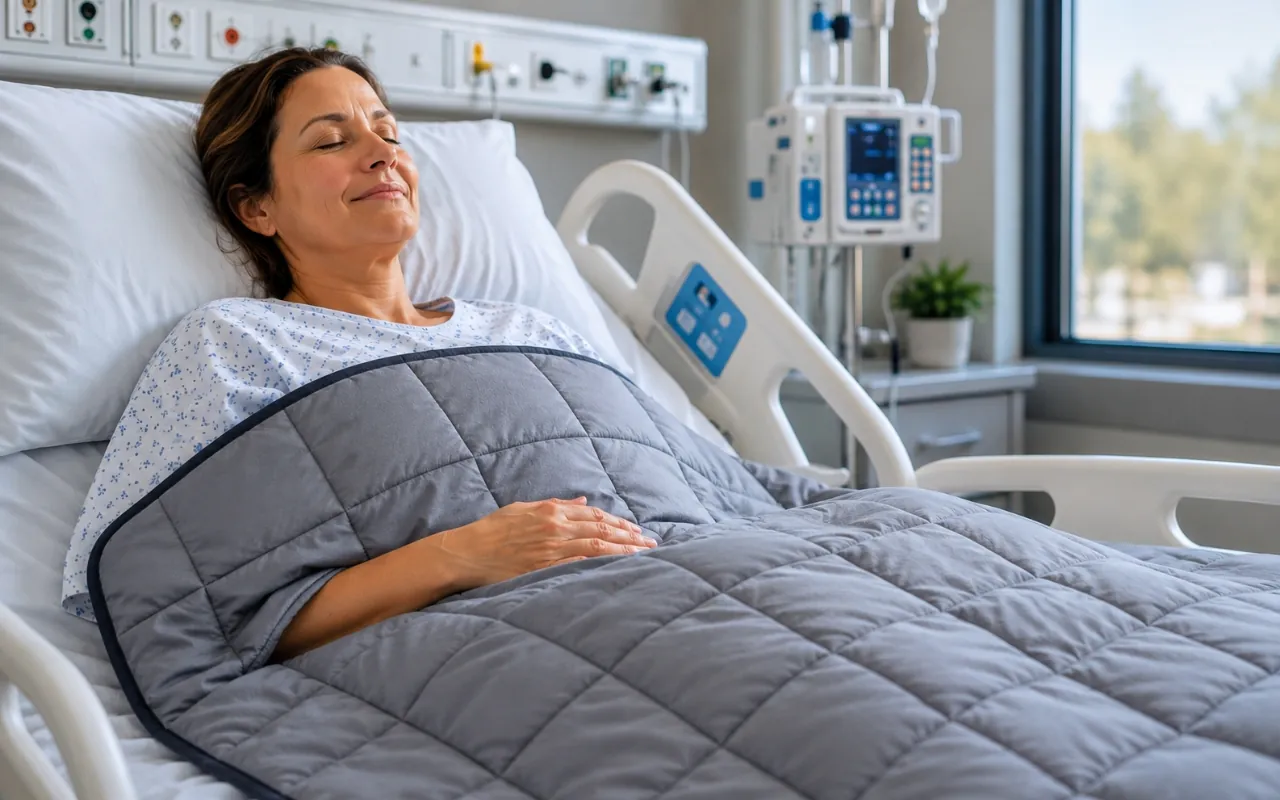
A 20-minute session with a weighted blanket significantly reduced anxiety among acutely ill hospitalized adults in a small pilot study, suggesting a potential nonpharmacologic option for helping patients manage anxiety during a hospital stay.
The study, published in the American Journal of Critical Care, included 54 adult patients at Saint Luke’s Hospital in Kansas City, Missouri. Researchers found patients reported the greatest decrease in anxiety immediately after using a 15-pound weighted blanket.
The research is notable because weighted blankets have been studied in settings such as mental health facilities, dental offices, and occupational therapy clinics. The researchers said no previously published studies had examined their use among acutely ill hospitalized adults.
Want to see more Nurse Approved articles in your Google results? Add us as a preferred source.
Add Nurse Approved as apreferred source on Google
Testing Weighted Blankets in the Hospital
Hospitalized patients can experience heightened anxiety, which may affect their recovery, sleep and mental health.
“Weighted blankets have been shown to provide therapeutic benefits in a variety of settings, including dental offices, inpatient mental health facilities and occupational therapy clinics,” said study co-author Marci Ebberts, MSN, FNP-C, CCRN, program director of nursing research at Saint Luke’s Hospital. “Hospitalized patients often experience heightened anxiety, which can negatively affect their recovery, sleep, and mental health. Our study found that a short treatment period with a weighted blanket can ease their anxiety significantly more than other nonpharmacologic methods, even after the blanket is removed.”
A team of nurses, with support from biostatisticians, conducted the study from March 2023 through February 2025. Charge nurses and direct care nurses across several inpatient units helped identify potential participants. The research team then reviewed patient records for eligibility and obtained consent.
The researchers randomly assigned the 54 participants to one of two groups. Each patient’s baseline anxiety was recorded on a scale from zero to 10 and reassessed at 20-minute intervals over an hour.
One group used the 15-pound weighted blanket for the first 20 minutes, followed by usual care based on patient preference. The other group received usual care first and then used the weighted blanket. Both groups received usual care during the final 20-minute period, allowing researchers to assess whether the effects persisted beyond the intervention.
Anxiety Dropped Most After Weighted Blanket Use
In both groups, the largest change in self-reported anxiety occurred immediately after patients used the weighted blanket.
Researchers observed a 3.6-point reduction in anxiety on a 10-point scale with the weighted blanket, compared with usual care. Anxiety levels during the final 20-minute usual-care period also suggested the calming effect may have persisted.
Patient feedback, however, showed that weighted blankets may not be comfortable for everyone.
More than 80% of participants in both groups described the blanket as calming. At the same time, 26% said they became too hot under it, while 33% thought the 15-pound blanket was too heavy.
What the Findings Could Mean for Nurses
The findings are preliminary. With just 54 participants, larger studies are needed to better understand how well weighted blankets work across hospitalized patient populations.
Still, the findings offer early evidence that a relatively brief weighted blanket intervention may help ease anxiety in acutely ill adults without medication.
The patient feedback is equally important for nurses. Although most participants found the blanket calming, about one in four found it too warm and one in three thought it was too heavy. This suggests patient comfort and preference would be important considerations when using weighted blankets as an anxiety intervention.
For nurses caring for anxious patients, the study adds another potential tool to the growing range of nonpharmacologic approaches to patient comfort. It also underscores the need for larger studies to determine which hospitalized patients are most likely to benefit.
