

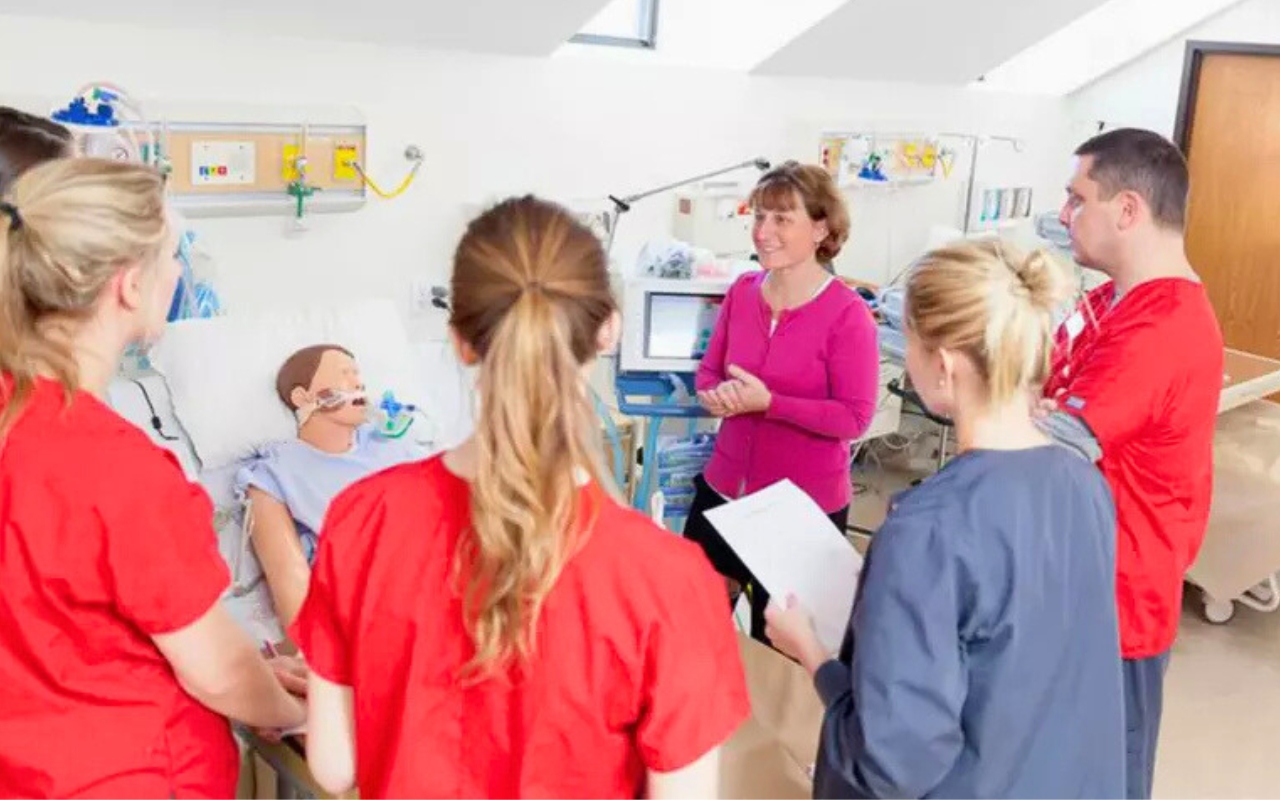

Certified Nurses Day marks a milestone for critical care nursing this year as the Critical Care Registered Nurse (CCRN) credential celebrates 50 years of validating specialized knowledge in critical care nursing, one of healthcare’s most demanding fields.
Want to see more Nurse Approved articles in your Google results? Add us as a preferred source.
Add Nurse Approved as apreferred source on Google
What is CCRN Certification for Nurses?
CCRN certification, a specialty credential for nurses who provide direct care to acutely and critically ill patients, was established in 1976 by the AACN Certification Corporation. As the credentialing arm of the American Association of Critical-Care Nurses (AACN), it has validated advanced clinical knowledge and judgment in critical care nursing for years. One of the first specialty nursing certifications in the United States, it remains widely recognized.
According to Jodi Berndt, PhD, RN, CCRN, PCCN, CNE, CNEcl, CHSE, chair of the AACN Certification Corporation Board of Directors for 2025–2028 and associate professor of nursing at the College of Saint Benedict and Saint John’s University in St. Joseph, Minnesota, the credential emerged at a time when critical care nursing was advancing rapidly but lacked a formal way to recognize specialized expertise.

“In the 1970s, critical care was advancing rapidly, but there wasn’t a formal way to validate the specialized knowledge nurses were applying in these complex environments,” Berndt said. “By creating the CCRN, AACN helped define and shape standards for critical care nursing practice. Fifty years later, that purpose remains to validate knowledge and clinical judgment even as the science and technology of care have grown more sophisticated.”
Filling a Critical Gap in Nursing Practice
During the 1970s, intensive care units expanded rapidly. As a result, nurses faced growing responsibility, managing complex conditions and advanced technologies. Recognizing these increased demands, AACN saw the need for a credential that formally recognized the specialized knowledge essential in high-acuity settings.
“AACN recognized that this specialty required focused preparation and ongoing professional development,” Berndt said. “CCRN provided a way to formally recognize nurses who met established standards of knowledge in caring for acutely and critically ill patients.”
Early adopters quickly demonstrated the value of the credential. One example is Barbara Washington-Knight, who earned the CCRN in 1977.
Berndt noted that Washington-Knight used the certification to strengthen her case for a transfer into critical care while serving in the U.S. Air Force. She worked in critical care for decades and continues to maintain her certification today.
A Growing Commitment to Certification
Certification has become a vital marker of professional development in nursing. Today, more than 138,000 nurses hold AACN Certification Corporation credentials—a testament to the growing recognition of specialty certification throughout healthcare systems.
“Because certification is a voluntary pursuit, the growth in the number of nurses achieving certification reflects a strong commitment to the profession,” Berndt said. “Healthcare organizations increasingly value that commitment because it signals dedication to professional development and high standards of practice.”
What CCRN Means at the Bedside
For patients and families facing critical illness, the CCRN credential can serve as a visible indicator of expertise and dedication.
“For patients and families, CCRN signals confidence, excellence, and pride in nursing,” Berndt said. “Even if they don’t know the specifics of the exam, they recognize that it reflects professional achievement. In moments of uncertainty, that visible validation of specialized knowledge provides meaningful assurance.”
Keeping Pace With Modern Critical Care
Critical care medicine has changed significantly over the past five decades. To ensure certification reflects current practice, AACN certification exams undergo a comprehensive review every 5 years through a structured practice analysis.
“The practice analysis process is comprehensive and grounded in real-world data,” Berndt said. “We regularly survey nurses across care settings to understand current practice expectations. AACN takes that information to shape exam content using the Synergy Model, ensuring that CCRN reflects contemporary evidence, technologies, and patient care realities.”
As healthcare delivery evolves, eligibility pathways for certification have expanded to recognize roles beyond the traditional ICU, including tele-critical care and system-level knowledge professionals.
“Critical care delivery has expanded beyond the walls of an intensive care unit,” Berndt said. “Tele-critical care and system-level roles now influence patient outcomes in significant ways. Broadening eligibility pathways recognizes those evolving roles while maintaining consistent standards for knowledge validation.”
A Layered Approach to Expertise
The CCRN credential verifies foundational knowledge in acute and critical care nursing. In addition, the field recognizes credentials that denote specialized expertise.
Subspecialty certifications such as CMC and CSC focus on cardiac medicine and cardiac surgery patients. AACN has also introduced micro-credentials that highlight focused clinical knowledge in areas such as ECMO and sepsis.
“Together, specialty certification, subspecialty certification, and micro-credentials reflect the layered and nuanced complexity of modern acute and critical care practice,” Berndt said.
Honoring the Legacy of Nurse Credentialing
In addition to celebrating certification milestones, Certified Nurses Day also recognizes Margretta “Gretta” Madden Styles, a pioneer in nurse credentialing whose work helped shape the national certification movement.
“Gretta Styles emphasized that certification should protect the public and uphold professional standards,” Berndt said. “That principle continues to guide our work. AACN Certification Corporation was established to drive patient health and safety while maintaining high standards of professional practice in patient care.”
Looking Ahead
Looking to the future, as healthcare systems become increasingly complex, Berndt believes specialty certification will remain an important marker of professional excellence in nursing.
“Clear standards will become even more important,” she said. “Specialty certification provides a structured, nationally recognized way to validate knowledge in a focused practice area. I believe it will continue to serve as an important marker of professional commitment to excellence in critical care nursing.”
