
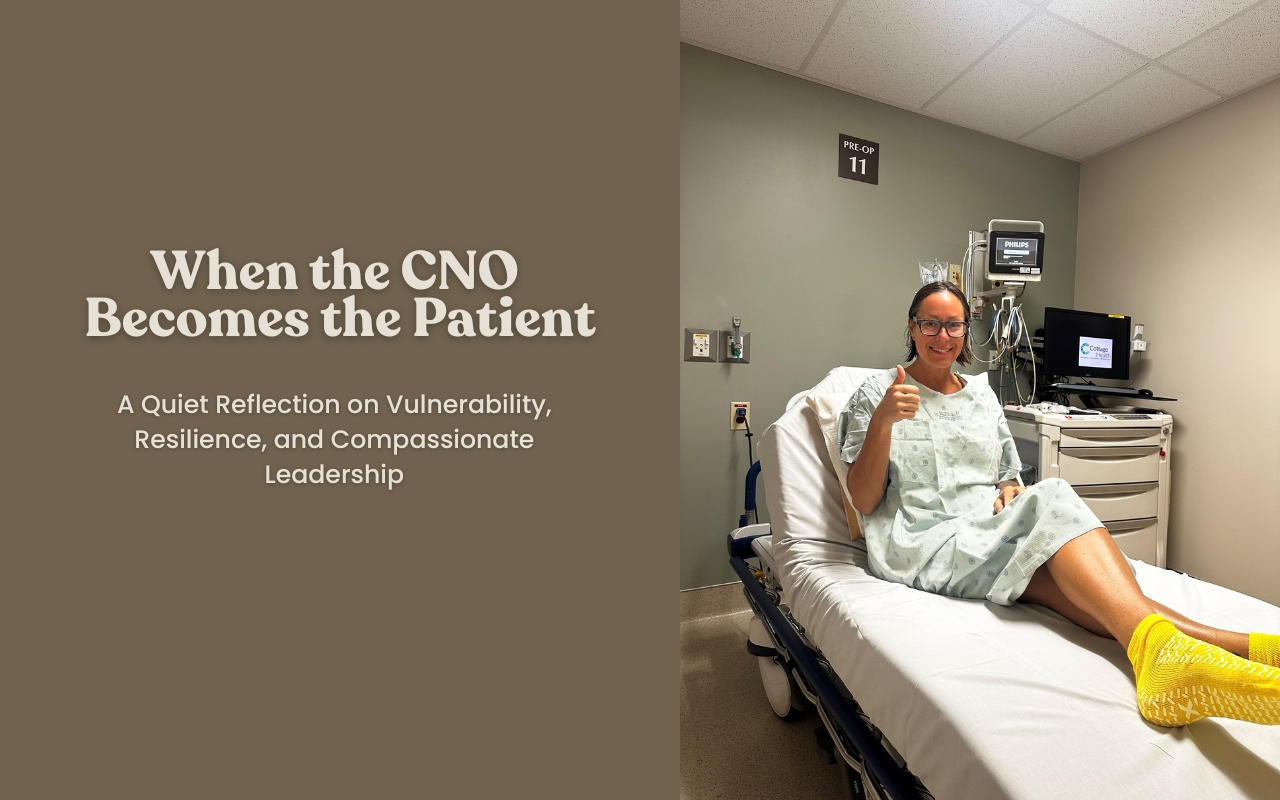

For much of my professional life, I have stood firmly in the role of nurse leader. As a Chief Nursing Officer, I am accustomed to settings that require decisiveness, steadiness, and constant presence. Nurse executives are expected to project confidence, maintain control, and lead others through complexity, often without pause. Strength and resilience are not just encouraged; they are expected.
It was from within this context that I unexpectedly stepped into a very different role: the patient.
Entering Unfamiliar Territory
Despite years of clinical and administrative experience, becoming a patient, even as a nurse leader, was quietly disorienting. This experience unfolded during October, Breast Cancer Awareness Month, a time filled with resources, messaging, and support options. Yet even surrounded by awareness efforts, the reality of a new breast cancer diagnosis felt intensely personal and, at times, isolating.
Familiar systems suddenly felt complex. Processes I understood intellectually became emotionally taxing. I encountered the same realities many patients face: multiple referrals, communication gaps, scheduling challenges, and the ongoing need to coordinate care.
Even with knowledge of how the system works, I experienced the uncertainty that comes with relying on others. Control, something leaders instinctively depend on, was no longer mine. In its place came vulnerability.
This shift offered a perspective that is rarely gained from the leadership office alone.
Experiencing Vulnerability. Personally and Professionally
Nurse leaders are trained to respond, solve problems, and move forward. Illness disrupts that rhythm. It introduces waiting, uncertainty, and emotional strain that expertise alone cannot resolve.
During my experience with my own care, I experienced anxiety and frustration alongside gratefulness and trust. Ceding control had a significant psychological impact. Being in the patient role broadened my insight into the emotional burden carried not only by patients but also by families and caregivers.
While there are many support groups available, I found the sheer number of options overwhelming. In the end, my most meaningful support came from something simple, a “phone-a-friend” approach. Connection, clarity, and trust mattered more than navigating yet another pathway.
This experience affirmed a powerful truth: while we have many resources for patients, there remains a considerable opportunity to better care for caregivers.
Seeing the System Through a Patient’s Eyes
Working through the healthcare system firsthand revealed its difficulties, even for those deeply familiar with it. Overlapping communications and scheduling issues added stress during an already vulnerable time.
During this period, my daughter, who is also a nurse, became an essential source of support. She helped interpret information, offered reassurance, and provided a steady presence. Seeing her step into the caregiver role broadened my respect for the vital, often unrecognized, role caregivers play in truly patient-focused care.
Her presence reminded me that caregiving is both clinical and intensely human.
Allowing Care and Choosing Self-Care
One of the most meaningful lessons was learning to accept care.
Like many nurse leaders, I felt compelled to stay engaged and maintain control. Yet true healing required rest, reflection, and permission to step back. Allowing myself this space became an essential act of self-care.
Self-care should not be a luxury for leaders; it is foundational to building resilience, clarity, and sustainable leadership. Rest and reflection do not weaken leadership capacity; they strengthen it.
This period reinforced the significance of acknowledging those who care for the whole person. Programs that honor caregivers and raise the patient voice, such as those based on the principle of “nothing about me without me,”reflect values I hold deeply. Caregiver recognition, as embodied by the DAISY program, serves as a reminder that compassion, presence, and listening are central to healing.
Returning to Leadership and Finding My True North
As I began returning to practice, I encountered a quieter challenge, one that many leaders face after a health-related leave. Questions surfaced about confidence, relevance, and contribution. I wondered how others approach this space: how leaders reconnect with their “true north,” let go of feelings of being broken, and reclaim confidence in their ability to lead and contribute meaningfully.
These questions are not always spoken aloud, yet they matter deeply. They speak to identity, purpose, and the human side of leadership that is often left unaddressed.
A Gentle Framework for Leadership Reflection
From this experience emerged a simple, reflective framework that consistently steers my leadership:
Vulnerability → Self-Care → Compassionate Leadership
- Vulnerability permits leaders to understand uncertainty, dependence, and emotional exposure.
- Self-care creates space for healing, resilience, and thoughtful decision-making.
- Compassionate leadership grows from these experiences, guiding how leaders engage teams, influence culture, and support patient- and family-centered care.
This framework is not prescriptive. Rather, it invites reflection and encourages leaders to thoughtfully translate personal experience into everyday leadership practice.
Carrying the Experience Forward
Transitioning from nurse executive to patient offered lessons that were humbling, meaningful, and deeply personal.
At the heart of those lessons was a simple truth: listening is what our patients ask of us most.
Sharing this experience is not about grievance; it is about paying it forward. It is about using vulnerability as a pathway to understanding, empathy, and meaningful change. By sharing my story, I hope to contribute to improving processes, strengthening culture, and reminding us that truly listening to the patient voice is where improvement begins.
Even within highly capable systems, it is the human element that matters most.
