
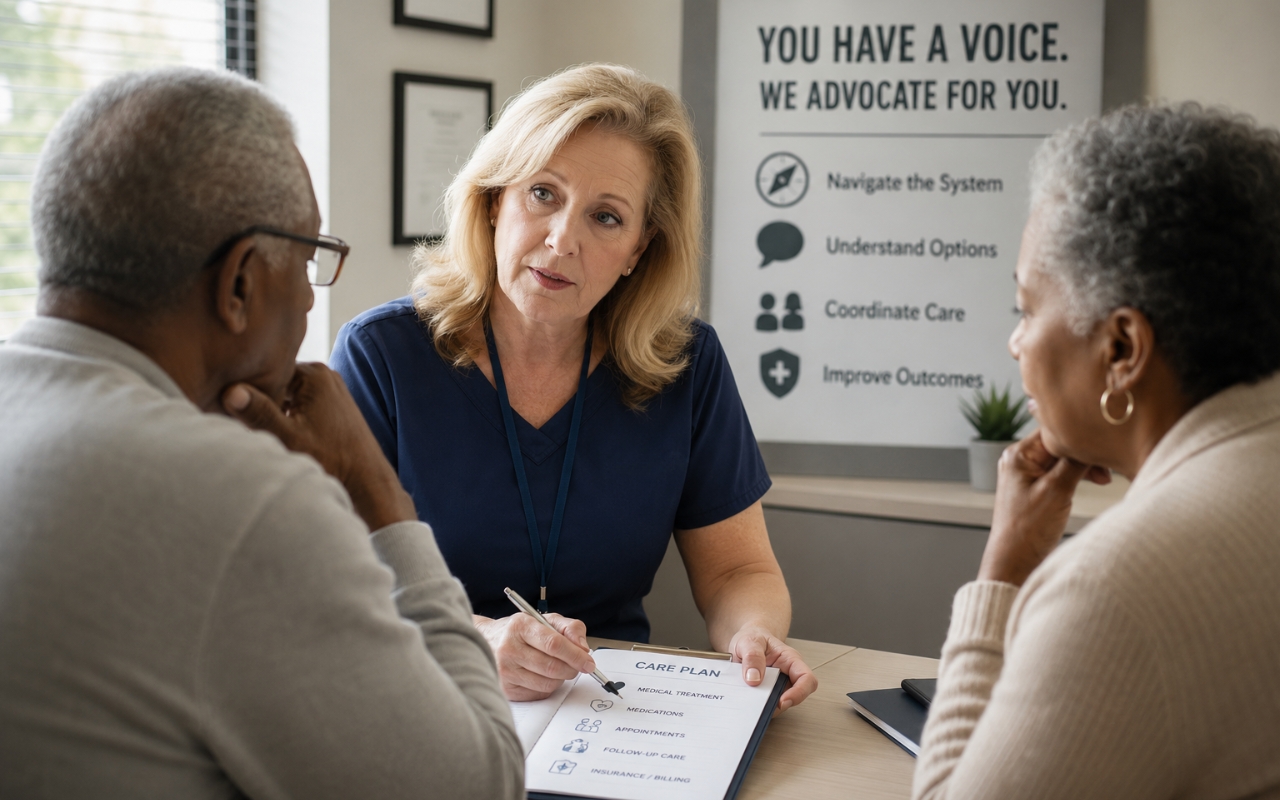

As patients navigate a fragmented healthcare system, families often need more than medical care. They need guidance through the system.
Teri Dreher Frykenberg realized this need after decades as an ICU nurse, witnessing how communication failures and rushed care coordination put patients at risk.
Today, Frykenberg is seen as a pioneer in patient advocacy, helping patients navigate complex medical decisions and mentoring nurses to move beyond bedside care.
After 30 years in hospitals, Frykenberg launched her advocacy business in 2011. She is now a board-certified advocate, founder of Nurse Advocate Entrepreneur, and leader supporting nurses in advocacy careers outside hospitals.

Her move into advocacy stemmed from growing concerns about what patients lacked in an increasingly strained system.
“In 2010, the Affordable Care Act’s impact on patient care became clear to me,” Frykenberg said. “Nurses and physicians spent more time documenting than at the bedside.”
The issue became personal when her father-in-law fell critically ill on a cruise.
“He became seriously ill on a cruise. I brought him back to the U.S., and over six weeks, witnessed communication and care gaps that could have been fatal,” she said.
That confirmed what Frykenberg had seen in practice.
“Patients and families need a knowledgeable advocate at their side to help them navigate the healthcare system,” Frykenberg said.
A Career Shift Sparked by Advocacy
Frykenberg said one of the defining moments in her nursing career involved advocating for a postoperative patient whose condition was rapidly deteriorating.
“I almost got fired for speaking up for a patient and questioning a doctor,” she said.
The patient, an African American woman, developed complications after surgery. Frykenberg pushed for additional testing after becoming concerned about her condition.
“I stood up to the doctor and questioned why he wasn’t ordering further tests. He almost threw a chart at me, transferred the patient out of intensive care, and she nearly died,” she said.
The next day, after resuscitating the patient during an emergency, Frykenberg was removed from the unit over a minor documentation mistake with an unsigned morphine dose.
“After 23 years at the hospital as a top ICU nurse, I was essentially accused of being a drug abuser,” she said.
During her suspension, Frykenberg decided to leave the hospital setting and start her own advocacy business.
“I knew patients needed advocates unbound by hospital constraints,” she said.
At the time, few clinicians or administrators understood the role of professional patient advocates, even though it had existed since the 1970s.
“I often had to explain my role to doctors, nurses, and administrators,” she said.
With her new role established, Frykenberg explains the responsibilities it entails.
What Does a Nurse Patient Advocate Do?
A professional RN patient advocate uses clinical knowledge to help patients and families navigate healthcare, coordinate care, understand treatments, attend appointments, resolve billing issues, and advocate for informed decisions.
Filling the Gaps Patients Often Don’t See
Frykenberg says RN patient advocates spot problems families may not recognize until a crisis hits.
“Professional RN patient advocates have deep medical backgrounds, understand the system, and anticipate crucial questions for patients and families,” she said.
Her work includes reviewing treatment plans, coordinating among providers, researching options, and helping resolve insurance disputes.
“We vet health providers, research treatments, and resolve billing and insurance,” Frykenberg said.
Many families seek help when something in a patient’s care feels wrong.
“A common scenario is when patients or families sense something is wrong during a crisis. They’re reassured that tests are fine, but their instincts say otherwise,” she said.
In those moments, advocates can help push for answers and additional evaluations.
“In healthcare, what you don’t know can actually hurt you or even kill you,” Frykenberg said.
The Dangerous Transition Points in Healthcare
According to Frykenberg, some of the most significant patient safety risks occur during care transitions.
“The greatest risks occur during transitions—when patients are admitted, discharged, or move to rehab,” she said.
Such gaps can lead to missed follow-ups, medication errors, or unreported lab results, thereby impacting outcomes.
Patient advocates help bridge the hospital to home, assessing support needs, reviewing medications, and clarifying instructions.
A Case That Changed the Outcome
One case that remains especially meaningful to Frykenberg involved an 83-year-old patient whose condition deteriorated after a routine procedure.
He developed an infection, became confused, and Frykenberg noticed he was prescribed antipsychotics despite no mental health history.
She also identified signs of gastrointestinal bleeding.
“He was experiencing frequent episodes of black, tarry diarrhea, which indicated he was bleeding in his gut,” Frykenberg said.
A colonoscopy revealed an ulcer from two weeks of untreated C. diff.
Once issues were addressed, Frykenberg moved him to a better rehab facility.
“He regained strength, started eating, stopped being confused from medications that he didn’t need, and went home with his family,” she said.
Why Nurses Are Uniquely Positioned to Advocate
Frykenberg said nurses are suited for advocacy because of clinical skills, strong patient relationships, and longstanding public trust.
“Nurses are suited for advocacy because we spend more time with patients than doctors or others in hospitals,” she said.
She cites Gallup’s poll ranking nursing as the most trusted profession for 24 years.
Through Nurse Advocate Entrepreneur, Frykenberg mentors clinicians interested in advocacy businesses.
“I believe my calling is to help more healthcare professionals build careers as private patient advocates,” she said.
What the Growth of Advocacy Says About Healthcare
Frykenberg believes the growing interest in patient advocacy reflects deeper problems within the healthcare workforce itself.
“Our healthcare system doesn’t support providers in caring for patients or themselves,” she said.
She cites burnout, workplace violence, and dissatisfaction as reasons professionals seek new paths.
“These are just some of the reasons doctors and nurses are feeling that they just can’t do this anymore,” Frykenberg said.
For many, advocacy offers autonomy, work-life balance, and reconnects them to patient care.
“I loved saving lives in the ICU, but this field is something I love more every day, both working for patients and mentoring emerging patient advocates,” she said.
She wants the public to see patient advocates as team members, not adversaries.
“I think the biggest misconception is that we’re aggressive and that we’re only there to catch hospitals and doctors making mistakes,” Frykenberg said. “This is totally not true.”
“Board-certified advocates are valuable to the care team. We act professionally and seek win-win outcomes,” she said.
Frykenberg expects advocacy to become more common as patients value experienced guidance through complex situations.
“More people will see the need to hire patient advocates, like hiring a lawyer for legal or financial protection,” she said.
For nurses considering the field, her message is straightforward.
“If you have the passion to find something better for yourself and your patients, I can guide you through each step to launch a successful practice,” Frykenberg said.
Despite decades spent saving lives in critical care, she says advocacy has become the most personally meaningful chapter of her career.
“This is such a personal, pure form of nursing,” Frykenberg said. “I love my clients and families and being able to do the right thing because I am working only for the client, not the health system.”
