


Estimated reading time: 8 minutes
Transforming nursing education, a new Texas high school incorporates immersive, hospital-based clinical training directly into the classroom. This approach offers students early exposure to ICU care, patient safety protocols, and healthcare workflows well before they ever set foot in nursing school.
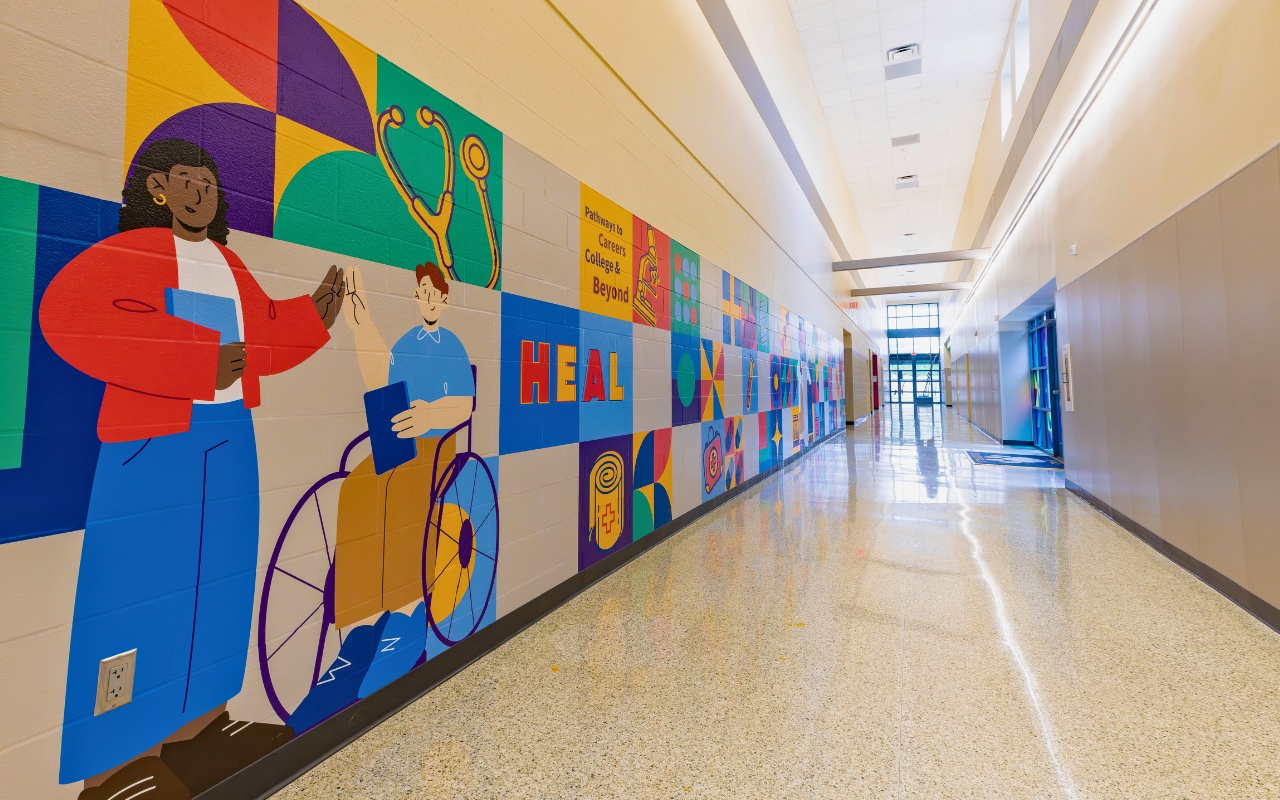
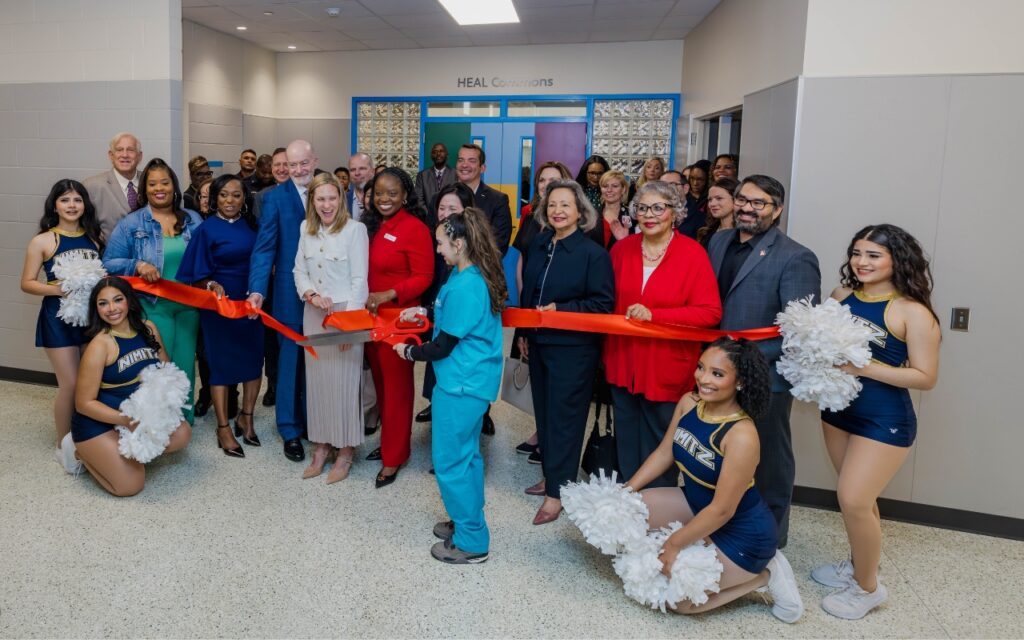
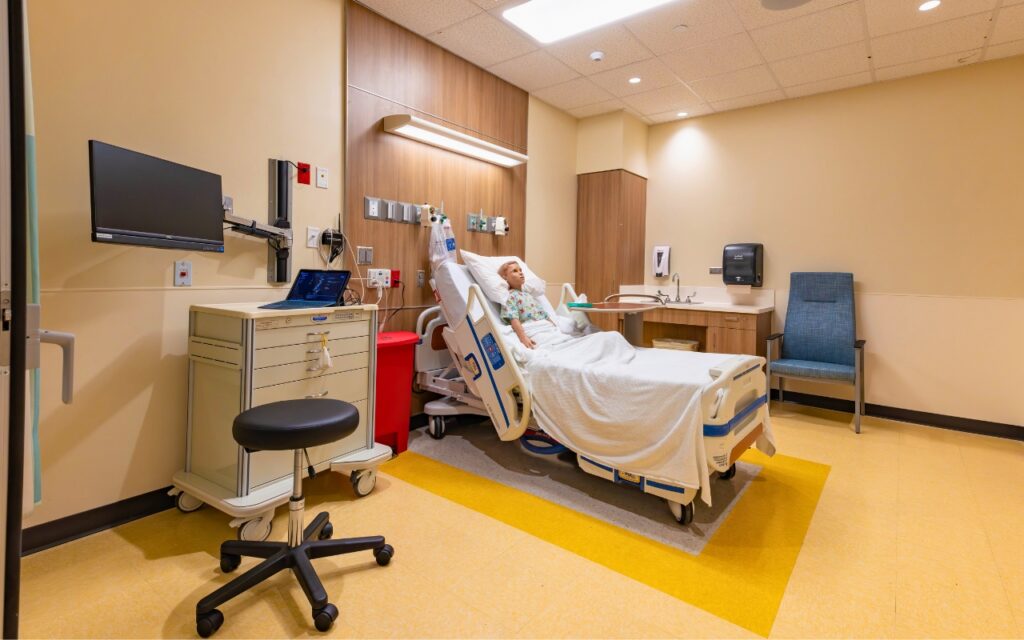
Located on the campus of Nimitz High School in Houston, the new Health Education and Leadership (HEAL) High School has officially completed a 6,500-square-foot simulated hospital designed to mirror real patient care environments found inside Memorial Hermann hospitals.
This project exemplifies a broader national effort to address healthcare workforce shortages by developing earlier pipelines into nursing and allied health careers and seamlessly integrating learning opportunities for students from an early stage.
Want to see more Nurse Approved articles in your Google results? Add us as a preferred source.
Add Nurse Approved as apreferred source on Google
A Hospital Environment Inside a High School
The simulated hospital was developed through a partnership between Memorial Hermann Health System and Aldine Independent School District (ISD), supported by a $31 million gift from Bloomberg Philanthropies to Memorial Hermann Foundation.
The facility includes:
- Two medical-surgical patient rooms modeled after Memorial Hermann hospital rooms
- Two ICU rooms with a nurse’s station and observation windows
- An AnteRoom where students practice donning personal protective equipment before entering isolation spaces
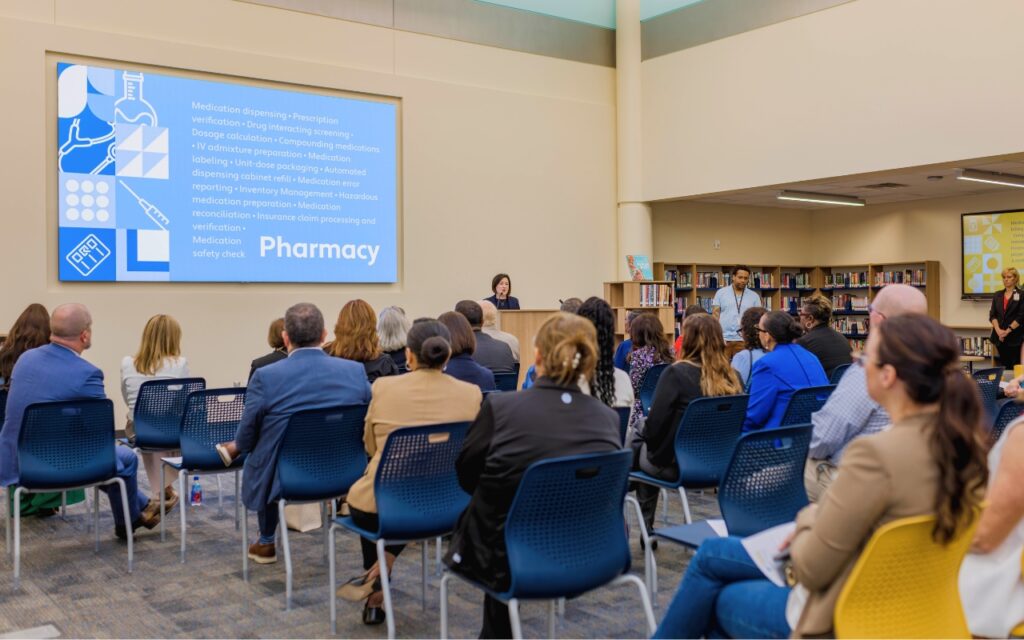
- A mock pharmacy with medication racks, vials, and simulated medication-mixing equipment
- A negative pressure room with airflow management equipment
- A nurse’s station featuring a real pneumatic tube system used to demonstrate medication transport workflows
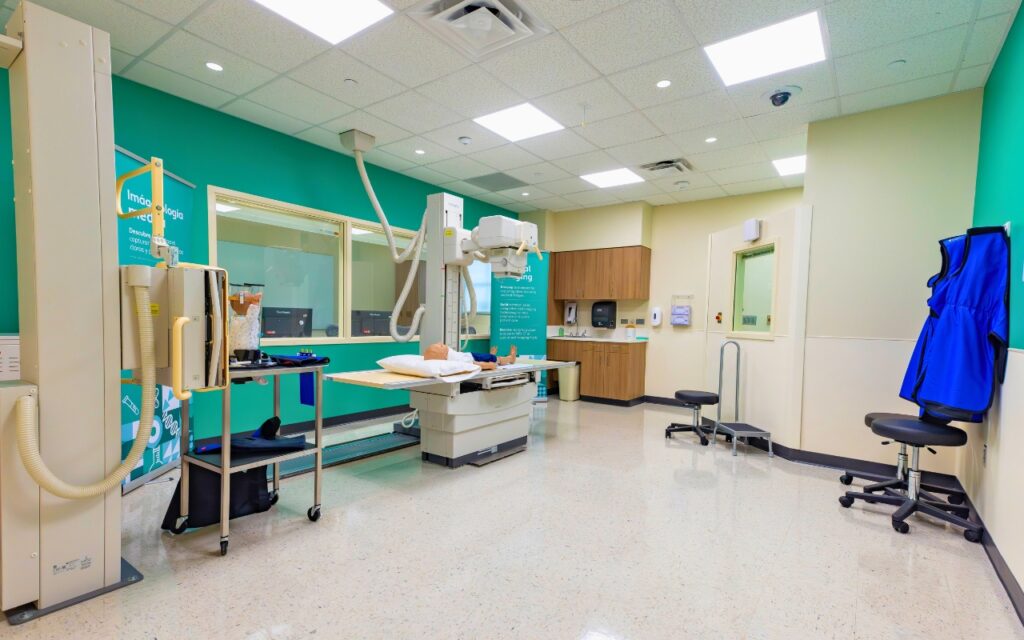
- Planned imaging and observation spaces
The school is part of a broader Bloomberg Philanthropies initiative launched in 2024 to help bridge education and healthcare workforce gaps nationwide.
Building on these foundations, HEAL High School in Houston has opened a fully simulated hospital inside a high school to prepare students for nursing and healthcare careers through hands-on ICU, med-surg, pharmacy, and patient safety training alongside healthcare professionals.
Why Nursing Leaders Say This Matters
For nurses and healthcare systems facing persistent staffing shortages, this initiative stands out as more than an educational experiment, directly linking education to current workforce needs.
Bryan Sisk, Chief Nursing Executive for Memorial Hermann Hospital System, explained that the model addresses both the shrinking healthcare workforce pipeline and the lengthy training timeline required for practice-ready clinicians.
“We are addressing two related challenges,” Sisk said. “First is a shrinking pipeline into healthcare careers, and second is the long timeline required to prepare a practice-ready nurse or allied health professional.”
Sisk said many students traditionally do not receive meaningful healthcare exposure until late in college, if at all.
“This model begins in ninth grade, exposing students early to real-world clinical environments, career pathways, and foundational skills while staying closely connected to the needs and aspirations of the community,” he said.
Sisk believes that this approach could shorten the gap between initial interest and workforce readiness.
“Instead of starting from zero after high school, students enter post-secondary programs with experience, credentials, and clarity, effectively accelerating the development curve while also improving retention in the profession,” he said.
Simulated ICU and Med-Surg Training Designed Around Real Nursing Workflows
Unlike traditional classroom-based career programs, HEAL High School’s simulation spaces are intentionally crafted to reflect the conditions nurses routinely face in acute care settings.
“The simulated hospital environment is intentionally designed to reflect the realities of med-surg and ICU care,” Sisk said.
“The exposure students receive closely mirrors workflows, equipment, communication patterns, and patient safety protocols they will encounter on day one.”
Sisk said the familiarity may help reduce the cognitive overload often experienced by newly graduated nurses entering practice.
“This familiarity reduces the cognitive load new graduates often experience and helps them transition more confidently into clinical roles,” he said.
Further strengthening practical training, the initiative also integrates Memorial Hermann staff directly into the educational environment.
“We have Memorial Hermann employees working alongside Aldine ISD faculty, creating a highly integrated learning environment,” Sisk said.
Students Begin Building Nursing Skills Earlier
Students at HEAL High School choose from five healthcare pathways:
- Nursing
- Sports medicine and rehabilitation
- Medical imaging
- Pharmacy
- Healthcare business administration
The nursing pathway gives students the chance to earn certifications such as Certified Nursing Assistant (CNA), Certified Medical Assistant (CMA), Patient Care Technician (PCT), and phlebotomy, enhancing their immediate employability after graduation.
Additionally, students can earn 15 to 24 college credits, allowing them to enter post-secondary healthcare education at an advanced stage and spend less time completing a degree or license.
The program outline notes that some students may need only one to two additional semesters after graduation to obtain an LVN or associate degree, thereby accelerating their entry into the healthcare workforce.
The curriculum blends classroom instruction with job shadowing, simulation labs, mentoring, volunteer opportunities, internships, and paid work-based learning experiences.
Starting in ninth grade, students are paired with Memorial Hermann mentors. By 11th grade, students gain access to paid internships and employment opportunities.
Beyond Technical Skills
Sisk said one of the most important outcomes may be the development of professional identity and non-technical nursing competencies that are often learned much later in traditional education pathways.
“Students gain skills that typically take longer to learn, including situational awareness, teamwork, communication under pressure, and understanding real clinical workflow, making them better prepared for healthcare careers,” he said.
“They also begin developing a professional identity earlier, learning how to show up on a care team, how to prioritize, and how to think about patient safety in real time.”
“These are not just technical skills, but behavioral and cognitive capabilities that typically take years to develop,” Sisk said.
Nurses Are Helping Shape the Curriculum
Nurses are playing a direct role in designing both curriculum and simulation experiences through Memorial Hermann’s Institute for Nursing Excellence.
“Our nurses play a central role in shaping both curriculum and simulation experiences,” Sisk said.
“Frontline clinicians and educators collaborate to create scenarios that reflect the complexity and realities of patient care, including communication, decision-making, and teamwork required in practice.”
The initiative also creates, as Sisk described, a “bidirectional learning environment” between students and healthcare professionals.
“Students learn directly from practicing professionals. At the same time, our staff gains fresh perspectives and a deeper connection to the community we serve,” he said.
A Workforce Strategy With Broader Community Impact
HEAL High School is expected to expand over four academic years and reach full capacity by 2028, serving hundreds of students annually.
While workforce development remains a central goal, Sisk said the broader mission extends beyond staffing pipelines.
“This initiative goes beyond workforce development. It helps students build careers, strengthens community connections, and offers early investment in future healthcare professionals, which supports both employment and community well-being,” he said.
He added that the long-term vision includes stronger economic mobility and expanded opportunities for underserved communities.
“As the communities around our facilities grow stronger, we become stronger as a health system,” Sisk said. “This is about more than the workforce. It is about lasting community impact through authentic partnership and shared purpose.”
Could This Redefine the Future New Graduate Nurse?
Sisk believes programs like HEAL High School could ultimately reshape expectations for new graduate nurses entering the workforce.
“If this model achieves its full potential, the definition of a new graduate nurse will evolve,” he said.
“Graduates will already understand the clinical environment, communicate effectively within care teams, and demonstrate a higher level of readiness on day one.”
“They will require less acclimation, adapt more quickly, and be more likely to stay in the profession because they entered it with clarity, confidence, and a strong sense of purpose.”
