


Estimated reading time: 5 minutes
More than one in four Americans whose body mass index (BMI) falls within the “healthy” range may actually meet the criteria for obesity, according to new research that is challenging one of medicine’s most widely used health measurements.
The study, published Monday in the Annals of Internal Medicine, found that millions of adults who would not traditionally be classified as obese based on BMI may already be experiencing obesity-related health effects under a newer definition known as clinical obesity.
Researchers say the findings raise important questions about whether BMI alone is sufficient to identify patients at risk for obesity-related diseases and whether some individuals may be missing opportunities for earlier intervention.
“Many people assume that if their BMI says they are not obese, they don’t have to worry about the many health problems linked to obesity,” said Dr. Brian P. Lee, a hepatologist and liver transplant specialist at Keck Medicine of USC and the study’s lead author. “Our findings show that millions of Americans may already have obesity-related health impacts and may be missing needed health interventions.”
A Growing Challenge to BMI
For decades, BMI has served as the standard tool for defining obesity. Calculated using height and weight, the measure is simple, inexpensive, and widely used in healthcare settings.
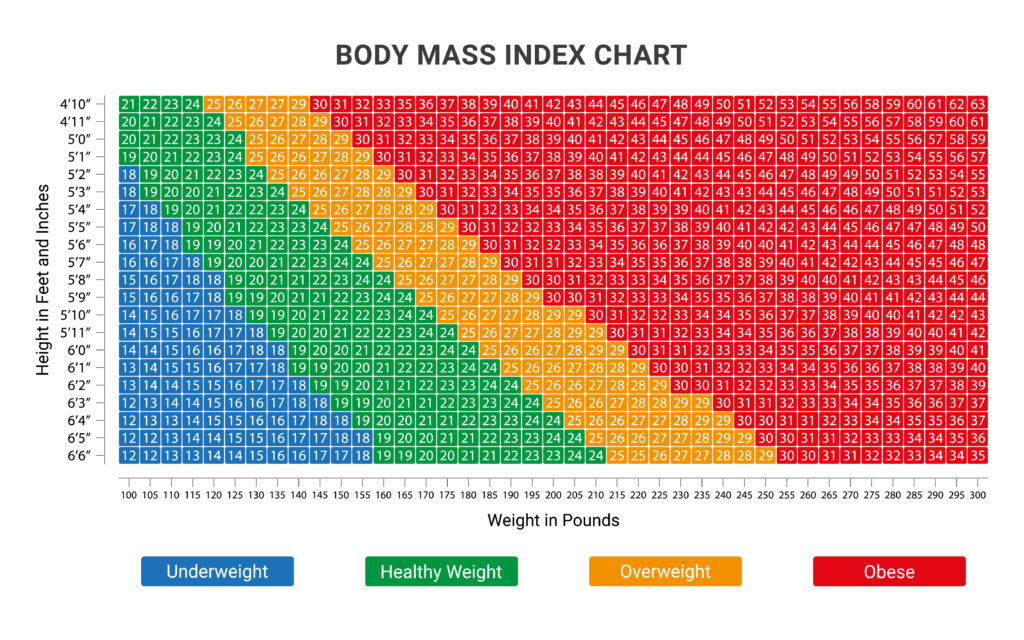
Yet BMI has long faced criticism for what it cannot measure.
The calculation does not distinguish between fat, muscle, or bone mass, nor does it account for where fat is stored in the body. As a result, a highly muscular person may be categorized as overweight, while another individual with excess body fat and significant metabolic risk may fall within a normal BMI range.
Those limitations have become increasingly important as researchers gain a better understanding of the role body fat distribution plays in disease development.
In recent years, obesity experts have argued that where fat is carried may be just as important as how much weight a person carries overall.
Looking Beyond the Scale
The study examined a newer framework known as clinical obesity, introduced in 2025 by an international commission of obesity experts convened through The Lancet Diabetes & Endocrinology.
Unlike BMI, which relies solely on height and weight, clinical obesity incorporates measurements designed to assess excess abdominal fat and its impact on health.
Particular attention is paid to visceral fat, the fat stored deep within the abdomen that surrounds internal organs. Unlike subcutaneous fat found beneath the skin, visceral fat has been associated with chronic inflammation, insulin resistance, cardiovascular disease, fatty liver disease, and other serious health conditions.
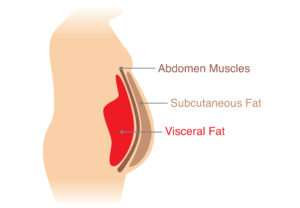
To evaluate clinical obesity, healthcare providers consider measurements including waist circumference, waist-to-hip ratio, and waist-to-height ratio, along with evidence of obesity-related effects on organs, tissues, or physical functioning.
The approach reflects a broader shift in obesity medicine away from weight alone and toward assessing how excess body fat affects overall health.
What the Study Found
Using data from approximately 5,600 adults participating in the National Health and Nutrition Examination Survey (NHANES), researchers compared traditional BMI classifications with the newer clinical obesity criteria.
The results revealed substantial differences between the two approaches.
Among adults whose BMI fell within the normal range, approximately 26% met the criteria for clinical obesity.
Among adults categorized as overweight by BMI, roughly half would be reclassified as obese under the clinical obesity definition.
The findings suggest that a significant number of Americans may have obesity-related health risks that are not being captured by BMI alone.
Because BMI remains a key factor in determining eligibility for obesity medications, bariatric surgery, and other interventions, some patients may not receive treatment despite having excess body fat associated with disease.
Why the Findings Matter
The study arrives as obesity rates continue to climb across the United States and as newer weight-loss medications reshape conversations around obesity treatment.
More than a cosmetic concern, obesity is associated with increased risks of heart disease, stroke, type 2 diabetes, high blood pressure, liver disease, sleep apnea, certain cancers, and premature death.
Healthcare providers have increasingly emphasized that obesity is a complex chronic disease influenced by genetics, metabolism, environment, behavior, and body composition.
The findings add to a growing body of evidence suggesting that BMI, while useful as a screening tool, may not provide a complete picture of an individual’s health risk.
For patients, the distinction could be significant.
A person with a normal BMI may assume they are at low risk for obesity-related complications, while underlying metabolic abnormalities and excess abdominal fat continue to contribute to disease progression.
For clinicians, the study highlights the importance of looking beyond a single measurement when assessing overall health.
What It Means for Patients and Providers
Experts are not calling for BMI to be abandoned. Rather, many see it as one tool among several that should be used to evaluate health.
Additional measurements such as waist circumference and metabolic health markers may help identify patients who would otherwise be overlooked.
“The good news is that obesity can be treated,” Lee said. “Whether through lifestyle changes, medication or both, we have effective ways to reduce excess body fat and lower the risk of future health problems. The earlier we identify people at risk, the better chance we have of improving long-term health and quality of life.”
Whether clinical obesity ultimately changes how obesity is diagnosed across the healthcare system remains to be seen.
What is becoming increasingly clear, however, is that the number on the scale — and the BMI calculated from it — may not tell the entire story.
For millions of Americans who have long viewed a normal BMI as reassurance, the new findings suggest that health risks associated with obesity may be hiding in plain sight.
