

Estimated reading time: 8 minutes
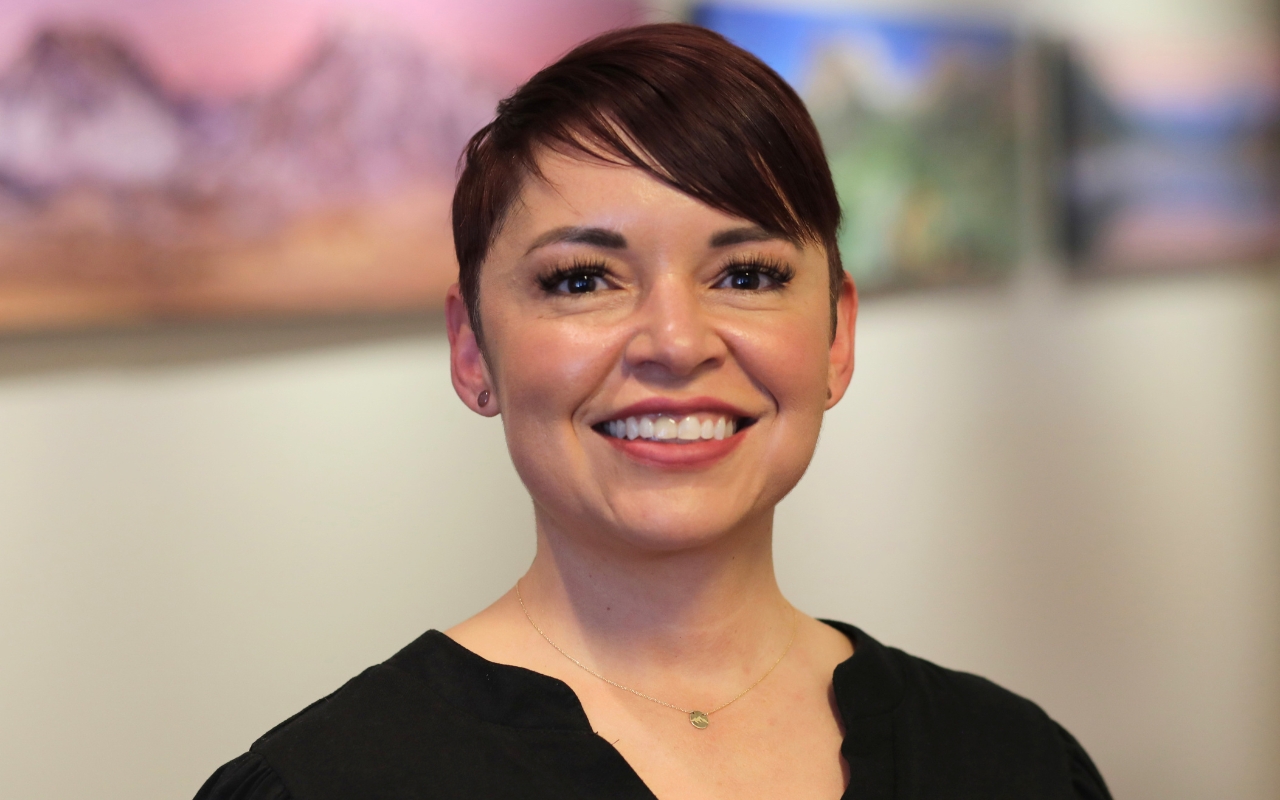
When the rural California hospital where Melissa Mora, MSN, RNC-OB, NI-BC, worked stopped providing labor and delivery services, pregnant patients did not disappear.
Neither did the births.
Mammoth Hospital in Mono County, California, temporarily stopped labor and delivery services in January 2022 amid staffing shortages. The closure later became permanent, leaving pregnant patients to travel approximately 45 miles south to Northern Inyo Hospital in Bishop for delivery care.
For Mora, a Latina nurse from San Antonio and the first in her family to earn a college degree, the loss of local maternity care raised an immediate question.
“After we lost local delivery care, I kept coming back to one question: who walks with these women now?” she said.
That question eventually shaped the Perinatal Nurse Navigator care coordination model Mora designed as part of her master’s program. The model was intended to help patients navigate referrals, establish relationships with the clinicians who would deliver their babies, transfer medical information between facilities, and receive follow-up after delivery.
As Nurse Approved recognizes National Hispanic Heritage Month, Mora’s experience shows what nurses can do when an essential healthcare service disappears from a community but patients still need care.
When Labor and Delivery Went Away
Mora was working at Mammoth Hospital as its labor and delivery services became increasingly difficult to maintain.
She said hospital leadership attributed the situation to safety concerns associated with maintaining clinical experience in a low-volume unit. Mora questioned that explanation, noting that some experienced nurses worked elsewhere to maintain their skills.
The hospital temporarily stopped delivering babies in January 2022 after struggling to fill labor and delivery positions. The Southern Mono Hospital District board made the closure permanent in June 2023. Reporting at the time also documented declining birth volume and financial losses associated with the department.
Mora came to a different conclusion about what drove the decision.
“It took seeing babies still delivered in the ED, with none of the safety net we used to have, for it to really click: this was never about safety. It was about money,” Mora said. “There was no plan to relocate or retrain us, and no real effort to talk to the Hispanic families I knew would carry the heaviest part of this decision.”
Mora had moved into clinical informatics before the hospital stopped providing labor and delivery services, during a period when she said the unit had already been on diversion.
That move would eventually change how she approached the problem.
Because nearly every hospital department interacts with the electronic medical record, Mora said informatics helped her build relationships across the organization and better understand how change happens inside a critical-access hospital.
“That move taught me a hard lesson fast: change depends on leadership trust, and I hadn’t earned mine yet, so my advocacy sounded like noise to the decision-makers,” she said.
Instead of trying to solve everything at once, she began asking what piece of the problem she could actually move.
Additional Barriers for Hispanic Families
The loss of local maternity care had particular significance for Mora because of the community she served.
More than a quarter of Mono County residents identify as Hispanic or Latino, according to Census data.
Mora said about one-third of the patients she encountered were more comfortable speaking Spanish. Pregnant patients now faced traveling to another hospital, potentially meeting the clinician who would deliver their baby without having established a relationship beforehand.
She also saw patients who were reluctant to ask questions or push back in an unfamiliar healthcare system because they worried about being perceived as burdens.
Her own experience as a bilingual and bicultural nurse made those moments particularly visible to her.
Mora remembers speaking Spanish to one frightened mother in labor.
“I’ll never forget speaking Spanish to a terrified mother in labor and watching her entire body soften, like she’d been holding her breath the whole time waiting for someone to understand her,” Mora said. “That moment told me everything about where care actually starts.”
For Mora, her identity affects what she notices in patient care.
“My identity isn’t background noise in how I nurse; it’s the reason I notice who’s about to fall through the cracks before the system ever admits there’s a crack,” she said.
Fourteen Hours Waiting for Transport
One case has stayed with Mora.
A mother arrived bleeding and needed an emergency cesarean section. Her baby was premature, and according to Mora, the hospital waited 14 hours for transport to arrive.
Mora said she knows the case through the nurses who cared for the patient and from attending debriefings afterward.
“Fourteen hours, with a fragile baby on the way, in a building that no longer had the team or equipment to handle this,” she said. “I remember standing in that room, thinking this is exactly what we told them would happen.”
For Mora, the experience illustrated a consequence of losing services that can be difficult to capture in financial calculations.
“That’s the human cost nobody puts on a slide in a board meeting,” she said.
Building a Nurse Navigator Around the Gap
Mora eventually turned her concerns about continuity of care into her master’s capstone, developing the Mono County Perinatal Care Plan.
One component was the Perinatal Nurse Navigator model.
The concept assigns a pregnant patient a nurse who can follow her across a fragmented care pathway rather than leaving her to coordinate it herself.
“A patient’s experience starts with a referral to our outpatient maternal health clinic, where she’s assigned to one nurse who knows her name,” Mora said.
The nurse helps the patient establish a relationship with the obstetric provider expected to deliver her baby. As the pregnancy progresses, the nurse coordinates transfers and higher-level testing so the patient is not responsible for repeatedly calling providers or making sure medical records reach another facility.
The relationship continues after delivery.
“After delivery, that nurse follows up, checking on her recovery, her baby, and current needs (SDOH),” Mora said. “From start to finish, she doesn’t navigate a broken system by herself. Someone knows her whole story.”
The model was not intended to replace the hospital’s labor and delivery unit. Instead, it was designed around the new reality that pregnant patients still needed continuity when local delivery services were no longer available.
What Nurses Can Do When Reopening Is Not an Option
Mora believes nurses in communities that have lost maternity services have to work on two timelines.
They can advocate for broader changes through hospital leadership and at county and state levels while simultaneously finding ways to reduce gaps for patients who need care now.
“When reopening a unit just isn’t realistic, nurses have to hold two things at once: push up through the chain of command at the county and state levels and refuse to sit around waiting for that alone,” she said.
Her project explored other possibilities, including referring patients to regional centers for comprehensive maternity care and incorporating certified nurse-midwives and doulas into care models.
Mora also sees workforce development as part of the solution.
Cerro Coso Community College is preparing to launch California’s first community-college Licensed Midwife Associate of Science degree program, with the midwifery portion scheduled to begin in fall 2027. The program received a $500,000 grant from the California Department of Health Care Access and Information.
“But if you’re asking me directly where nurses have the greatest impact right now, it’s this: keeping one more woman from falling through the cracks today while we build the workforce,” Mora said.
From One Rural Hospital to Five States
The experience ultimately changed the direction of Mora’s career.
She founded PeakRN, a nursing education and leadership consulting business focused on rural and critical-access hospitals. Mora said she now works with hospitals across five states.
Her career has included labor and delivery, triage, transport, education and informatics. She credits her father, an entrepreneur, with instilling the problem-solving instinct that has followed her through those roles.
Whenever something became difficult, she said, he would ask her the same question: “Okay, now what are you going to do about it?”
Her master’s program gave that instinct structure, Mora said, through tools including literature review, stakeholder analysis, and PDSA testing cycles.
Today, she sees a broader lesson in what happened in Mono County.
“Hospital leaders and policymakers consistently miss that maternity care isn’t a self-contained line item that can be cut in isolation; it’s connected to everything else,” Mora said.
She believes the consequences can extend beyond obstetrics to family medicine, pediatrics, and patients’ broader relationship with their local healthcare system.
“When a birth center closes, the ripple affects family medicine, pediatrics, and even the community’s willingness to trust the hospital for anything at all,” she said. “Every budget conversation overlooks that some services exist because they embody a community’s trust in the system.”
Turning Frustration Into Something Nurses Can Use
For nurses working in communities where resources are limited or disappearing, Mora does not believe leadership has to begin with authority.
“Your ability to lead change doesn’t depend on a title, a budget, or backup,” she said. “It starts with refusing to look away from what you see.”
Her response to losing local maternity care was not to try to solve rural obstetrics. Instead, she identified one part of the system she believed a nurse could change.
“I turned my frustration into my master’s capstone rather than writing angry letters to the board, a reminder that change doesn’t have to be dramatic to matter,” Mora said. “Sometimes it begins with one small role, built from what you already have.”
For the first-generation college graduate who once watched a frightened mother relax when she heard someone speak Spanish, the work is also tied to what Mora wants other nurses from underrepresented backgrounds to recognize about themselves.
“If you’re first-generation like me, you’re already breaking the mold,” Mora said. “We deserve a place in every corner of this society, and nursing, rooted in caring for family, is exactly that.”
