

Estimated reading time: 3 minutes
Tara Piantadosi was 32 when she had a mammogram.
The Hackensack University Medical Center dietitian had learned that her mother’s breast cancer diagnosis was associated with a CHEK2 gene mutation. Genetic testing showed Piantadosi carried the mutation, too.
Following updated screening guidelines because of her increased risk, she underwent an early mammogram. It detected Stage 0 breast cancer, or ductal carcinoma in situ (DCIS).
Stephanie Albarracin’s path to breast cancer was very different.
She had no family history of the disease and was diagnosed in March 2025 at age 38. Albarracin underwent immunotherapy, chemotherapy, and 25 rounds of radiation at Palisades Medical Center. She recently learned that she has no evidence of disease.
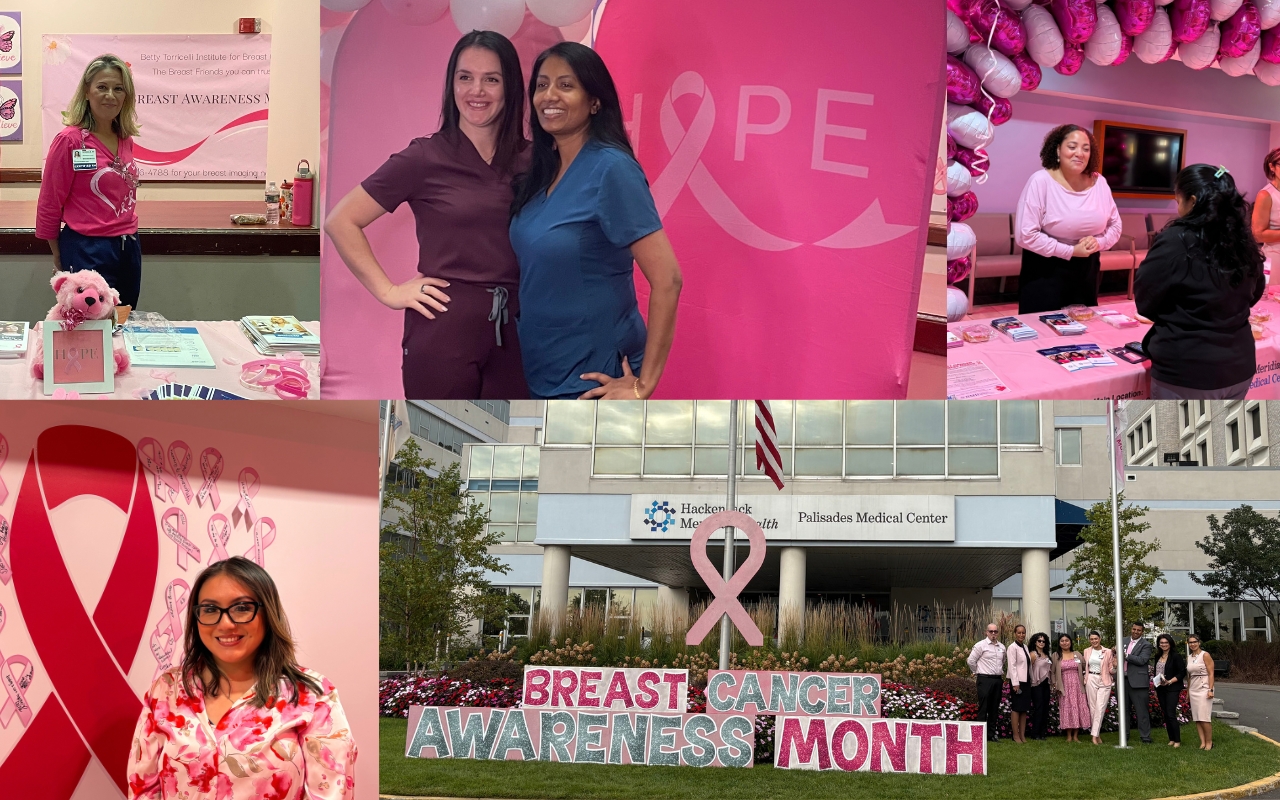
The two women shared their experiences as Hackensack Meridian Health launched Breast Cancer Awareness Month activities at Hackensack University Medical Center and Palisades Medical Center in New Jersey. Their stories highlight how differently breast cancer risk can present, particularly as diagnoses among younger women draw increasing attention.
Breast Cancer Is Increasing Among Younger Women
Breast cancer is the most commonly diagnosed cancer among women in the United States, according to the American Cancer Society, and approximately 1 in 8 women is expected to develop the disease during her lifetime.
More than 382,000 women are expected to receive a breast cancer diagnosis this year, according to information provided by Hackensack Meridian Health. The health system also cited American Cancer Society data showing that breast cancer incidence is increasing most rapidly among women younger than 50.
For nurses and other healthcare professionals, these experiences underscore the importance of understanding a patient’s individual risk rather than relying on age or family history alone.
Piantadosi’s family history led to genetic testing and the discovery that she carried the same CHEK2 mutation found after her mother’s diagnosis, prompting earlier mammography that detected her DCIS at Stage 0.
Albarracin had no family history to provide the same warning.
Bringing Breast Cancer Screening Into the Hospital
Hackensack Meridian Health used its Breast Cancer Awareness Month kickoff to give employees and visitors access to breast cancer information, specialists, and screening.
At both hospitals, attendees could speak with breast cancer specialists, learn about screening technologies, including AI-powered diagnostics, and practice breast self-check techniques using life-sized models.
Same-day mammogram screenings were also available on-site.
The health system is continuing its breast cancer awareness and screening campaign throughout October, encouraging women to speak with their healthcare providers about their personal risk and when they should be screened.
For nurses, the experiences of Piantadosi and Albarracin offer a practical takeaway. Family and genetic history can identify patients who may benefit from earlier screening, but having no family history does not eliminate the possibility of breast cancer at a younger age.
One woman knew she had an elevated risk before her mammogram. The other had no family history pointing her toward one.
Both faced breast cancer before age 40.
