
Estimated reading time: 6 minutes
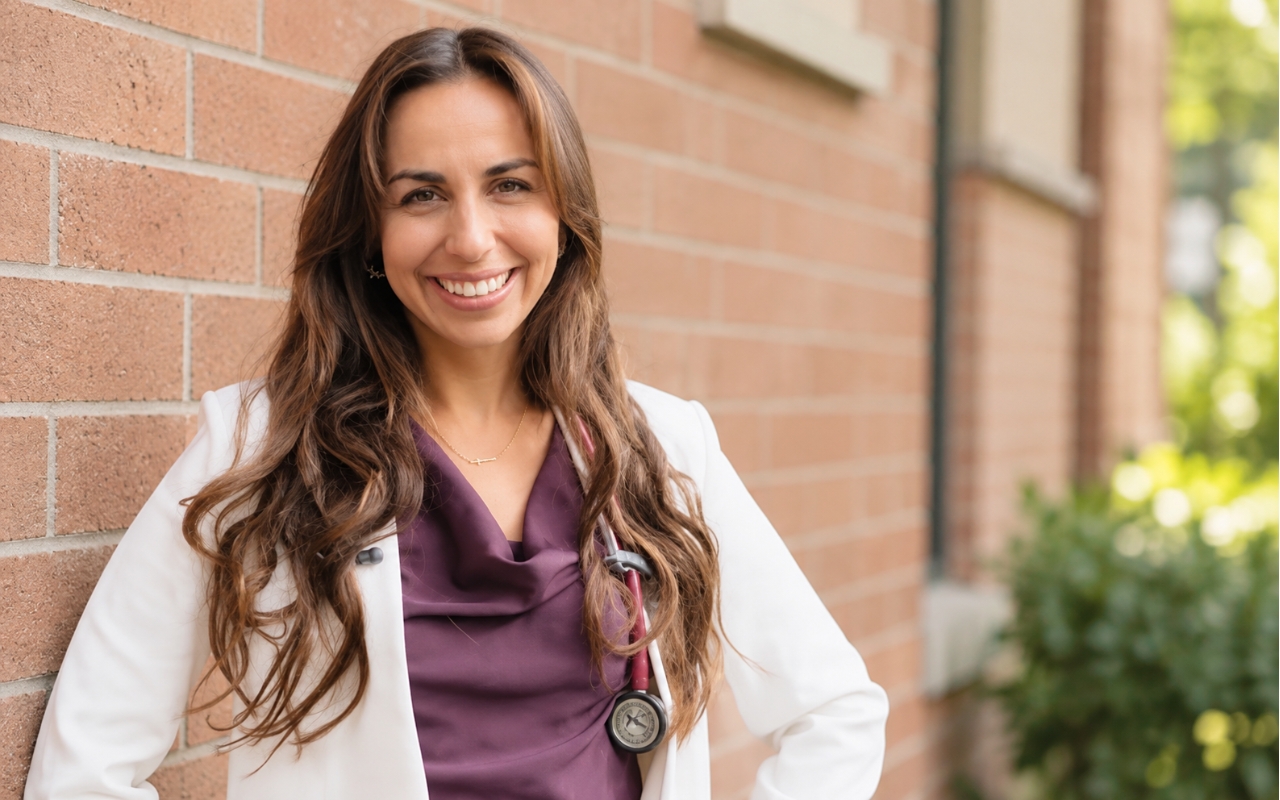
Alexandra Beattie (Hernandez), DNP, APRN, PCNP-BC, went to the home of a medically fragile child, expecting to teach his mother how to use his G-tube and feeding equipment after a hospital discharge.
Then she started reviewing his medications.
As Beattie read through the medication list, the child’s mother repeatedly handed her the wrong bottles.
The pediatric primary care nurse practitioner soon realized she faced a problem that standard discharge instructions could not solve. The mother spoke a specific dialect of Mixteco, an Indigenous language of Mexico, with very little English or Spanish. She also had limited literacy and difficulty reading the standard numeric system.
Her son depended on multiple medications, including anti-seizure and gastrointestinal drugs. Getting them wrong could have serious consequences.
“When I realized the caregiver did not have confident literacy of the standard numeric system, I realized drawing up 3.5 mL on a syringe and matching it to the 3.5 mL on the label was not realistic at least for the time being,” Beattie said.
So Beattie created another way to communicate.
When Translation Isn’t Enough
Beattie, now a Pediatric Primary Care Nurse Practitioner at Heritage Health, was working in San Diego at the time. She was accustomed to caring for families who did not speak English and said resources were readily available for commonly encountered languages such as Spanish and Arabic.
This situation was different.
Telephone interpretation was available, but Mixteco interpreters were difficult to access, and wait times were often long. Even when an interpreter was available, dialect differences could create additional communication challenges.
Interpretation alone also could not address the caregiver’s difficulty reading medication labels and numerical doses.
“It really opened my eyes to how hard staying out of the hospital is if you cannot access the language and education,” Beattie said. “We are so blessed to live in a country where there are many resources, but even here, our resources are still limited and sometimes creativity is required to help give patients the independence they want and deserve.”
For this child, an incorrect dose or missed medication could potentially lead to a prolonged seizure and further neurological damage, Beattie said. Problems with his gastrointestinal medications could interfere with his ability to tolerate enteral feedings, potentially leading to dehydration, malnutrition, or hospital readmission.
Shapes, Syringes and a Sharpie
Beattie’s solution was deliberately simple.
She used a Sharpie to draw a different shape on each medication bottle, then drew the corresponding shape on the syringe to use with that medication. She marked the syringe at the precise point to which the medication should be drawn and used paper tape to help keep the markings from rubbing off.
“If 5.5 mL of Keppra was needed, I would draw a triangle on the Keppra bottle and a triangle on the matching syringe and then on the triangle syringe I would mark exactly where 5.5 mL was so all the caregiver needed to do was match the shape on the bottle to the shape on the syringe,” Beattie said.
The system allowed the mother to match each medication to its corresponding syringe without having to interpret the numerical dose.
But Beattie knew the visual system had limitations.
Pediatric medication doses can change as a child grows, and the markings did not tell the caregiver whether to give a medication once a day, twice a day, or only as needed.
Creating the system was only the beginning of the nursing intervention.
Teach-Back Became the Safety Check
Beattie requested insurance authorization for additional home visits because she recognized that the caregiver needed more support than the originally planned G-tube education. She said insurance will sometimes cover palliative care visits for medically fragile children to provide additional caregiver support.
During subsequent visits, Beattie and other nurses repeatedly used the teach-back method to assess whether the mother understood how to administer the medications.
That continued oversight mattered because the system was meant as a temporary bridge, not a replacement for medication education.
“We continued this for several months, checking in on her. Most of the errors were caught at the first several visits and at subsequent visits each nurse was hypervigilant about making sure she was confident in what she was doing,” Beattie said.
The eventual goal was for the mother to become comfortable using the numeric system. Beattie said the woman’s older school-age children were also helping her learn.
Beattie said she was not aware of any hospital readmissions while the system was being used.
For the child’s mother, caring for her son herself meant something more immediate.
“She was so happy she could do it! Every visit the mother was so grateful and happy!” Beattie said. “It was evident that she adored her little boy and having him home meant the world to her.”
The mother had several other children, Beattie said, making hospitalizations particularly difficult because they separated the family.
“Because of this, she was very motivated to learn and an incredibly fast learner,” Beattie said.
A Personal Connection to Language Barriers
As Nurse Approved recognizes National Hispanic Heritage Month, Beattie’s story also reflects how her Puerto Rican heritage has shaped the way she approaches patients and families facing language barriers.
Both of her parents were born in Puerto Rico and were fluent in English, so Beattie said she did not personally experience many of the language barriers her patients encounter. Her grandparents, however, spoke little English.
“Oftentimes I think of them and how much I love them and how my heart breaks thinking of them receiving sub-par care or education due to a language barrier,” she said.
“Because of this, I think I really go out of my way even more than I otherwise would to make sure Latino patients and others with a language barrier receive the same care even if it means inconvenience, extra time, resources, etc. Every life and soul is precious, and everyone deserves to have a thorough understanding of what is going on in their own bodies and the health of those they care for,” Beattie said.
The Lesson for Nurses Starts at Discharge
The experience left Beattie with a lesson for nurses and other healthcare professionals: Don’t assume a patient or caregiver understands instructions simply because they appear to.
“I think nurses, providers, and all healthcare staff should pause, especially at the time of discharge, and take time to perform the teach-back method,” she said. “Without this, it is really easy for things to be missed. Especially in patients with language barriers.”
Some patients and caregivers will smile, nod, and say they have no questions even when they don’t understand what they have been told, Beattie said. When that happens, simply repeating the same education may not be enough.
“If gaps in education are noticed, then there needs to be a pause and resources and education need to be allocated,” Beattie said.
She acknowledged that healthcare teams can face pressure to discharge a patient once they are medically stable. But when a caregiver cannot safely carry out the care required at home, Beattie said clinicians need to document the problem and advocate for additional support.
“It may mean the provider or case manager doing extra work, but that work will always be worth it!” she said. “The patients and their families are always worth it.”
For one mother and her medically fragile son, that extra work began with something as simple as a Sharpie, a few shapes, and a nurse who realized the usual instructions weren’t working.
