


Estimated reading time: 5 minutes
As more women seek menopause care, Tufts University is building a university-wide initiative that brings clinical care, research, nutrition science, and medical education together around a stage of life that has historically received limited attention.
The Tufts Women’s Health and Menopause Initiative is developing a multidisciplinary clinical center, research infrastructure, and education for healthcare professionals. Menopause-dedicated clinicshave already opened in Boston, Braintree, and Norwood, with plans to expand in 2027.
The effort comes as menopause medicine is emerging as a specialized area of practice, but patients still face gaps in access to care and evidence about how best to manage symptoms.
“It’s estimated that 6,000 women enter menopause every day in the United States. But in 2024, the National Institutes of Health spent just 0.1% of their research budget on menopause-specific research,” said Larissa Calancie, the Linda and Jeffrey Moslow Assistant Professor of Women’s Health and Menopause at the Gerald J. and Dorothy R. Friedman School of Nutrition Science and Policy at Tufts University. “This is something that deserves resources and attention.”
Menopause is a natural stage of life, not a disease or medical condition. Many women spend a quarter to a third of their lives in perimenopause and the menopausal transition, yet questions remain about why symptoms vary so widely and which interventions work best for individual patients.
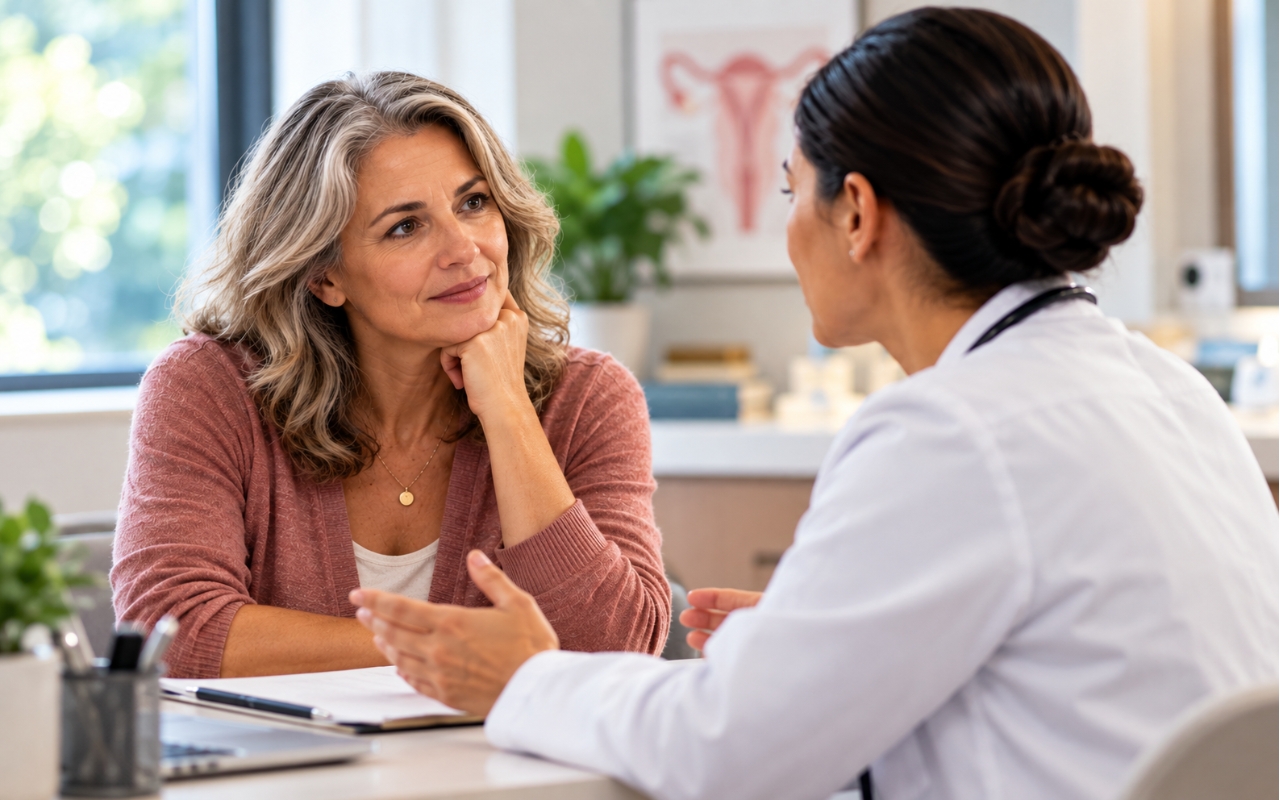
“Patients are almost overwhelmed with emotion just having a conversation about their symptoms, because they have felt for too long that people haven’t listened to them,” said Megan Evans, the Linda and Jeffrey Moslow Professor in Women’s Health and Menopause at Tufts University School of Medicine and an obstetrician and gynecologist at Tufts Medical Center.
“It’s not uncommon that I see patients who want a second opinion after another physician dismissed their symptoms or didn’t recognize perimenopause or menopause changes. The transition into menopause encompasses every aspect of someone’s well-being—mental health, sexual health, cardiovascular health, their life.”
A Growing Need for Menopause Care
Menopause medicine draws on expertise from gynecology, nutrition, endocrinology, primary care, and preventive medicine to address symptoms such as hot flashes and sleep problems, as well as longer-term considerations including bone health and cardiovascular risk.
But specialized care can be difficult to access. Evans said some patients face waits of six months to a year to see a menopause specialist.
Meanwhile, women in their 40s and 50s are encountering an abundance of health and aging information on social media. Evans said patients frequently bring information from wellness influencers into appointments. Some also seek hormones through online retailers or turn to medical spas that may offer faster appointments but promote supplements or injectables that can have harmful side effects or may not be safe for every patient.
“Some of that information is accurate, and some of it is only partially accurate,” Evans said. “One of the challenging parts of menopause medicine is that there’s a huge lack of research in this space, so there’s a lot we don’t know. Unfortunately, I think patients can get taken advantage of because of that. They want answers now, but research takes time to show that things are safe and effective.”
For nurses and other clinicians, this evolving evidence can complicate conversations with patients who arrive with questions about treatments or products they encountered outside traditional healthcare settings.
Building Care and Research Together
The initiative grew in part from the experience of Linda Moslow, who entered perimenopause in her early 40s and experienced months of anxiety, sleeplessness, and confusion before finding physicians who helped her understand what was happening.
“I was prepared educationally for what could happen, and I thought that because I took great care of myself that I would be immune to perimenopause,” Moslow said. “It hit me like a tornado! I was so grateful to have had incredible medical doctors who were well versed in women’s health and recognized what I personally needed in support. This is what drives me to change the experience for other women.”
Moslow and her husband, Jeff Moslow, chair of the Tufts University Board of Trustees, made a $4 million gift to establish the initiative and endow two inaugural professorships.
Calancie and Evans serve as co-directors.
One of the initiative’s early projects is a comprehensive intake process that collects clinical, lifestyle, and nutrition information before appointments, helping clinicians tailor care while also creating a resource for research.
“The patient intake form will also include a validated dietary screener that looks at dietary patterns and quality, which we’re really excited about,” Calancie said. “There are not many menopause health clinics around the country, and it’s especially unique to have one that looks at nutrition from the start and throughout care.”
Calancie said healthy eating patterns resembling a Mediterranean-style diet, or diets rich in high-quality fats and carbohydrates, are associated with fewer vasomotor symptoms such as hot flashes, as well as weight loss, healthy body composition, and lower rates of depression.
Researchers hope to investigate why some women experience severe symptoms while others do not, which interventions work best for different patients, and how lifestyle factors such as diet may influence symptom severity.
Closing a Menopause Education Gap
The initiative is also targeting gaps in menopause education and training.
Evans said medical students and residents historically have not received adequate menopause training, leaving some practicing physicians without a complete understanding of or comfort with menopause management.
She wants menopause incorporated across areas of medical education, including cardiovascular health, metabolism, and pregnancy, rather than confined to a single lecture. She also envisions expanding menopause education beyond medical students to other healthcare disciplines, including physician assistant and physical therapy students.
“The infrastructure we’re building is very exciting, but the driving force for me is to be a space where patients can feel that someone is listening and paying attention to their symptoms,” Evans said. “This is so much beyond treating patients’ symptoms. It’s treating their whole self.”
