


Estimated reading time: 5 minutes
A new wearable pulse oximeter developed at Tufts University automatically adapts to a patient’s skin reflectance and may improve the accuracy of blood oxygen monitoring across diverse patient populations. In testing, ChromaSense met FDA performance requirements and showed no observable skin tone bias.
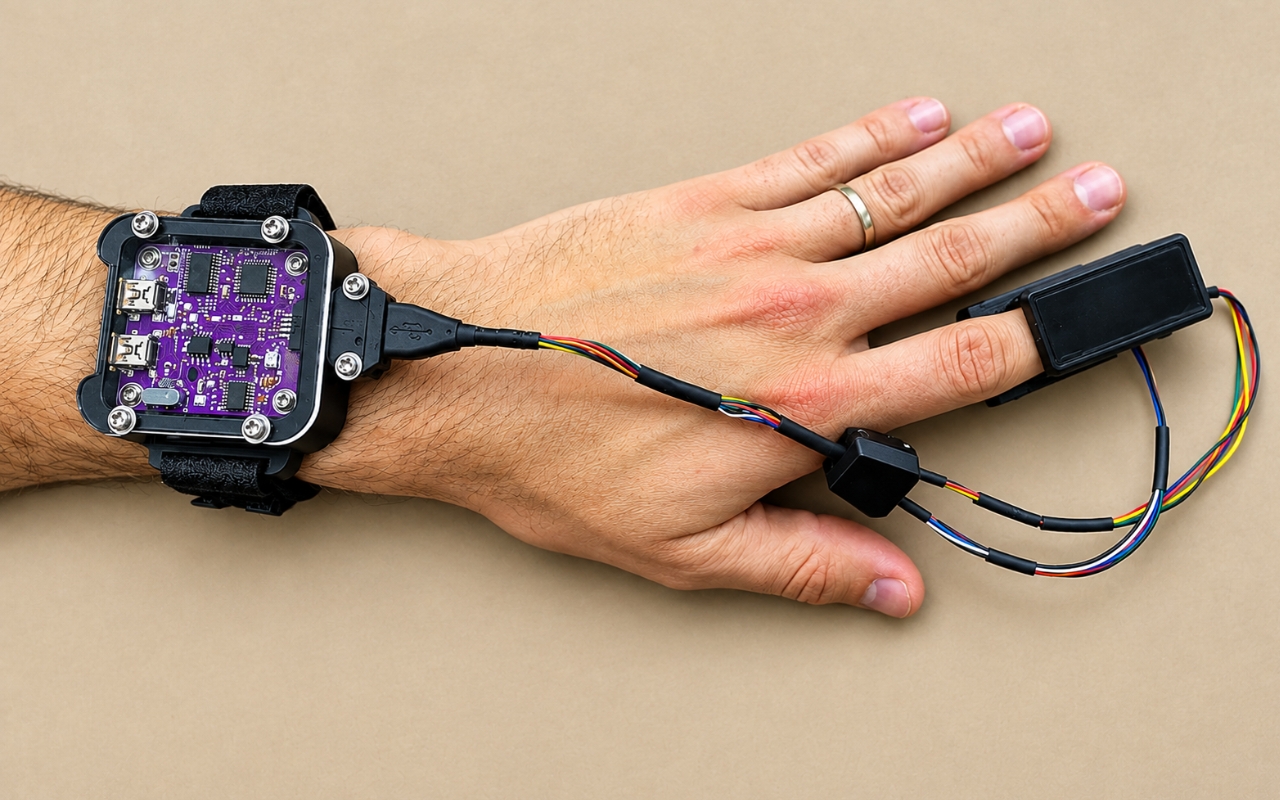
Researchers at Tufts University have developed ChromaSense, a wrist-worn device that measures oxygen saturation, heart rate, and respiratory rate. In testing, the device met FDA performance requirements and showed no observable skin tone bias.
For nurses, who rely on pulse oximetry to identify hypoxemia, monitor changes in patient condition, and guide treatment decisions, more reliable oxygen saturation readings could improve assessment across patients with a wide range of skin tones.
Want to see more Nurse Approved articles in your Google results? Add us as a preferred source.
Add Nurse Approved as apreferred source on Google
Why Pulse Oximeter Accuracy Matters
Pulse oximeters are among the most widely used monitoring tools in healthcare. They estimate oxygen saturation by measuring how red and infrared light interacts with blood flowing through tissue.
However, light does not interact with every person’s skin in the same way. Differences in skin pigmentation, blood flow, and age can influence the optical signals these devices rely on. Even small inaccuracies can affect decisions about supplemental oxygen, hospitalization, or intensive care.
Concerns about pulse oximeter accuracy gained national attention during the COVID-19 pandemic. A 2020 New England Journal of Medicine study found that despite reassuring pulse oximeter readings, as many as 17% of Black patients had occult hypoxemia, meaning dangerously low arterial oxygen levels that were not detected by the device. Researchers reported the misdiagnosis rate was more than three times higher than that seen in White patients.
A Different Approach to Pulse Oximetry
Developed in the laboratory of Valencia Koomson, associate professor of electrical and computer engineering at Tufts University, ChromaSense differs from conventional pulse oximeters by accounting for each patient’s skin reflectance before taking measurements.
Unlike traditional pulse oximeters that clip onto a finger and measure light passing through tissue, ChromaSense is worn on the wrist.
The device measures light reflected from the skin and underlying tissue, using each patient’s skin reflectance profile to calibrate both its light output and signal-processing algorithms. Rather than assuming one setting works for every patient, it individualizes measurements based on the user’s characteristics.
Device Meets FDA Performance Standards
Researchers first evaluated ChromaSense in 50 adults with varying levels of skin pigmentation.
In that study, oxygen saturation measurements were within 1.4% of a standard reference pulse oximeter, well within FDA performance requirements.
The latest evaluation tested the device under more demanding conditions.
Conducted at the Hypoxia Research Laboratory at the University of California, San Francisco, investigators deliberately and briefly lowered oxygen saturation levels between 70% and 100% in healthy adult volunteers.
The study included Black, Asian, Hispanic, White, and multiethnic participants. Researchers compared ChromaSense with a blood-based reference oximeter that is not affected by skin tone.
The wearable device measured oxygen saturation within 2.87% of the reference standard, meeting FDA performance requirements. Investigators also reported no observable skin tone bias, including at lower oxygen levels.
For nurses, improved pulse oximeter accuracy could help reduce uncertainty when assessing oxygen saturation in patients with a wide range of skin tones.
How Photoplethysmography Helps Improve Accuracy
ChromaSense relies on photoplethysmography (PPG), which analyzes changes in reflected light as blood pulses through tiny blood vessels. Those signals allow the device to estimate oxygen saturation, heart rate, and respiratory rate.
Koomson said PPG provides insight into how effectively the heart pumps blood throughout the body.
“Really a measure of how well your heart is actually pumping blood through your arteries to your extremities and back. The spacing between peaks gives heart rate, light absorption and reflection give oxygen levels, and a slower pattern of changes in pulse amplitude and frequency indicates breathing rate. All are tied to the movement of blood as the heart contracts and relaxes.”
Melanin absorbs and scatters light, which can weaken or alter the optical signal in people with darker skin if devices are not designed to account for those differences.
Researchers Explore Future Blood Pressure Monitoring
The research team is also exploring whether ChromaSense could eventually estimate blood pressure without using an inflatable cuff.
Some existing cuffless blood pressure technologies have shown inconsistent performance across different patient populations. Koomson said current commercial systems can be “as little as 40% accurate for some subgroups.”
Using machine learning, her team analyzed data from 2,315 adult ICU patients to estimate systolic and diastolic blood pressure from those waveforms while accounting for differences in skin tone, age, and gender. Researchers reported accuracy of up to 90% for systolic and diastolic blood pressure measurements.
That capability has not yet been incorporated into ChromaSense.
“The blood-pressure work is not yet built into ChromaSense, but the goal is in the future to embed that machine learning model into the device.”
Why It Matters for Nurses
Pulse oximetry remains one of the most frequently used assessment tools in nursing practice. Accurate oxygen saturation measurements help nurses recognize clinical deterioration, monitor response to treatment, and communicate changes in patient condition.
As wearable monitoring devices become increasingly common in clinical care, ensuring they perform accurately across diverse patient populations will remain an important patient safety and health equity priority.
“If you train a model that converts light signals to blood oxygen, pulse, or pressure and you don’t ensure that the dataset that you’re training with is diverse enough in terms of age, race, and gender, it can affect the performance or accuracy of the model,” Koomson said. “An apparently high-performing model can look far less impressive once broken down into specific groups.”
