


Most healthcare transformation does not begin with a press release. It begins inside workflows, staffing models, and the quiet redesign of how care is delivered.
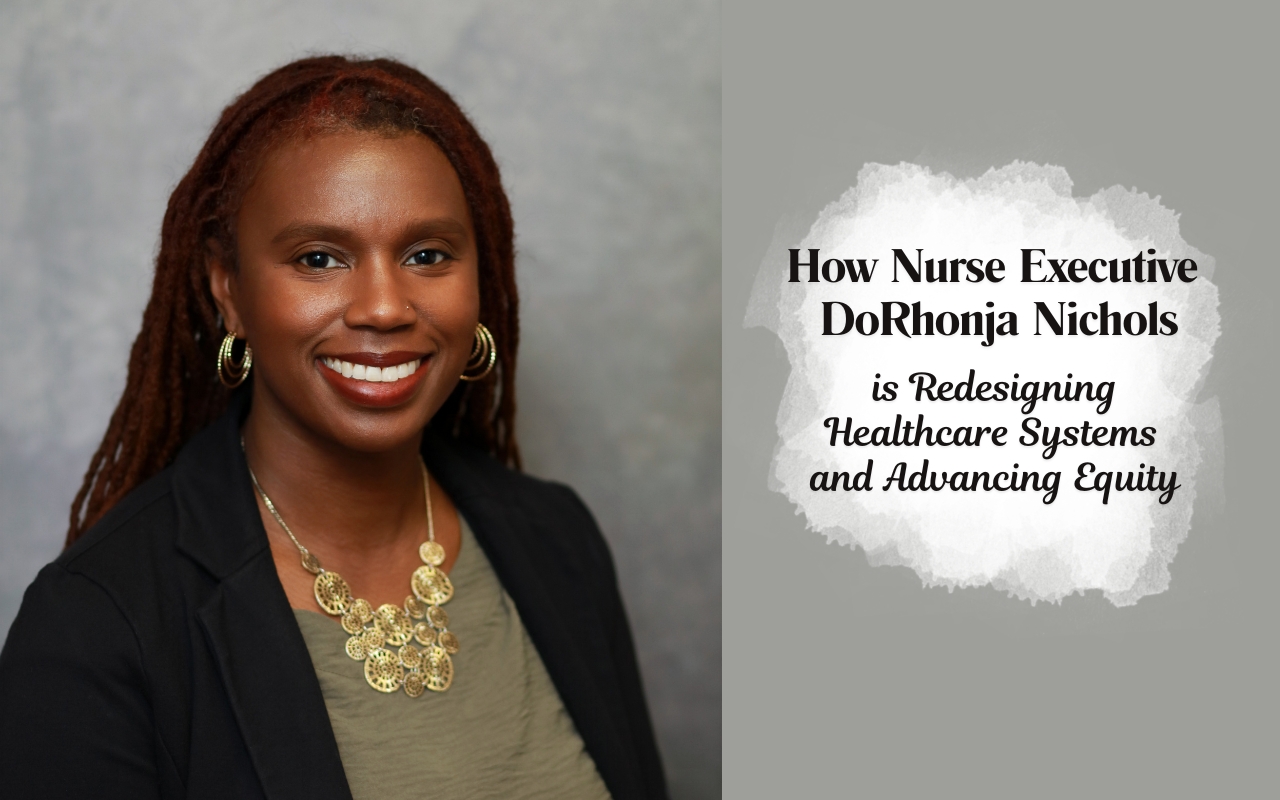
For DoRhonja Nichols, DNP, RN, NEA-BC, system change is not a slogan. It is structure. As Director of Critical Care and Behavioral Health Services at the University of Maryland Medical System, she has focused her leadership on strengthening the intersection of quality, safety, workforce stability, and equity in some of the hospital’s highest-acuity environments.
This is the kind of impact that rarely trends. But it reshapes healthcare from the inside out.
As part of Nurse Approved’s Black History Month series, The Unseen Shifts — How Nurses of Color Have Quietly Changed Healthcare Systems, Dr. Nichols’s work reflects a sustained commitment to excellence, equity, and workforce empowerment across multiple high-acuity programs at UM St. Joseph Medical Center.
Building Systems That Strengthen Care
When asked to step back and identify the system-level issue she has been most determined to address, Dr. Nichols points to a critical intersection: quality, safety, and workforce engagement.
In critical care and behavioral health settings, these elements cannot be separated. Patient outcomes are directly influenced by the strength, stability, and support of the teams providing care.
Her focus has been clear. Build systems that reliably produce excellent clinical outcomes while fostering environments where team members feel heard, valued, and equipped to perform at their highest level. That work includes strengthening safety cultures, reducing practice variation, investing in leadership development, and building structures that promote psychological safety and accountability.
This commitment is personal. Patients deserve care delivered with the same attentiveness and dignity clinicians would expect for their own families. At the same time, professionals who choose demanding, high-acuity work deserve intentional investment and meaningful support.
When systems are designed to fully support both patients and the people who care for them, excellence becomes sustainable clinically, operationally, and culturally.
Reimagining Capacity Through Virtual Nursing
As lead of the UMMS Virtual Nursing Program, Dr. Nichols helped implement a model that has delivered more than 6,800 virtual hours and over 31,000 visits across six hospitals.
The problem she sought to solve was not a clinical competency issue. It was one of capacity.
Bedside nurses are highly skilled, yet increasingly constrained by competing demands. Documentation burden, discharge teaching, and care transitions often occur under time pressure. That strain contributes to burnout and limits opportunities for meaningful patient education and connection.
The goal was not to replace bedside nursing. It was to extend it.
By transitioning admission assessments, individualized care planning, patient and family education, and discharge teaching to virtual nurses, the program redistributed responsibilities in a way that aligned responsibilities with capacity. Bedside nurses were able to concentrate on real-time assessments and complex interventions. Cognitive load decreased. Task fragmentation improved. Workflow continuity strengthened.
Early pilot data reflected improvements in nurse satisfaction, workload balance, and enjoyment in coming to work.
But another outcome emerged.
Dr. Nichols recalls observing a virtual discharge encounter in which a nurse provided comprehensive education to a patient and a family member. The conversation was unhurried and thorough. When complex questions surfaced, the nurse collaborated with the physician to ensure clarity and accuracy.
It was nursing at its purest: education, advocacy, and relationship-centered care.
Virtual nurses later shared that the role reconnected them with the reasons they entered the profession. With a dedicated focus on teaching and engagement, they experienced renewed purpose. Patients and families expressed appreciation for the clarity and attention they received.
In high-acuity and behavioral health settings, focused presence is invaluable. The virtual care model enabled nurses to engage with a single patient at a time for extended, uninterrupted interaction. Technology-supported integrated interpreter services enabled family participation in real time, strengthening communication and understanding. Many patients even asked about requesting a virtual nurse during future admissions.
Innovation, when thoughtfully executed, can simultaneously strengthen outcomes and professional meaning.
Equity in the Everyday Details
Not all system changes involve advanced technology. Some of the most meaningful shifts are rooted in respect.
Dr. Nichols chaired a systemwide workgroup to address gaps in culturally inclusive hair products, partnering with a local woman-owned business to improve access.
To some, this may appear small. To her, it is equity.
Access to culturally appropriate personal care items does not cease to matter once a patient is hospitalized. All patients should be able to wash and comb their hair with products that maintain their health and identity rather than detract from it.
Healthcare can sometimes narrow its focus to medical needs alone. True equity requires valuing and caring for the whole person. When hospitals attend to everyday details that affirm identity and dignity, they build trust and strengthen care.
What Culturally Responsive Care Requires
In facilities where up to 70 percent of the inpatient population is Black, culturally responsive care extends far beyond policy statements.
Hospitals care for patients during some of the most vulnerable moments of their lives. Culturally responsive care begins with appreciation and understanding of the communities served. It includes employing team members across roles and disciplines who reflect the local population, helping foster safety and trust through the patient’s eyes.
It also requires confronting disparities directly. Identifying potential bias in areas such as pain management or maternal morbidity and mortality, and building structures to address them, moves equity from aspiration to action.
Developing Equity-Minded Leaders
Through the Vizient New Graduate Nurse Residency Program, Dr. Nichols facilitates dialogue on unconscious bias and inclusive practice. She believes early-career nurses must intentionally recognize, value, and celebrate diversity of perspectives, backgrounds, and experiences within both patient populations and care teams.
This foundation positions them to become thoughtful advocates who design care frameworks responsive to community needs.
Equally important is sustained commitment to growth. Intellectual curiosity, humility, and continuous learning are essential. As nurses advance, they take on responsibility not only to excel individually but also to mentor, uplift, and create pathways for others.
Mentorship as Infrastructure
For Dr. Nichols, mentorship and sponsorship are not side projects. They are central to leadership.
She is deliberate about paying forward the guidance and advocacy that shaped her own career. Mentorship includes helping leaders broaden perspectives and lead with strategic insight and empathy. Sponsorship goes further. It means advocating for advancement, recommending stretch opportunities, and connecting emerging leaders to influential networks that accelerate growth.
Her approach reflects a clear philosophy: influence carries responsibility. Using one’s voice and credibility to position others for visibility and promotion is part of the work.
Influencing Change as a Nurse of Color
As a Black nurse executive leading system-level initiatives, Dr. Nichols has learned that her voice matters and that it is her responsibility to determine how best to use it.
Leadership requires stewardship over what is entrusted. Influence holds weight, and that weight demands wisdom. She values those around her and intentionally creates diverse groups of thought and expertise to bring about effective change.
This is not performative inclusion. It is structural leadership.
The Meaning of Quiet Impact
Black History Month often highlights visible milestones. Dr. Nichols’s work reflects sustained, behind-the-scenes redesign
To her, quiet impact means walking in her purpose and fulfilling her assignment to the best of her ability. Impact does not need to be loud to bring about change. It must be honest, humble, integral, and contribute to a vision greater than oneself.
Her hope for the next generation of nurses of color is simple and profound. That they will not have to fight for a place that is already theirs. That serving alongside leaders who look like them will not be rare or exceptional, but normal and celebrated. That diversity will be interwoven into the fabric of healthcare and community without debate.
The unseen shifts happening inside healthcare systems today are not accidental. They are the result of leaders like DoRhonja Nichols who redesign structures, redistribute opportunity, and restore dignity through disciplined, thoughtful action.
Quietly, consistently, and with purpose.
