
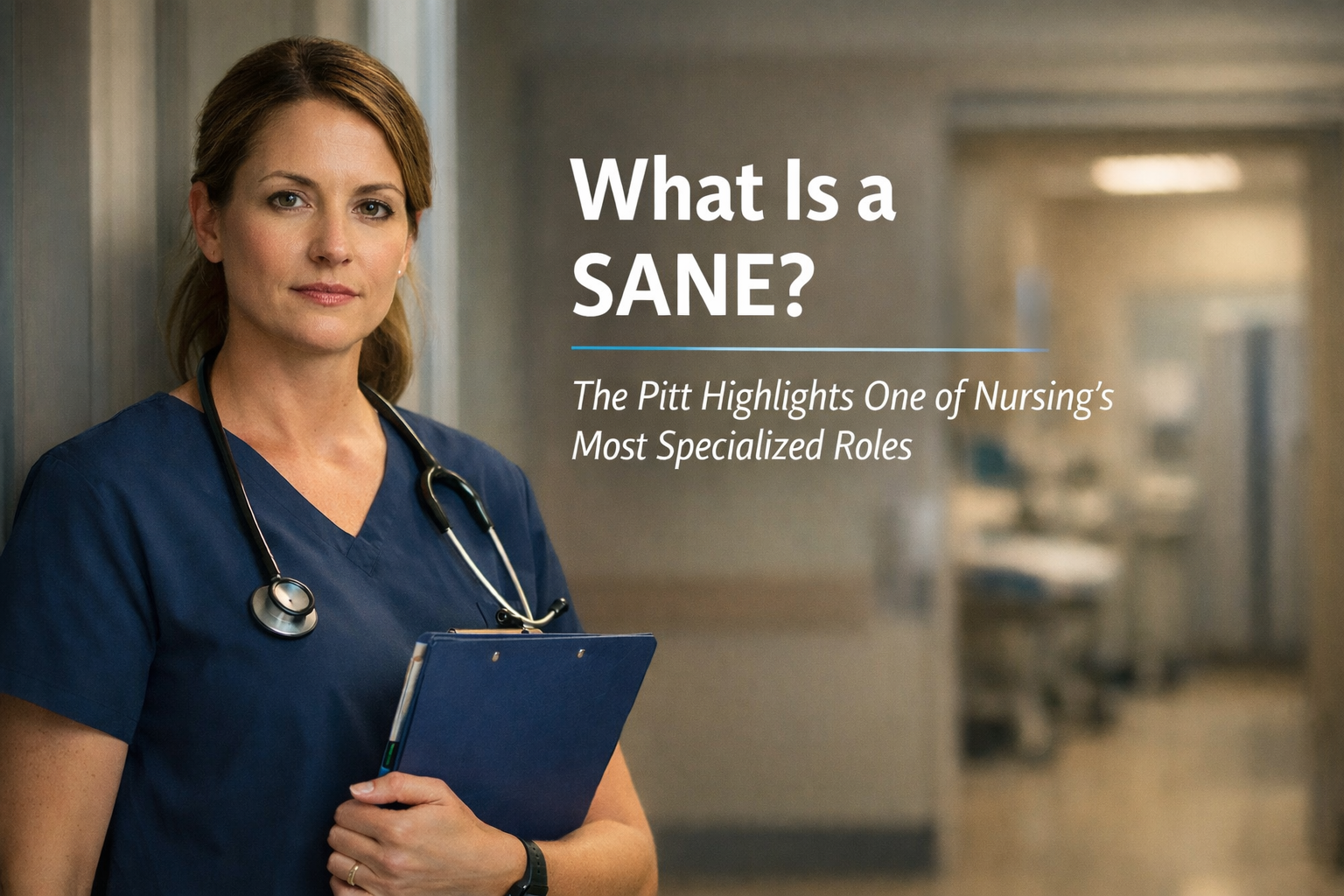

In The Pitt Season 2, Episode — Titled “1:00 P.M” — HBO Max Charge Nurse Dana steps into a role many viewers may not have known existed. When a young sexual assault survivor arrives in the emergency department, Dana assumes care because she is the hospital’s designated SANE — Sexual Assault Nurse Examiner.
The show does something important: it slows down. It shows consent. It shows careful documentation. It shows a nurse who understands that this moment is not only clinical — it is life-altering.
And in doing so, it brings national attention to one of nursing’s most specialized and impactful roles.
What Is a SANE?
A Sexual Assault Nurse Examiner (SANE) is a registered nurse (RN) or advanced practice registered nurse (APRN) with specialized education and clinical preparation in providing sexual assault medical forensic care.
According to the U.S. Department of Justice’s Office on Violence Against Women National Protocol, these exams must be patient-centered, trauma-informed, and grounded in informed consent at every step.
SANEs are trained to:
• Conduct comprehensive medical assessments
• Provide injury care and preventive treatment when indicated
• Collect and preserve forensic evidence when the patient consents
• Maintain chain of custody standards
• Document findings objectively and thoroughly
• Coordinate with advocacy services
• Provide testimony in court if required
This is not simply “doing a rape kit.” It is a specialized clinical and forensic process designed to preserve both patient dignity and legal options.
What Happens During a Sexual Assault Medical Forensic Exam?
Television often condenses this process. In reality, it is structured but flexible — guided entirely by patient consent.
The DOJ National Protocol emphasizes that patients may decline any portion of the exam and may withdraw consent at any time.
A SANE exam may include:
• Medical and assault history (as the patient chooses to share)
• Head-to-toe assessment
• Injury documentation, including written and sometimes photographic documentation
• Evidence collection using standardized forensic kits when consented
• Evaluation for STI exposure and pregnancy risk
• Discharge planning and referrals for advocacy and follow-up care
Evidence collection must follow strict procedures to prevent contamination and maintain the chain of custody, ensuring admissibility if the patient chooses to pursue legal action.
But the core of the role is this: restoring control in a moment where control was taken.
How Does a Nurse Become a SANE?
While requirements vary by state and employer, national professional standards provide a clear framework.
1. Hold an Active RN or APRN License
Candidates must have an unrestricted nursing license.
2. Complete a 40-Hour SANE Didactic Course
This education covers:
• Trauma-informed care
• Forensic evidence collection
• Documentation standards
• Legal testimony preparation
• Cultural sensitivity and victim advocacy
3. Complete Clinical Preceptorship
Supervised clinical training allows nurses to apply forensic and trauma-informed skills in real-world cases.
4. Meet Practice Hour Requirements for Certification
The International Association of Forensic Nurses offers SANE-A (Adult/Adolescent) and SANE-P (Pediatric) certification. Eligibility includes documented clinical practice hours in addition to education requirements.
Certification is not federally mandated but is widely recognized as best practice.
The Skills Required to Become a SANE
This specialty requires a rare combination of clinical precision and emotional intelligence.
According to national protocol guidance, trauma-informed care principles include safety, trustworthiness, transparency, empowerment, and choice.
A SANE must demonstrate:
• Calm presence in high-trauma encounters
• Exceptional communication skills
• Nonjudgmental, consent-based practice
• Meticulous documentation and attention to detail
• Comfort collaborating with interdisciplinary partners
• Emotional resilience and professional boundaries
It is one of the most technically demanding and emotionally layered nursing specialties.
Why This Role Matters
Sexual assault survivors deserve medical care that is competent, compassionate, and legally sound.
Research and national guidance indicate that specialized forensic examiners improve evidence quality and patient experience compared to non-specialized providers.
Programs that utilize SANE-trained nurses are considered best practice in coordinated community responses to sexual assault.
The Pitt portrays something many nurses already understand: some of the most powerful nursing work happens quietly — in rooms where dignity, consent, and control matter more than speed.
New episodes of The Pitt stream on Thursday nights at 9 p.m. on HBO Max. If you haven’t watched yet, consider this your official Nurse Approved recommendation.
