


Estimated reading time: 3 minutes
A Virginia health system’s dietitian-led program using electromagnetic feeding tube placement reduced ventilator-associated pneumonia by 67% and saved 350 nursing hours in one year, according to a new article in Critical Care Nurse.
This initiative at Inova Health not only expanded postpyloric feeding tube placement but also reduced complications, building on the program’s core mission to streamline bedside care for critically ill patients.
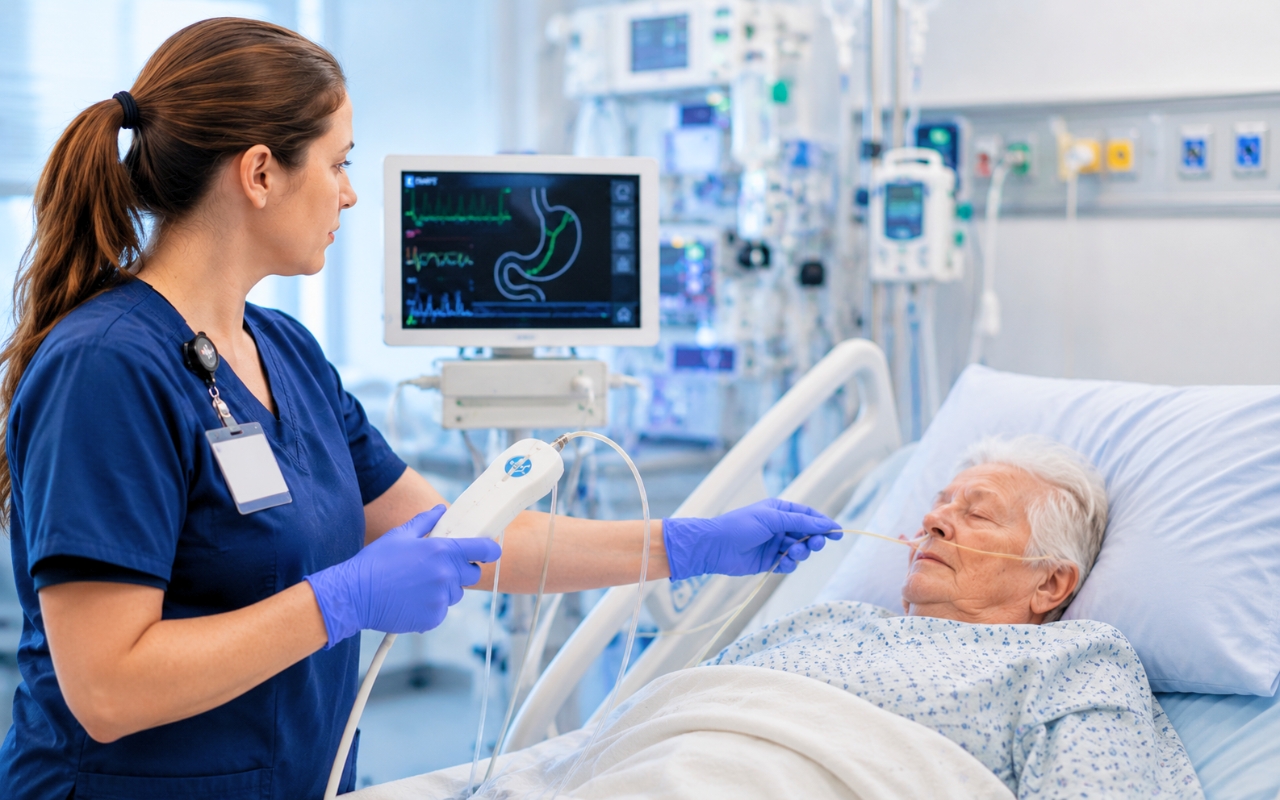
Driving these results was the adoption of an electromagnetic sensor-guided feeding tube system (EMFT), enabling real-time monitoring of tube placement at the bedside.
Technology Expands Bedside Feeding Tube Placement
Inova operates five acute care hospitals, ranging in size from 237 to 923 beds. Across the health system, approximately 1,600 nasal feeding tubes are placed annually in intensive care units that include trauma, surgical-trauma, cardiovascular, medical-surgical, and neurocardiovascular units.
Before launch, most feeding tubes were placed using traditional bedside techniques, lacking real-time visualization, which made postpyloric placements rare and were usually performed by interventional radiology or endoscopy specialists, with fewer than 10 placements a year.
With the program in place, during the first year after implementation, clinicians placed 531 feeding tubes using EMFT technology. Registered dietitian nutritionists placed 350 tubes, while registered nurses placed 181.
Thanks to these changes, each placement, averaging about an hour, contributed to cumulative savings of approximately 350 nursing hours over 12 months.
Pneumonia Rates and Nursing Time Improved
The program produced markedly improved clinical outcomes, demonstrating a strong impact on patient safety and efficiency.
Postpyloric tube placements increased dramatically, rising from five total placements before implementation to 221 in the program’s first year. This represents a 4,320% increase in postpyloric tube placements.
Radiology reports found no lung placements by the trained superuser team.
Further demonstrating impact, the health system reported a 20% reduction in radiographs ordered to confirm suspected feeding tube migration, as clinicians increasingly verified tube positioning at the bedside.
Ventilator-associated pneumonia cases declined by 67%, dropping from 48 to 16 patients. Additionally, hospital-acquired aspiration pneumonia among ICU patients decreased by 20%, from 525 cases before the program to 418 during the program’s first year.
Interprofessional Collaboration Drove the Rollout
The rollout began with a review of national guidelines, evidence, and available technology, and progressed with a 10-day pilot program in one ICU at each of Inova’s five hospitals.
A standardized five-step placement process, with competency and education requirements, ensured consistent, high-impact results, prioritizing the most vulnerable patients in ICUs at greatest risk of complications.
Each facility designated a dietitian and nurse superusers who served as a core placement team supporting bedside staff during the rollout.
“Nurses have embraced the dietitian-led EMFT placement program as a true interprofessional partnership focused on achieving the safest possible feeding tube placement for their most acutely ill patients,” said Jamie Grandic, RDN-AP, CNSC. “The positive outcomes from this initiative exceeded our expectations.”
Meagan Davis, RDN-AP, CNSC, said the program helped standardize care while improving both patient safety and workflow for care teams.
“By combining advanced technology with specialized nutrition expertise, we were able to reduce delays in treatment and give nurses more time to focus on the complex needs of critically ill patients,” Davis said.
About six months after launching the ICU program, Inova expanded the process to additional patient populations who met criteria for postpyloric tube placement.
