

Estimated reading time: 3 minutes
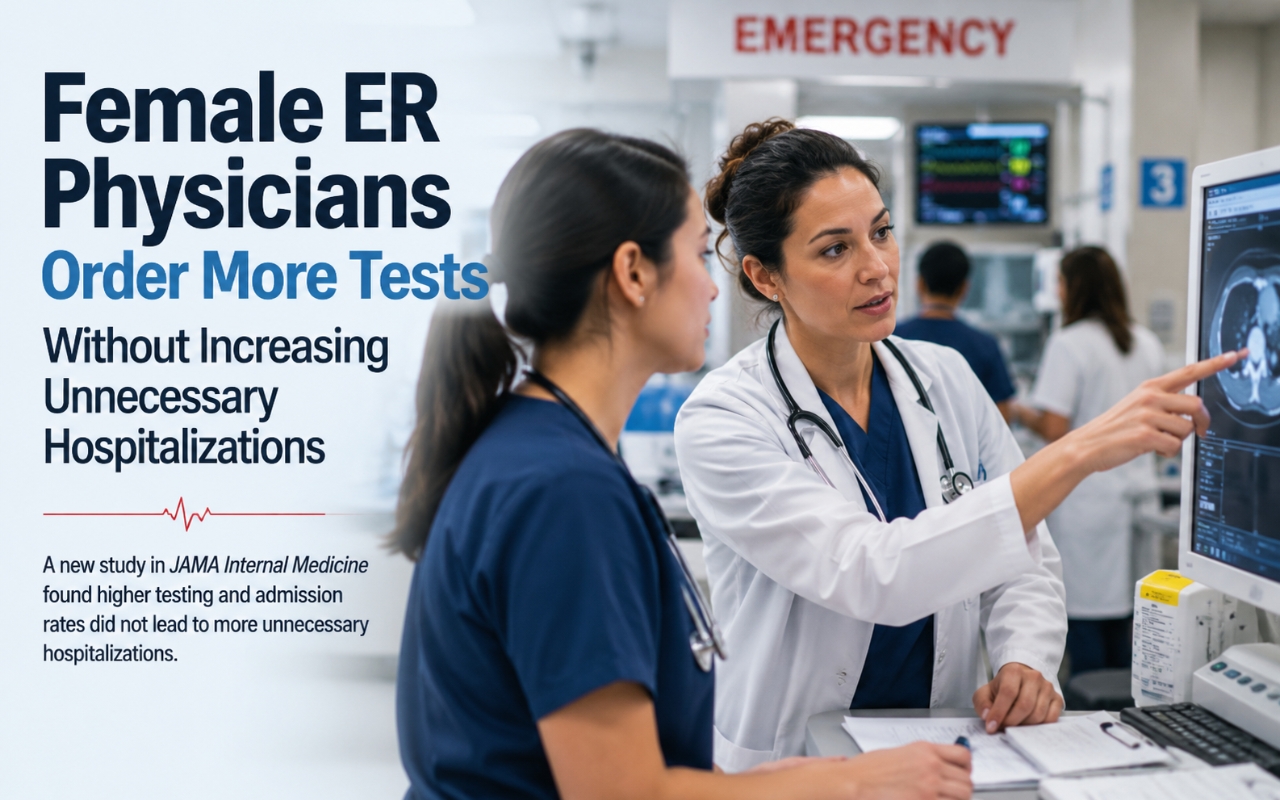
Female emergency physicians order more diagnostic tests and admit more patients than their male peers, but those higher rates do not appear to result in more unnecessary hospitalizations, according to a new study published in JAMA Internal Medicine.
The research offers new insight into how physicians navigate diagnostic uncertainty in the emergency department. For emergency nurses and nurse practitioners, the findings reflect a challenge they navigate every shift: helping evaluate patients whose symptoms may or may not signal serious illness while ensuring timely, evidence-based care.
Study Examined More Than 1.5 Million Emergency Department Visits
Researchers from UCLA Health analyzed more than 1.5 million emergency department visits by veterans, comparing care provided by female and male physicians working in the same emergency departments.
Unlike primary care, where patients often choose their physician, emergency department patients generally do not, allowing researchers to better compare physician practice patterns.
The study found female physicians ordered approximately 3% to 5% more laboratory and imaging tests and admitted 3% to 5% more patients to the hospital than male physicians.
More Testing Did Not Mean More Unnecessary Care
Additional laboratory and imaging studies were just as likely to uncover clinically important findings, suggesting the higher testing rates were medically appropriate rather than unnecessary.
“Our research finds that in the emergency department setting, female and male physicians may approach diagnostic uncertainty differently, and these differences don’t necessarily represent unnecessary care,” said Dan Ly, assistant professor of medicine in the Division of General Internal Medicine and Health Services Research at the David Geffen School of Medicine at UCLA and the VA Greater Los Angeles.
Researchers also used short inpatient stays as a commonly accepted marker of potentially unnecessary hospitalizations. In that comparison, patients admitted by female physicians were no more likely to have brief hospital stays than those admitted by male physicians.
Mortality Rates Were Similar
The study found no difference in mortality between patients treated by female and male emergency physicians.
“We found no differences in mortality from this additional care, but mortality rates don’t tell the whole story,” Ly said.
The researchers noted that mortality does not capture all meaningful patient outcomes, including missed diagnoses and quality of life.
Study Raises New Questions About Diagnostic Decision-Making
The authors said future research should explore why female and male physicians appear to approach diagnostic uncertainty differently, including whether differences in risk aversion contribute to the findings. They also hope to examine outcomes beyond mortality, such as missed diagnoses and quality of life.
For emergency nurses, the findings underscore the complexity of emergency department decision-making. Whether the decision is to order another test, admit a patient, or discharge them safely, emergency care depends on close collaboration between physicians, nurses, and the broader healthcare team. The findings suggest there may be more than one clinically appropriate approach to caring for patients with uncertain diagnoses.
