
Estimated reading time: 4 minutes
Recent headlines involving veteran broadcast journalist Scott Pelley and CBS News have sparked renewed discussion about journalistic independence, public trust, and the role of facts in reporting.
The circumstances surrounding the dispute have drawn significant attention in media circles, prompting conversations about how news organizations balance business pressures, editorial decisions, and the public’s expectations for accurate reporting.
Whatever people think about the dispute, it has reignited broader conversations about trust, accountability, and the role of evidence in informing the public.
For nurses, those questions may sound surprisingly familiar.
Trust Is Built on Facts
At its core, journalism is intended to serve the public by gathering facts, verifying information, and presenting accurate reporting. The goal is not to tell people what to think, but to provide information that helps them make informed decisions.
Nursing operates on a remarkably similar foundation.
Every day, nurses rely on evidence-based practice, clinical judgment, and verified information to guide patient care. Whether explaining a diagnosis, educating a patient, or advocating for a treatment plan, nurses understand that accuracy matters.
That same principle applies to journalism. Public confidence depends on the belief that information has been researched, verified, and presented with integrity.
Why Credibility Matters More Than Ever
Healthcare professionals have seen firsthand how misinformation can influence patient decisions.
From vaccine myths to viral health trends circulating on social media, nurses frequently find themselves correcting inaccurate information and helping patients distinguish between evidence and opinion.
At the same time, Americans are navigating a constant stream of information from traditional news outlets, social media platforms, podcasts, influencers, and artificial intelligence-generated content.
In this environment, trusted experts play an increasingly important role. Nurses consistently rank among the most trusted professionals in the United States, giving them a unique opportunity to help the public navigate complex health information.
The Nursing Perspective Is Often Missing
Despite their expertise, nurses remain underrepresented in news coverage.
Healthcare stories often feature physicians, administrators, policymakers, and researchers. Yet nurses, who spend more time with patients than any other healthcare professional, are often absent from the conversation.
That absence matters. Nurses witness how healthcare policies affect patients in real time, including staffing challenges, patient safety concerns, health inequities, and caregiving realities that statistics alone cannot fully capture.
When nurses share their experiences and expertise, public understanding of healthcare improves.
Nurses Don’t Need a Newsroom to Be Heard
The media landscape has changed dramatically over the past decade.
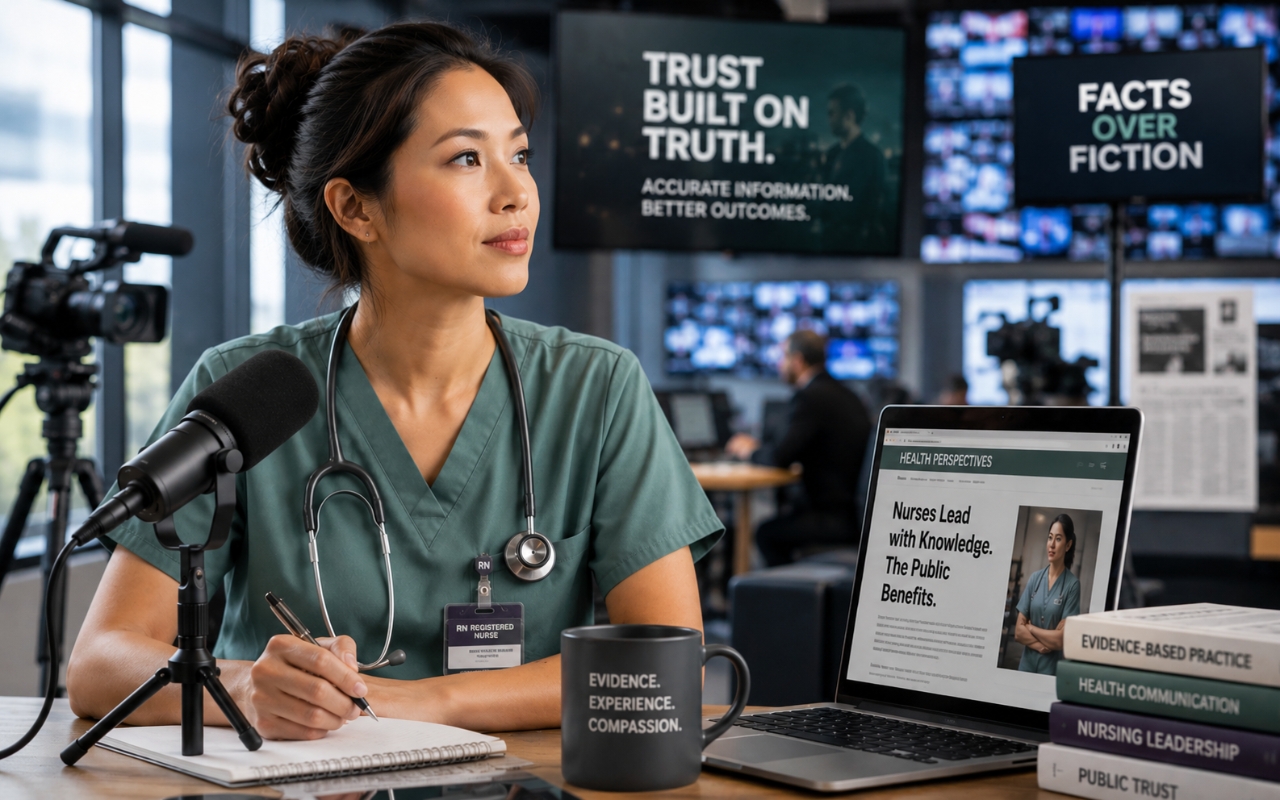
Today, nurses can contribute to professional publications, write opinion pieces, host podcasts, create educational videos, build newsletters, publish on LinkedIn, or engage audiences through social media.
Many nurses are already doing exactly that.
Some educate patients about chronic disease management. Others discuss workforce challenges, nursing education, leadership, patient advocacy, or emerging healthcare trends.
Professional publications also provide an important platform for nurses to share their expertise. For example, outlets such as Nurse Approved give nurses opportunities to contribute articles, commentary, and insights that help inform colleagues and educate the public on issues affecting healthcare.
The result is a growing ecosystem of nurse-led and nurse-informed media that helps amplify voices often overlooked by traditional outlets.
Importantly, these opportunities allow nurses to share evidence-based information while maintaining the professional standards that define nursing practice.
Why Nurse Voices Matter
Healthcare stories often focus on systems, policies, and statistics. Nurses add something equally important: the human experience.
They see how healthcare decisions affect patients and families in real time, and their perspective helps transform complex issues into stories people can understand and relate to.
At a time when healthcare is becoming increasingly complex, that perspective is more valuable than ever.
A Call for More Nurses to Speak Up
The recent debate over journalism and public trust offers an important reminder: facts, evidence, and integrity matter.
These are values that journalists strive to uphold and values that nurses practice every day.
As healthcare continues to evolve, the profession needs more nurses to share their knowledge, tell important stories, and shape public conversations about health and healthcare.
Whether through writing, speaking, podcasting, teaching, or creating content, nurses have an opportunity to shape those conversations with expertise and evidence.
The public does not need fewer experts in the discussion.
It needs more nurses to speak up.
