Estimated reading time: 8 minutes
Tavi Schlueter, MSN, CPNP-PC, PMHS, spent more than 13 years caring for children with complex medical and psychiatric needs. Today, the pediatric nurse practitioner is confronting a different kind of healthcare complexity: the state-by-state rules that can shape where and how nurse practitioners can practice.
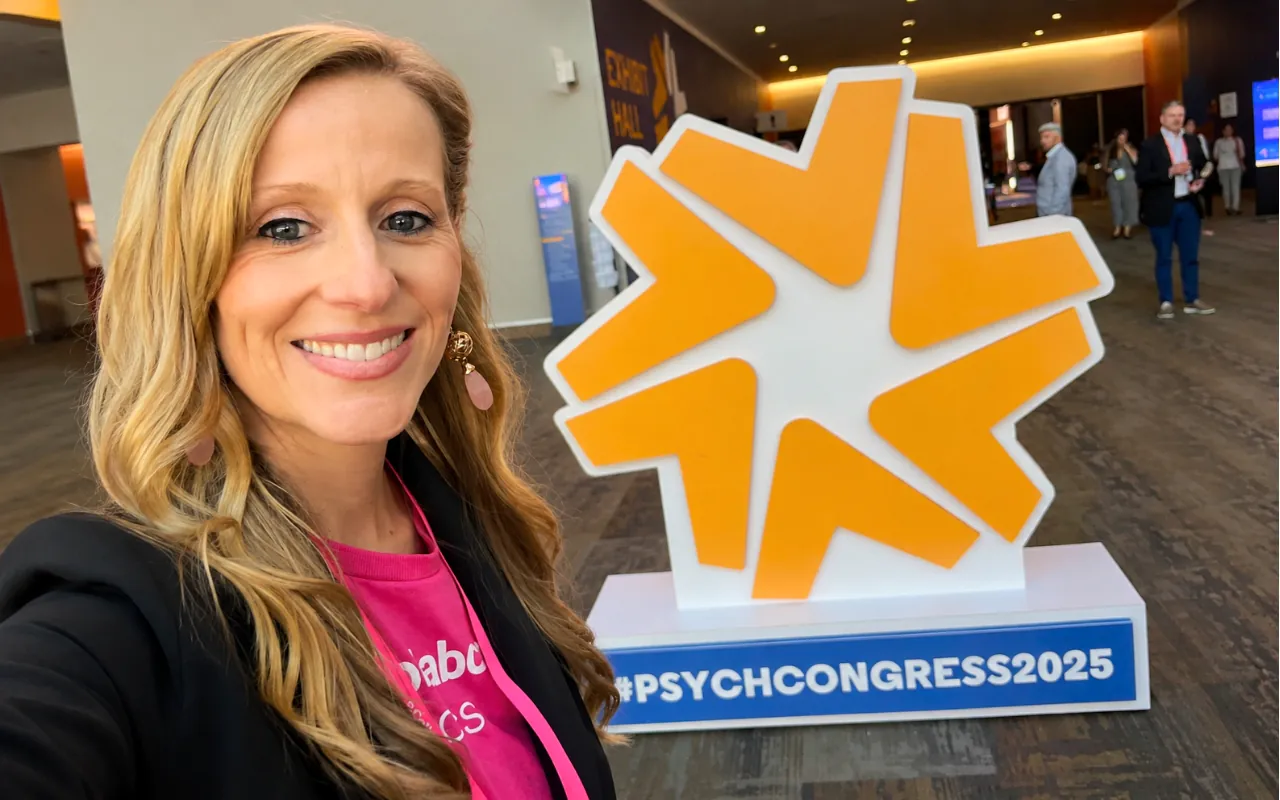
As Director of Growth Initiatives at CollabDocs, Schlueter works with NPs, PAs, physicians, healthcare organizations, and other partners around physician collaboration and the infrastructure clinicians may need to practice across different states.
The work has given her a close view of a challenge facing advanced practice nursing. NP education and national certification follow national standards, but practice requirements can change when clinicians cross state lines.
“An NP can have the same education and national certification but face very different practice requirements simply because they crossed a state line,” Schlueter said. “That creates complexity not only for individual clinicians but also for healthcare organizations trying to build multi-state models.”
For Schlueter, moving from clinical care into healthcare strategy did not mean leaving her nursing background behind.
“I may not be at the bedside anymore, but I haven’t stopped thinking like a nurse practitioner.”
From Pediatric Care to Healthcare Strategy
Schlueter knew she wanted to work with children and families and seriously considered medical school before choosing to become a nurse practitioner. What ultimately attracted her was the nursing model and the opportunity to combine diagnosis and treatment with a broader view of the patient’s life.
“That became especially meaningful in pediatrics, where you’re rarely treating just the child in front of you,” Schlueter said. “You’re thinking about the family, school, home environment, mental health, access to care, and all of the other factors that influence that child’s health.”
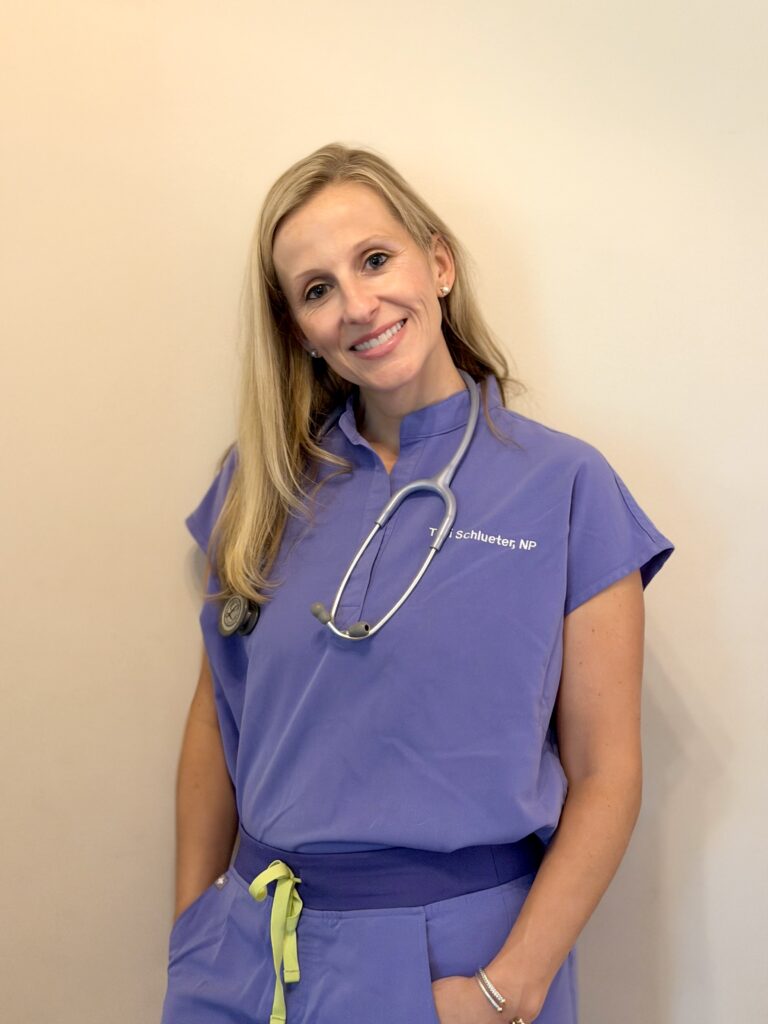
Schlueter received her bachelor’s degree from the University of Virginia and her master’s degree from Virginia Commonwealth University. She became dual certified in pediatric primary care and pediatric mental health after caring for children and adolescents whose physical and mental health needs frequently overlapped.
“It came directly from my clinical experience,” she said. “I spent much of my career caring for children and adolescents with co-occurring medical and mental health conditions, and it became impossible to separate the two.”
Many of her patients had also experienced significant trauma, reinforcing how closely physical health, mental health, family circumstances, and life experiences can intersect.
More than a decade in inpatient care shaped another lesson that would follow her throughout her career.
“You realize very quickly that good healthcare isn’t just about making the correct diagnosis or choosing the right treatment,” she said. “It’s about understanding the whole patient, building trust, communicating with families, recognizing when you need someone else’s expertise, and creating a plan that can actually work once that child leaves the hospital.”
Why She Left Full-Time Clinical Practice
Schlueter’s career began to shift when she moved from inpatient to outpatient practice. The transition led her to pay closer attention to the systems surrounding clinical care and ask why certain processes were difficult, what prevented clinicians from getting the support they needed, and what made practices difficult to build or expand.
She discovered that she enjoyed solving those problems.
“I loved clinical care, but I was becoming increasingly curious about healthcare from a broader operational and strategic perspective,” Schlueter said.
That curiosity eventually led her to pursue growth, partnerships, and strategy in healthcare.
“It wasn’t because I stopped loving clinical care. I had been practicing for more than 13 years, and being an NP was, and still is, a huge part of my professional identity.”
What changed was how Schlueter thought about her potential impact. In clinical practice, she could care for the patients in front of her. In her current role, she works on issues affecting clinicians and healthcare organizations across practices, specialties, and states.
“If I can help one clinician successfully launch or expand a practice, the impact doesn’t stop with that clinician,” she said. “It extends to every patient they’re able to serve, and that’s what made the transition feel so meaningful to me.”
A Day That Bridges Clinical Expertise and Healthcare Business
There is no standard schedule.
On a given day, Schlueter may speak with a healthcare organization about collaboration needs across several states, meet with a potential strategic partner, work with clinical or compliance teams on an emerging issue, review performance data, help shape educational content, or participate in discussions about growth strategy.
“There is a lot of translating between worlds,” she said. “I’m constantly moving between the clinical perspective, the business perspective, and the operational reality of actually making something work.”
A significant portion of her day is spent talking with individual NPs and PAs, physicians, organizational leaders, and companies serving advanced practice clinicians. Those conversations provide insight into the obstacles clinicians encounter when trying to establish or expand their practices.
One question comes up repeatedly.
“Most of them start with, ‘Can you help me practice in this state?’”
From there, questions arise about how physician collaboration works, how accessible a collaborating physician will be, what happens when a clinician adds another state, and how arrangements may need to change as a practice grows.
For organizations operating across multiple states, Schlueter said the complexity can include different practice laws, collaboration requirements, physician-to-provider ratios, agreements, renewals, and changing regulations.
“Healthcare is extraordinarily fragmented, particularly when you’re working across states,” she said.
Why Physician Collaboration Is More Than an Agreement
Schlueter’s years in clinical practice shaped her view of effective physician-NP collaboration.
Some of the strongest physician relationships of her career, she said, were those in which she felt comfortable asking for another clinical perspective when something about a patient’s condition did not seem right.
“That’s what meaningful collaboration looks like to me. It’s not simply having someone’s name on an agreement. It’s knowing who you’re collaborating with, having an actual relationship, and feeling comfortable reaching out when another clinical perspective could benefit the patient. Good clinicians recognize when to consult one another, regardless of the letters after their names.”
That experience continues to shape how Schlueter thinks about collaboration and what clinicians need from those relationships.
The Nursing Skills That Followed Her Into a Nonclinical Role
Despite the change in setting, Schlueter says some of the skills she uses most often came directly from nursing.
Assessment is one.
“Nurses are trained to walk into complicated situations, gather information quickly, identify what’s most important, and figure out what needs to happen next,” she said. “I do that constantly now; the ‘patient’ is just sometimes a partnership, an enterprise client, or a business problem.”
Communication is another. Years spent explaining complicated medical information to worried families prepared her to communicate complex healthcare business or regulatory concepts.
Her clinical background also affects how she evaluates potential solutions.
“A process can look beautiful on a spreadsheet and be completely unrealistic in clinical practice.”
Schlueter said she was surprised by how readily her clinical skills transferred to her new role.
“Healthcare business can sometimes feel like an entirely different world from bedside care, but many of the skills that make someone a strong clinician also make them effective in leadership: curiosity, judgment, communication, prioritization, adaptability, and the ability to function when you don’t have perfect information.”
What New NPs Should Look for in Their First Job
Schlueter considers the first NP position particularly important and recommends evaluating the learning environment rather than focusing only on the job itself.
“Ask who will support you. Ask what onboarding looks like. Ask whether you’ll have experienced clinicians available when you’re uncertain. Ask about patient volume and how quickly you’re expected to ramp up. If you’ll have a collaborating or supervising physician, ask what that relationship actually looks like in practice and how accessible that person will be.”
Passing boards, she emphasizes, does not mean a new NP should expect to have every answer immediately.
“Graduating and passing boards means you’re prepared to enter NP practice; it does not mean you’re supposed to know everything on day one. Find an environment where asking questions and seeking another clinical perspective are viewed as good clinical judgment, not weakness.”
It is a lesson she would also give her younger self.
“You don’t have to prove that you know everything. Ask the question. Look it up. Consult a colleague. Take another five minutes with the family. Trust the feeling that something isn’t quite right.”
Where Advanced Practice Nursing Goes Next
Schlueter believes advanced practice nurses will be critical to expanding healthcare access as care continues moving beyond traditional hospitals and clinics. NPs are already working across primary care, behavioral health, specialty care, telehealth, home-based care, and clinician-led practices.
But expanding the workforce, she said, is only part of what comes next.
“To me, the next chapter isn’t simply about increasing the number of NPs. It’s about building the infrastructure, technology, clinical relationships, and support systems that help NPs practice successfully, collaborate effectively with the broader healthcare team, and ultimately reach more patients.”
Schlueter never envisioned working in healthcare growth, partnerships, technology, and strategy when she became an NP. She has since discovered that moving away from direct patient care did not require leaving her clinical experience behind.
“I wish I had understood earlier that your career doesn’t have to follow one defined path. Clinical practice gave me a foundation I use every single day, and moving into a nonclinical role didn’t mean leaving nursing behind. It gave me a different way to use that experience and, in many ways, an opportunity to broaden my impact.”
