

Estimated reading time: 4 minutes
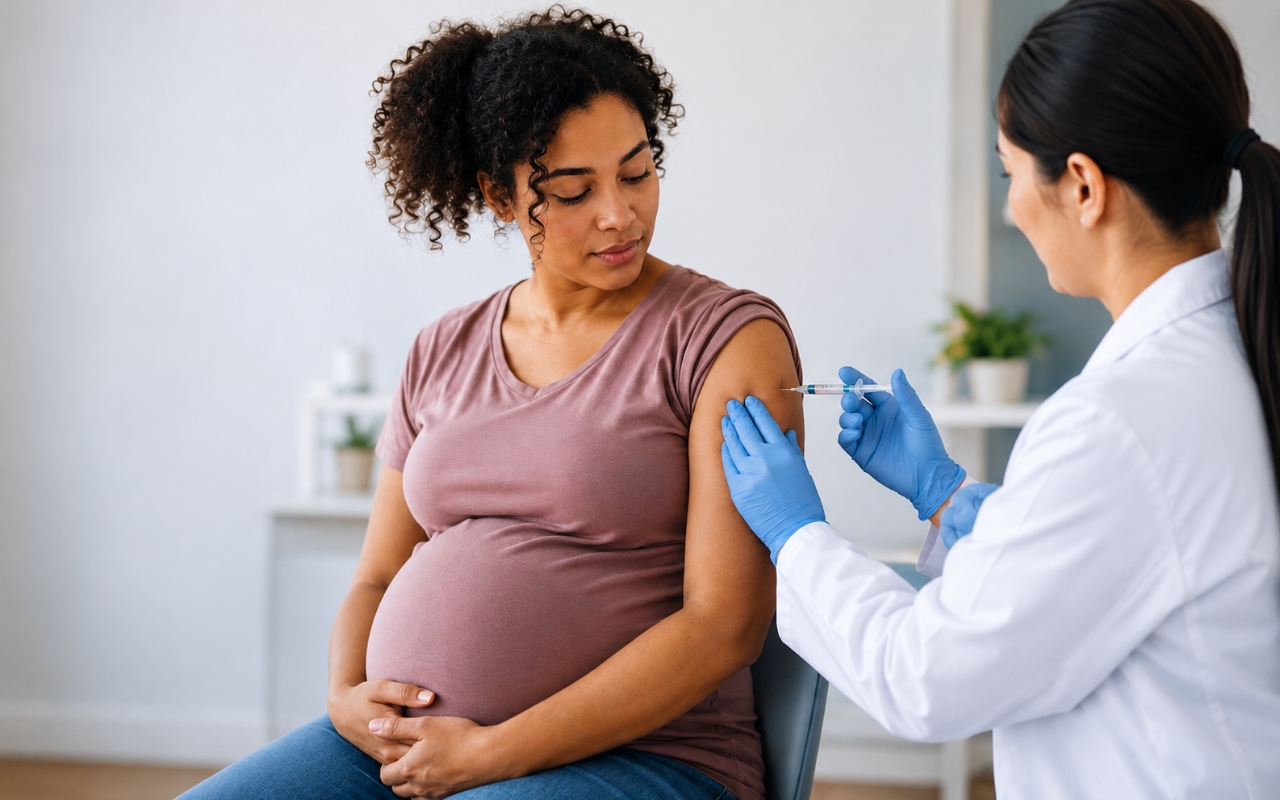
The American College of Obstetricians and Gynecologists (ACOG) has released a new maternal immunization schedule for 2026. Endorsed by nurse practitioner and nurse-midwife organizations, it marks the first time ACOG has issued maternal vaccine recommendations that differ from federal guidance.
For the first time, ACOG has formally published an immunization schedule that differs from current federal vaccine recommendations, creating a resource for obstetric clinicians, nurse practitioners, nurse-midwives, public health agencies, and patients seeking evidence-based information about vaccines during pregnancy and the postpartum period.
The schedule has been endorsed by 13 medical societies and healthcare organizations, including the National Association of Nurse Practitioners in Women’s Health (NPWH), the American College of Nurse-Midwives (ACNM), the American Academy of Pediatrics (AAP), and the American Academy of Family Physicians (AAFP).
Why is ACOG’s 2026 Maternal Immunization Schedule Making News?
ACOG’s 2026 maternal immunization schedule is the first maternal vaccine guidance issued by the organization to differ from federal recommendations. The schedule has been endorsed by 13 major healthcare organizations, including leading nurse practitioner and nurse-midwife groups, and is designed to support vaccination decisions during pregnancy and postpartum care.
A Response to Growing Uncertainty
According to ACOG leaders, the new schedule was developed in response to increasing uncertainty surrounding maternal immunization recommendations.
“Changing national recommendations coupled with rampant vaccine misinformation are resulting in confusion for both patients and health care professionals,” said ACOG President Camille A. Clare, MD, MPH, CPE, FACOG. “It is incredibly important for the public to have access to reliable, evidence-based information on maternal immunizations from a trusted source. ACOG is proud to be that source.”
The guidance was developed by ACOG’s Immunization, Infectious Disease, and Public Health Preparedness Expert Work Group and reflects the organization’s commitment to peer-reviewed scientific evidence and evidence-based medicine.
A Resource for Frontline Maternal Health Clinicians
Nurses, women’s health nurse practitioners, certified nurse-midwives, and other maternal health clinicians counsel patients about vaccine safety, assess vaccination status, and recommend immunizations throughout prepregnancy, prenatal, and postpartum care.
“Immunizations are an essential part of prepregnancy, prenatal, and postpartum care,” said ACOG Chief of Clinical Practice Christopher Zahn, MD, FACOG. “ACOG’s maternal immunization schedule is a tool that ob-gyns can use to start a dialogue with their patients about the importance of protecting themselves and their infants from vaccine-preventable diseases that can lead to poor health outcomes.”
Zahn emphasized the role healthcare professionals play in addressing vaccine misinformation.
“As ob-gyns, we have the power to combat vaccine misinformation on our own platforms, help our patients make educated decisions, and increase confidence in vaccination overall,” he said.
Nurse Practitioners and Midwives Support the Guidance
The National Association of Nurse Practitioners in Women’s Health, which represents women’s health nurse practitioners and other clinicians providing women’s and gender-related healthcare services nationwide, endorsed the updated schedule.
“As the professional community for women’s health nurse practitioners and other nurse practitioners providing women’s and gender-related health care services nationwide, the National Association of Nurse Practitioners in Women’s Health sets a standard of excellence by generating, translating, and promoting evidence-based clinical guidance for various topics, including maternal health care,” said Jessica Wells, PhD, RN, WHNP-BC, FAAN, president of NPWH.
“The National Association of Nurse Practitioners in Women’s Health is honored to collaborate with ACOG and endorse their updated maternal immunization schedule, which integrates the most updated evidence with important patient-centered considerations to support clinicians in providing strong recommendations for immunizations in pregnancy and postpartum as a fundamental intervention.”
The American College of Nurse-Midwives also endorsed the schedule, citing the role maternal immunization plays in improving outcomes for pregnant patients and newborns.
“Midwives have long understood that the health of a community begins before birth, and the midwifery model centers the whole health and well-being of the pregnant person and their family as the foundation for lifelong health,” said Michelle Monroe, DNP, APRN, CNM, FACNM, FAAN, CEO of the American College of Nurse-Midwives.
“By endorsing the ACOG maternal immunization guidelines, the American College of Nurse-Midwives affirms that immunization during pregnancy is a safe, effective, and essential tool to improve birth outcomes; protect newborns from severe illness and hospitalization; and strengthen the health of entire communities through early, shared protection.”
Protecting Newborns Through Maternal Vaccination
The American Academy of Pediatrics also endorsed the guidance, highlighting maternal immunization’s role in protecting infants during their first months of life.
“Babies are among the most vulnerable to vaccine-preventable diseases,” said Andrew Racine, MD, PhD, FAAP, president of the American Academy of Pediatrics. “Their immune systems are still developing, and in those first months of life, they rely on us, the adults around them, to help keep them safe. Maternal vaccines are one of the most effective ways to protect not only the mother but her newborn as well.”
The schedule is expected to serve as a practical resource for nurses, nurse practitioners, nurse-midwives, physicians, and other clinicians counseling patients on vaccination decisions during pregnancy and the postpartum period.
