

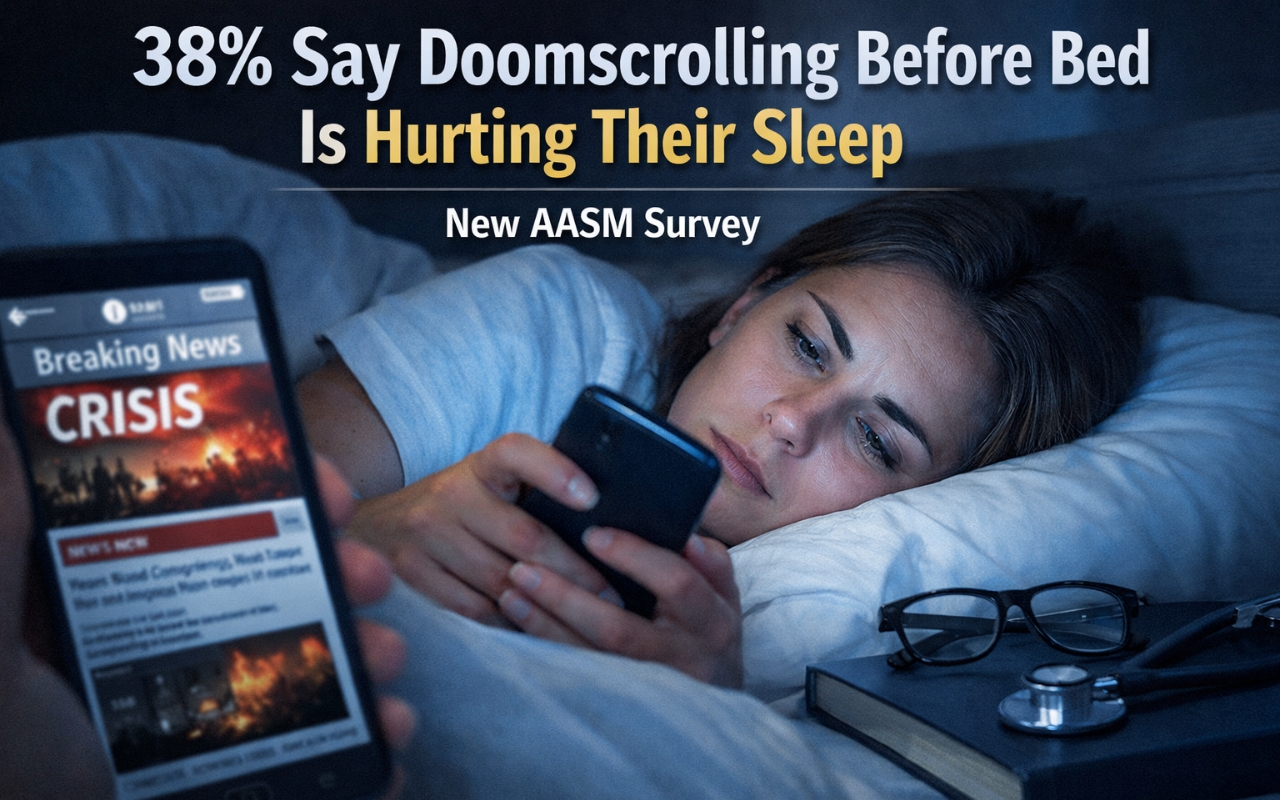

Many Americans are ending their shifts and their days the same way: scrolling.
A new survey from the American Academy of Sleep Medicine (AASM) finds that 38 percent of adults say using their phone or tablet before bed to view news and current events, often called doomscrolling, makes their sleep slightly or significantly worse. The impact is even more pronounced among adults ages 18 to 24, with 46 percent reporting worse sleep.
For nurses and healthcare professionals who already face long shifts and cognitive strain, the findings highlight a preventable contributor to fatigue at a time when restoration matters most.
What Does Doomscrolling Do to Sleep?
The 2025 AASM Sleep Prioritization Survey found that more than one-third of U.S. adults report worse sleep after viewing news on their phones before bed. Exposure to blue light and emotionally charged content can interfere with the body’s natural sleep cycle and reduce overall sleep quality.
Screen Time is Replacing Sleep
The AASM recommends that adults get at least seven hours of sleep per night and avoid handheld electronics 30 to 60 minutes before bedtime. Yet 26% of adults report prioritizing phone screen time over the recommended amount of sleep.
Screen use in bed is widespread. Half of adults report using a screen such as a TV, smartphone, computer, tablet, or e-reader in bed every day, while 33% say they do so most days or several days a week.
That tradeoff has measurable consequences.
“Internalizing topics that are stressful or worrisome before bed makes it difficult to have the deep, restorative sleep that is imperative to overall health,” said AASM Past President Dr. James Rowley. “Phone use before bed should be limited altogether, but it’s important to also be mindful of the type of content you view near bedtime.”
Rowley added, “Americans are turning to screens to unwind and relax before bed, even though it may prevent them from getting the rest they need. Blue light, especially when combined with emotionally charged content, can trick our body clocks into a state of daytime-level alertness, disrupting the circadian rhythm and making it more difficult to achieve high-quality sleep.”
Why This Matters in Healthcare
Missing even one night of sleep can impair cognitive function, reduce concentration, trigger headaches, and affect mood. Over time, chronic sleep loss is associated with increased risk for heart disease, high blood pressure, diabetes, and excessive daytime sleepiness.
For nurses, advanced practice providers, and healthcare teams who rely on sustained attention and clinical judgment, sleep loss carries both personal and patient safety implications. Fatigue has long been linked to increased error risk and occupational injury. Adding preventable bedtime screen habits to an already demanding schedule further limits recovery.
Evidence-Based Sleep Hygiene Tips from AASM
To support healthier sleep patterns, AASM experts recommend:
- Turn it off. Power down electronics at least 30 to 60 minutes before bed.
- Keep it out. Place phones in another room at night and use a clock for alarms.
- Implement a routine. Reading, journaling, or taking a warm shower can signal the body to wind down.
- Silence alerts. Disable notifications to prevent disruptions.
- Set a schedule. Wake up at the same time every day and go to bed when you’re sleepy.
About the Survey
The AASM commissioned an online survey of 2,007 adults in the United States. The margin of error was plus or minus 2 percentage points at a 95 percent confidence interval. Fieldwork was conducted from June 5 to 13, 2025, by Atomik Research, an independent market research agency.
