
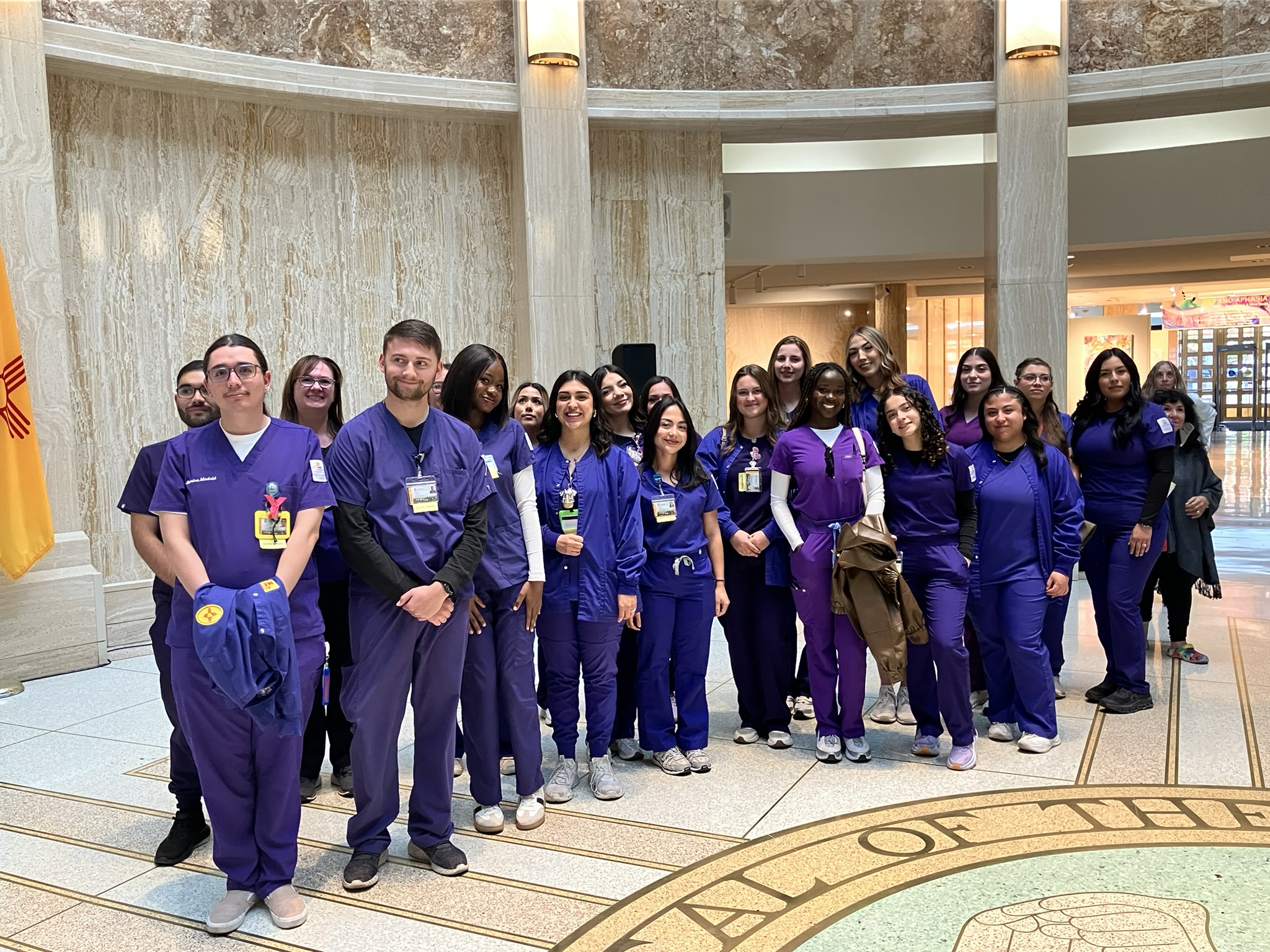

Nursing students at Western New Mexico University (WNMU) recently traded scrubs for policy briefs as they traveled from the Silver City and Deming campuses to Santa Fe, gaining a firsthand look at how healthcare legislation is shaped. The visit offered an invaluable lesson: nurses’ voices matter not only in patient rooms but also in the rooms where laws are made.
Designed to demystify the policymaking process, the excursion introduced students to the realities of drafting, debating, and passing bills. Many described the experience as both eye-opening and empowering, noting that the legislative process—often perceived as intimidating—became far more accessible once they were immersed in it.
Facing the Financial Realities of Healthcare
Throughout the session, students confronted the fiscal challenges shaping today’s healthcare landscape. Conversations focused on state budgeting and the growing costs of medications, issues they recognized as having direct consequences for patient outcomes. One student remarked on “the sheer effort required to lobby for change,” acknowledging that effective advocacy demands persistence and strong communication skills.
Inside a Mock Trial: The Intersection of Law and Nursing Practice
A highlight of the trip was a participatory mock trial modeled after a real-life scope-of-practice dispute involving radiology nurses restricted from using ultrasound machines. The simulation gave students a rare opportunity to examine how judicial decisions affect daily practice and how lobbyists influence legislative direction. For many, it was the clearest illustration yet of how law and medicine are intertwined.
Learning With — and From — Peers Across New Mexico
The event also brought together nursing students from institutions throughout the state. Comparing curricula revealed notable differences, particularly in how nursing ethics is taught. While some universities require students to memorize the Nursing Code of Ethics, WNMU students shared that they “work” the Code through applied learning in their cohorts and practicums. For WNMU faculty and students, this embodied approach reinforces the idea that ethics must be lived, not simply recited.
Silver City student and WNMU Board of Regents member Keana Huerta emphasized the magnitude of what she learned, noting she realized the “depth and scope of policymaking, and how it affects everything, not just patient care.”
Another Silver City student echoed this sentiment, adding, “It made me realize that advocacy goes beyond bedside care,” underscoring the need for nurses to use their voices in legislative settings as well as clinical ones.
Students from Deming drew similar insights. One described it as “eye-opening” to see the direct connection between legislative decisions and his future career. Another said the experience reinforced the “team mindset,” comparing lobbying efforts to “thousands of voices working together.”
Advocacy Skills for Every Student — Even Those Who Stayed on Campus
Although not all students were able to attend the Santa Fe trip, WNMU ensured the learning opportunity extended to everyone. Those who remained on campus completed a detailed module on effective letter-writing campaigns. By researching their representatives and crafting evidence-based arguments, students strengthened both their critical thinking and their advocacy communication skills.
Shaping the Next Generation of Nurse Advocates
Whether through hands-on legislative immersion or structured advocacy training, WNMU nursing students walked away with a shared realization: nursing leadership extends far beyond direct patient care. The trip—and the parallel letter-writing campaign—highlighted that championing change is part of the profession’s DNA.
For these future nurses, advocacy is no longer an abstract concept. It is an expectation—and an emerging skill set they are already putting into practice.
