

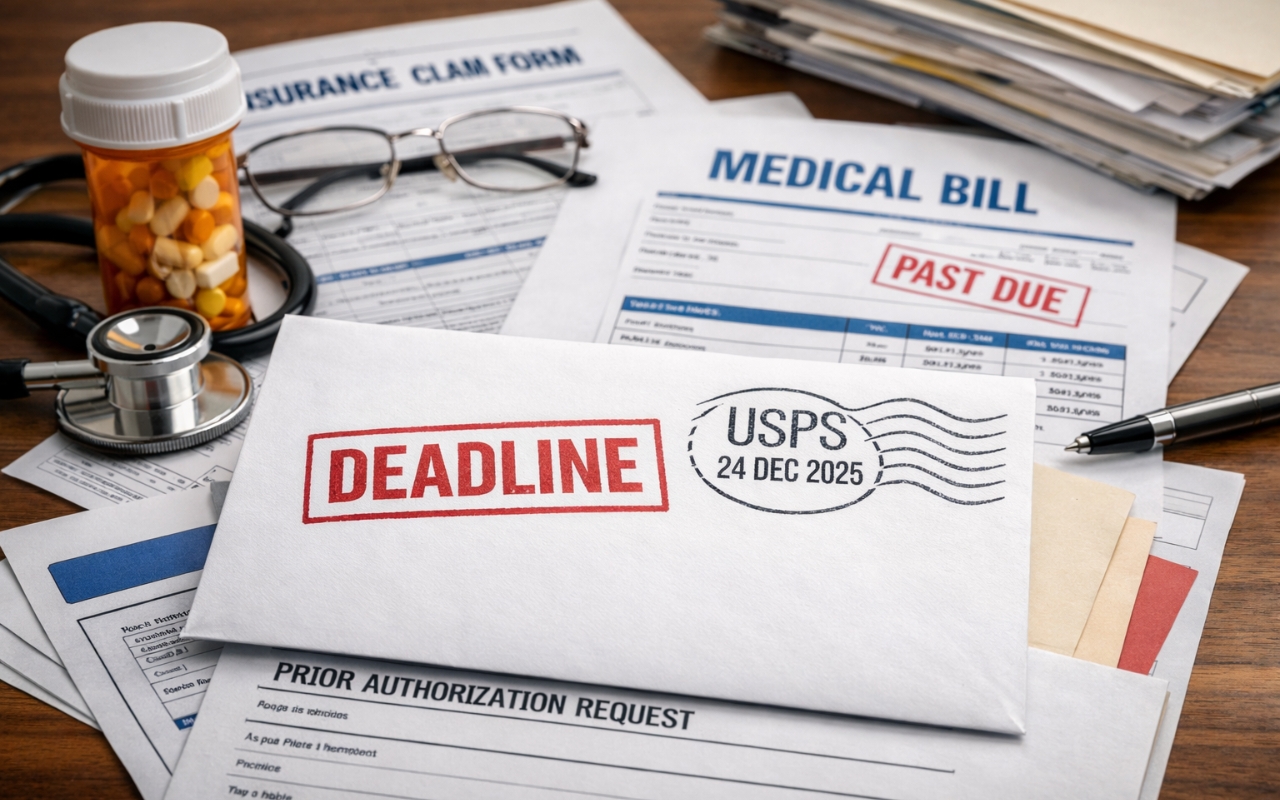

If you have ever mailed an insurance appeal, a prescription request, a medical bill, or important healthcare paperwork and thought, “As long as it’s postmarked by the deadline, I’m fine,” that assumption may no longer hold true.
On October 28, 2025, the United States Postal Service formally revised Section 608.11 of the Domestic Mail Manual, clarifying that most machine-applied postmarks reflect the date an item is processed at a postal facility, not necessarily the date it was dropped off by the sender. The updated rule took effect on December 24, 2025.
While this may sound like a technical or administrative update, the ripple effects are real for patients, nurses, and healthcare organizations. In some cases, this change could mean denied coverage, delayed care, or missed deadlines, even when someone believed they followed the rules.
As a family nurse practitioner, I see how non-clinical systems, such as insurance policies, documentation requirements, and logistics, directly affect patient outcomes. This is one of those changes outside the exam room that still has the power to influence what happens inside it.
What Changed With USPS Postmarks
Historically, a postmark served as proof that a document was mailed on a specific date. If paperwork was dropped off at the post office or placed in a collection box before a deadline, the postmark generally reflected that date, regardless of when the item was delivered.
Under the revised USPS processing procedures, that assumption is no longer consistently reliable.
Mail may now be postmarked based on when it is first scanned at a regional processing facility rather than when it was physically deposited by the sender. In some cases, mail may receive no visible postmark at all, particularly when automated systems are used. This means a document mailed “on time” could appear, on paper, to have been sent days later.
For healthcare-related mail, that distinction matters.
Why This Matters for Healthcare and Patients
Healthcare runs on deadlines, many of which are strict and unforgiving.
Insurance appeals, Medicare and Medicaid documentation, prior authorization paperwork, prescription forms, disability claims, and licensing or credentialing materials often require submission by a specific date. When proof of mailing is unclear or delayed, the burden often falls on the patient or provider to prove compliance.
This can lead to real consequences.
Insurance claims and appeals may be denied if they appear late, leaving patients responsible for unexpected medical bills or delaying access to care. Nurses and administrative teams often spend hours navigating appeals and resubmissions for issues unrelated to clinical decision-making.
Mail-order prescriptions and medical supplies can also be affected. Delays in processing paperwork may result in gaps in medication therapy, delayed equipment delivery, or interruptions in home health services. For patients managing chronic illness, these disruptions are not minor inconveniences. They can lead to symptom worsening, emergency department visits, or hospital readmissions.
There are also regulatory implications. Healthcare professionals rely on the timely submission of licensing renewals, continuing education documentation, and responses to requests from boards or accrediting bodies. When deadlines are missed or disputed, even unintentionally, consequences can include delayed credentialing, compliance issues, or financial penalties.
Why Nurses Should Pay Attention to This
Nurses are often the bridge between patients and the healthcare system. Patients ask how to submit paperwork, where to send forms, and what steps matter most. When systems change quietly, it affects how well nurses can guide them.
This issue disproportionately affects older adults, patients without reliable internet access, rural communities, and individuals managing complex medical conditions who still rely on traditional mail. When rules change without widespread awareness, these populations face the greatest risk.
Understanding this shift allows nurses to educate patients more effectively and anticipate barriers before they become delays in care.
What Patients and Healthcare Professionals Can Do Differently
Awareness is the first step. While no one can control postal processing timelines, there are practical ways to reduce risk when deadlines matter.
-
- Use trackable mailing methods for time-sensitive documents, such as certified mail, priority mail with tracking, or registered mail. Keep receipts and tracking numbers as proof of mailing.
-
- Request a dated acceptance receipt at the post office counter. A clerk-applied postmark or Postage Validation Imprint reflects the date the USPS accepted the item rather than when it was processed later.
-
- Submit documents electronically whenever possible using secure portals, email, or electronic fax systems that provide time-stamped confirmation.
-
- Avoid mailing paperwork at the last minute. Sending documents several days before a deadline reduces the risk of discrepancies caused by processing delays.
-
- Keep thorough records, including copies of forms, mailing receipts, screenshots, fax confirmations, and confirmation emails.
-
- Confirm submission requirements with insurers, pharmacies, or agencies, as some organizations accept electronic proof or alternative documentation when issues arise.
A Quiet Change With Real Consequences
This USPS postmark update does not mean mail is being delivered later. It changes how the official date on mailed items is determined and verified.
In healthcare, small administrative details can have outsized effects. A misdated appeal can lead to denied coverage. A delayed authorization can interrupt access to medications or services. A technicality can cause stress for patients who have done everything they were told to do.
Understanding this change allows patients, nurses, and healthcare teams to adjust how they submit important documents and protect themselves from avoidable delays.
Sometimes, the difference between a smooth healthcare experience and a frustrating one comes down to a detail as small as the date printed on an envelope.
