

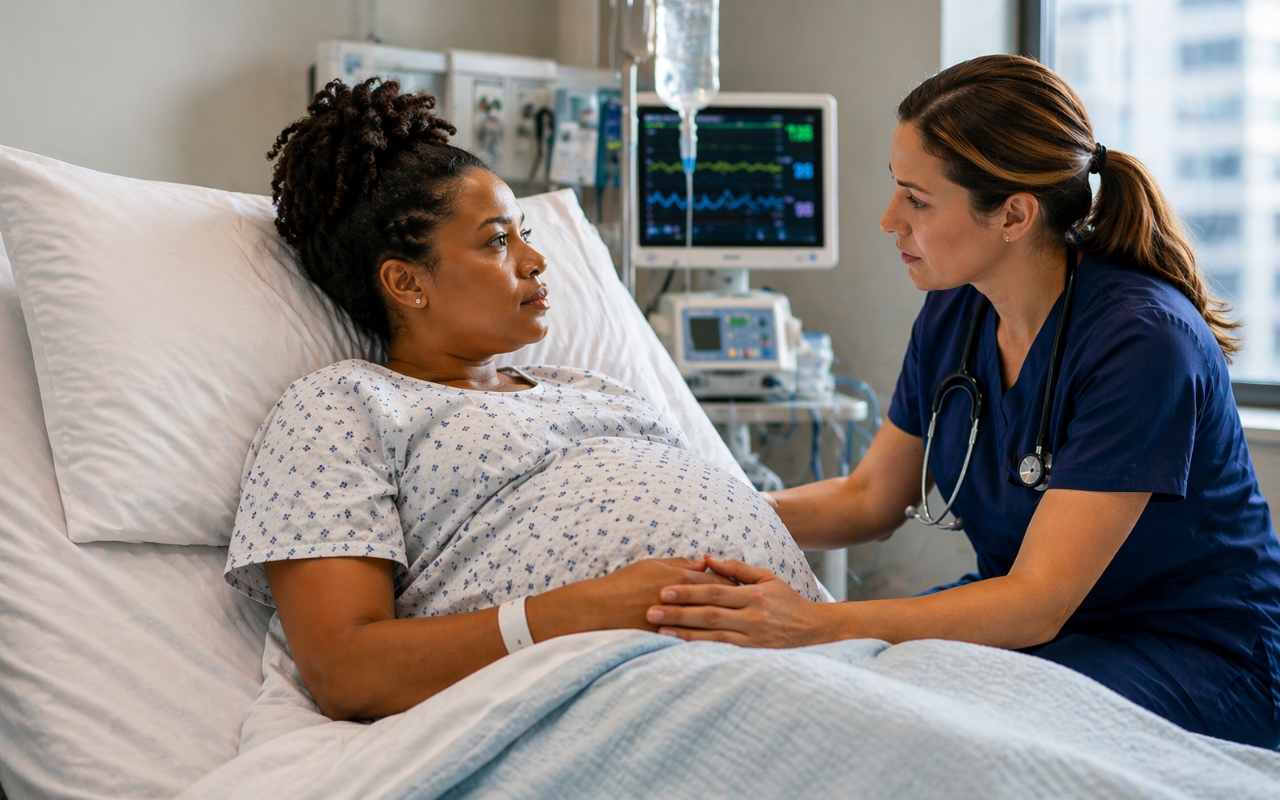

April is International Cesarean Awareness Month (CAM), spotlighting rising C-section rates, what’s driving them, and why informed decision-making and patient support matter more than ever.
C-Section Rates in the U.S.: What the Data Shows
As of 2024, cesarean deliveries account for 32.4% of live births, with primary cesarean deliveries at 22.9%, according to March of Dimes data.
While cesarean delivery can be the safest option for some mothers and babies, it is important to recognize that it is a major surgery and carries increased risks of complications for the mother.
A Case That Sparked National Attention
A recent news story, “Hospital Forces Woman in Active Labor to Attend Zoom Court for Refusing C-Section,” published in People Magazine, highlights the complexity of these decisions. https://www.youtube.com/shorts/5wry5ahyuGA
In September 2024, Cherise Doyley, a professional birthing doula pregnant with her fourth child, arrived at University Hospital of Florida in labor. She shared her birth plan with the healthcare team, which included attempting a vaginal delivery.
Physicians expressed concern about the risk of uterine rupture and strongly recommended a cesarean birth. Doyley acknowledged the risk, noting it was less than 2%, and expressed her desire to attempt a vaginal delivery before consenting to surgery.
Understanding the Risk of Uterine Rupture
Uterine rupture is a life-threatening emergency in which the uterus tears, potentially leading to severe complications, including abdominal pain, vaginal bleeding, fetal distress, and damage to surrounding organs.
The risk of uterine rupture is approximately 3.2 per 10,000 live births (Larsson et al., 2021).
The most significant risk factor is Trial of Labor After Cesarean (TOLAC), though other contributing factors include:
- Interdelivery interval of less than 16 months
- Induction of labor with prostaglandins or oxytocin
- Higher estimated birthweight and gestational age
Maternal factors may also include:
- Age over 35
- Height under 164 cm
- Parity greater than three
Balancing Risks: Cesarean Complications
Although the People’s article does not fully outline Doyley’s obstetrical history, it does note that she previously had a cesarean delivery complicated by postpartum hemorrhage that required readmission.
Potential complications of cesarean delivery include:
- Hemorrhage
- Abdominal pain
- Bowel obstruction
- Incisional hernia
- Organ damage
- Wound dehiscence
- Placenta previa
Doyley also reported that pain from her prior cesarean made it difficult to care for her newborn.
When Medicine Meets the Legal System
During her hospital stay, a nurse brought a tablet into Doyley’s room and informed her that she would be attending a virtual court hearing due to her refusal of a cesarean section.
Doctors and lawyers were present on the call, though Doyley did not have legal representation. A judge reviewed an emergency petition filed by the hospital to authorize a cesarean delivery in the interest of the unborn child.
After hearing from both the medical team and Doyley, the judge ruled that a cesarean could be performed without her consent if an emergency arose.
As labor progressed, fetal heart rate concerns ultimately led to an emergency cesarean section delivery of a baby girl just hours later.
Patient Rights and Informed Consent
According to the Patient Bill of Rights, patients have the right to make informed decisions about their care after receiving information about risks and benefits.
After being counseled on TOLAC and the risk of uterine rupture, Doyley stated that she understood the risks and wished to proceed with a trial of labor.
Patients also have the right to safe and respectful care aligned with their beliefs.
Doyley later told reporters, “When we use the courts to basically strong-arm, bully someone into an unnecessary medical procedure against their will, it’s akin to torture, in my eyes.”
Her experience raises important questions about whether patients feel their autonomy and dignity are respected in high-risk clinical situations.
What Nurses Can Do During Cesarean Awareness Month
Cesarean Awareness Month offers an opportunity for nurses and healthcare professionals to reflect, learn, and advocate.
Consider taking the following steps:
- Expand your knowledge: Understand the indications for cesarean delivery and associated risks.
- Support informed decision-making: Educate patients on their birth options and advocate for their preferred delivery method when appropriate.
- Provide emotional support: Offer compassionate care to parents who have experienced a cesarean birth, especially those who did not want one. Validate their feelings and listen to their experiences.
- Engage in continued education: Participate in webinars, workshops, and training focused on cesarean awareness and maternal health.
- Share experiences: Encourage open dialogue by sharing personal or professional experiences to help normalize conversations around cesarean birth.
- Support evidence-based initiatives: Advocate for organizations and policies that aim to reduce unnecessary cesarean deliveries and improve maternal outcomes.
