
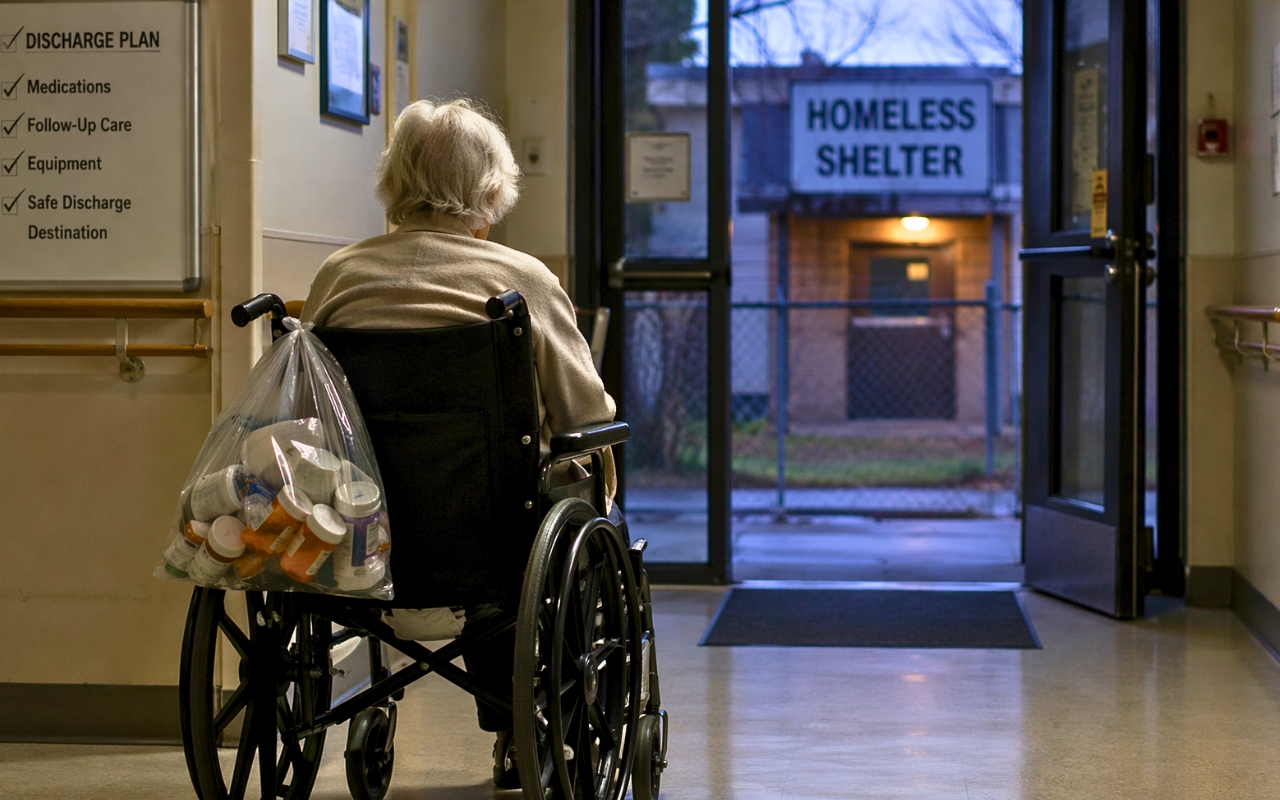

Federal inspection reports and patient advocates are raising concerns about nursing home discharges to homeless shelters in Ohio, a practice that may put patient safety at risk and strain already limited community resources.
A woman arrived at a homeless shelter in Ohio using a walker, incontinent, and carrying what inspectors described as “a large bag of medications.” She was diabetic, recovering from a tibia fracture, and living with alcohol-related dementia.
Shelter staff were alarmed enough to call the fire department.
“The staff member [said] Resident #83 was unclear of what was going on, scared, and not sure who dropped her off there,” inspectors from the Centers for Medicare and Medicaid Services (CMS) wrote following an August 3, 2023, inspection.
This case is just one of several urgent examples cited in recent federal reports, revealing a dangerous and increasingly critical pattern in Ohio. Nursing homes have discharged residents—many older and medically complex—to homeless shelters that lack the resources to meet their acute care needs.
Discharges Under Scrutiny
CMS has cited at least seven Ohio facilities in recent years for attempting or completing discharges to homeless shelters.
In the 2023 case, the woman had been living at Eastland Rehabilitation and Nursing Center in Columbus. After being caught drinking alcohol, the staff initiated an involuntary discharge. Inspectors found that while staff attempted to locate substance use treatment, they did not contact the county psychiatric bed board to secure appropriate placement.
Instead, she was transported to a homeless shelter already in crisis, with about 100 people desperately waiting for space.
Shelter staff initially refused admission, leaving her outside in the heat before allowing her into the lobby and calling emergency responders, including a social worker.
By the time inspectors urgently completed their report, neither the facility nor CMS could locate the patient, highlighting grave concerns about continuity of care and safety.
“In addition, the events of what occurred at the addiction recovery center or how/why Resident #83 ended up at the homeless shelter … could not be determined as the facility was unable to provide any additional information,” the report states.
A Growing Concern
Advocates warn that these dangerous incidents, though once rare, are now escalating at a concerning pace.
“We are starting to deal with it more and more,” said Chip Wilkins, who leads Dayton’s Long Term Care Ombudsman program. “The facilities are so closely monitored on discharges, yet they still try to send them to hospitals and not take them back. Or drop them off at homeless shelters.”
“I would say certainly over the last six months there has been an uptick,” he added.
Many of these patients are left stranded, lacking stable housing, income, or family, which makes safe care transitions almost impossible and puts lives at immediate risk.
At the same time, financial pressures are increasing. Medicaid covers most long-term nursing care in the United States, and funding constraints are affecting facilities nationwide.
“This issue has been growing as more residents face unstable housing,” said Scott Wiley, CEO of the Ohio Health Care Association. “State oversight and resources are needed to help tackle the issue on a larger scale.”
When Discharge Planning Breaks Down
For nurses and care teams, safe discharge planning is central to patient safety. Advocates warn that sending patients with complex medical needs to shelters often leads to rapid decline and hospital readmission.
“Invariably, that ends up being a horrible experience for the individual,” Wilkins said. “They’ll go to the shelter, and typically, within two to three days, the shelter will send them to the hospital because they can’t meet their needs.”
Homeless shelters are simply unprepared to provide vital clinical care. Many lack the resources to support residents who need frequent medications, mobility help, or complex disease management, making these discharges a potentially life-threatening move.
“The emergency shelter system, to the extent we have a system, is often the only thing available when other interventions don’t work,” said Marcus Roth.
Legal and Ethical Obligations
Under federal law, nursing home residents must generally receive at least 30 days’ notice before an involuntary discharge, except in emergencies. Facilities must also ensure that discharge destinations are safe and appropriate.
Leilani Pelletier, the statewide ombudsman, said these decisions must be individualized.
“The real issue is when people are discharged to a homeless shelter, and there’s been no work or investigation done on whether that would be a safe or appropriate discharge,” she said.
Her office reviews all involuntary discharges in the state, with shelter placements flagged as high priority due to safety concerns.
Cases Highlight System Gaps
A December 29, 2025, CMS inspection of the Laurels of Hillsboro detailed another case. A resident who had lived at the facility for 22 years was discharged after his insurance coverage ended.
The patient, with diabetes, vision impairment, and suspected autism, told inspectors that he was blindsided—never informed he would be abandoned at a homeless shelter, and did not receive the legally required notice, compounding the danger to his health and safety.
He arrived without the supplies needed to manage his medications and lacked basic identification documents needed to secure housing or employment.
“I can’t believe they would do someone dirty like that,” his roommate told inspectors.
Additional cases cited by CMS include:
- A patient discharged from Meadowbrook Manor before completing the required notice period and without a care plan, prescriptions, or follow-up appointments
- Shelter staff identifying a “mismatch” between a patient’s mobility limitations and shelter requirements
- A patient in New Lebanon was discharged with roughly 24 hours’ notice despite complex medical conditions
In some instances, facilities refused to readmit patients after shelters determined they could not safely care for them.
A System Under Strain
While these discharges represent a small fraction of the roughly 13,000 monthly nursing home discharges in Ohio, each case exposes urgent, systemic failures that threaten the most vulnerable residents.
These include gaps in behavioral health placement, limited post-acute care options, and housing instability among vulnerable populations.
For nurses, this problem spotlights the pressing challenge of ensuring safe care transitions across overstressed healthcare and social service networks—failures here can endanger lives.
This article is based on original reporting by Signal Ohio and distributed through a partnership with The Associated Press.
