



Nursing strikes have again become part of the national healthcare conversation. Recent labor actions involving tens of thousands of nurses and healthcare professionals in California and New York have brought renewed attention to staffing concerns, workplace safety, compensation, and working conditions. For many nurses who are not directly involved in a strike, the questions are less about contract negotiations and more about how to respond professionally and personally.
In Southern California and Hawaii, more than 31,000 nurses and healthcare professionals represented by the United Nurses Associations of California and Union of Health Care Professionals began an open-ended strike at Kaiser Permanente facilities on January 26. The strike spans more than two dozen hospitals and hundreds of clinics and is one of the largest healthcare labor actions in the country this year.
At the same time, nearly 15,000 registered nurses in New York City walked out across multiple private hospital systems beginning January 12, making it one of the largest nursing strikes in the city’s history. The strike has involved major hospitals including Mount Sinai, Montefiore, and NewYork-Presbyterian, with staffing levels, workplace safety, and retention cited as central issues.
These events have sparked conversations far beyond the hospitals directly involved. Nurses across the country are watching colleagues take strong positions and are asking where they fit when loyalty to coworkers, professionalism in the workplace, and personal choice do not always align.
WHY THESE MOMENTS FEEL PERSONAL
Strikes in healthcare often feel different from labor actions in other industries because nursing depends on teamwork and trust. Nurses rely on one another for patient safety and emotional support. When disagreements arise over labor actions, it can feel like a division between colleagues rather than a disagreement about negotiation strategy or policy.
The concerns raised during the current strikes in Los Angeles and New York are familiar across the profession. Staffing shortages, rising patient acuity, workplace safety concerns, and retention of experienced nurses affect many healthcare environments. Even nurses who do not support striking often recognize the pressures that lead colleagues to that decision.
Because the underlying concerns are shared, nurses who are not participating in a strike may still feel emotionally involved. Some feel loyalty toward coworkers advocating for change. Others feel responsibility to maintain stability within their own workplace. Many feel caught between both positions.
THE PRESSURE TO SHOW SUPPORT
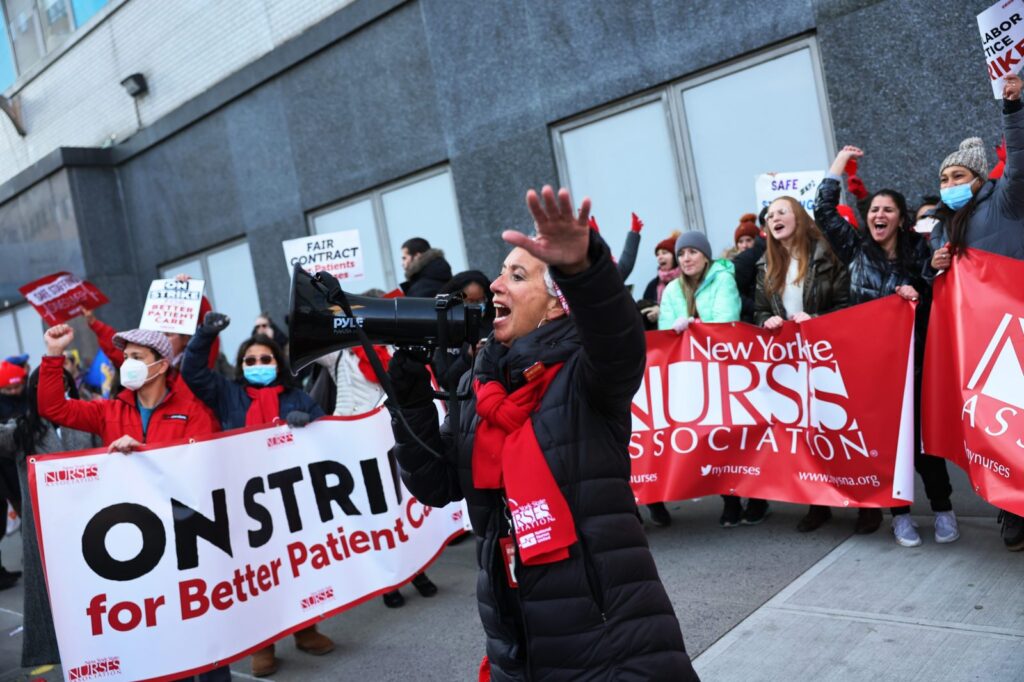
In today’s environment, support is often expected to be visible. Some nurses feel pressure to join picket lines or use social media to advocate publicly. Others worry that remaining quiet may be interpreted as lack of solidarity.
At the same time, many nurses are uncomfortable turning workplace conflict into public advocacy. Social media has blurred the line between personal opinion and professional identity. What feels supportive among peers may be interpreted differently by employers, patients, or the public.
Nurses have the right as private citizens to write letters to legislators, participate in policy discussions, or raise awareness about patient safety and workforce issues. Advocacy that focuses on systems, patient outcomes, and workforce sustainability can contribute meaningfully to healthcare discussions.
Choosing not to participate publicly is also a valid decision. Some nurses prefer to support colleagues privately or through professional organizations. Others want to avoid escalating workplace tension or risking professional relationships that will continue long after a strike ends. Silence does not necessarily mean disagreement or lack of support.
PERSONAL CHOICE AND THE REALITY BEHIND IT
Labor disputes can create the impression that there are only two acceptable positions. In reality, nurses make decisions based on circumstances that are often invisible to others.
Financial obligations, family responsibilities, immigration or visa considerations, employment contracts, and personal risk tolerance all influence how nurses respond during a strike. Some nurses believe participation is necessary to create change. Others believe their responsibility to patient continuity requires them to continue working. Many fall somewhere in between.
Recognizing that colleagues may be operating under different constraints helps reduce judgment and allows for more respectful professional relationships.
NAVIGATING REACTIONS TO NURSES WHO CONTINUE WORKING
Few issues create more division than the decision to continue working during a strike or cross a picket line. For some nurses, this feels incompatible with professional solidarity. For others, it is a practical or necessary decision.
Reducing these choices to loyalty or betrayal oversimplifies a complex situation. Nurses who continue working may still share concerns about staffing or workplace conditions. Nurses who strike may feel they are advocating for long-term patient safety. Both perspectives often stem from the same goal of improving care, even when the methods differ.
Maintaining respect during disagreement matters because labor disputes eventually end. The professional relationships that remain afterward continue to shape workplace culture and patient care.
PROFESSIONALISM IN A DIVDED MOMENT
Periods of conflict test professionalism. Avoiding gossip, personal attacks, or public criticism of colleagues helps prevent lasting damage within teams. Statements made during emotionally charged moments, particularly online, can remain visible long after disputes resolve.
Nurses should remain mindful that their professional identity extends beyond a single workplace issue. Advocacy that remains respectful and focused on broader concerns helps preserve credibility and protects individual careers.
MOVING FORWARD TOGETHER
The increase in nursing strikes reflects broader pressures within healthcare. Staffing shortages, burnout, financial strain, and changing expectations around work and well-being continue to affect nurses nationwide. Nurses who strike and nurses who continue working are often responding to the same challenges from different positions.
Nurses are not required to prove their support publicly, nor are they required to remain silent if they choose to advocate thoughtfully. Writing letters, engaging with policymakers, or raising awareness about patient safety can all be appropriate when approached professionally.
When strikes end, what remains is the professional community nurses must continue to work within. Navigating loyalty, professionalism, and personal choice with respect allows nurses to move forward together, even after difficult moments of disagreement.
