


For trauma nurses, every decision can change a life.
In the controlled chaos of a trauma activation, clinicians rely on knowledge, teamwork, and instinct developed through years of experience. For many trauma nurses, specialty certification strengthens their ability to lead in these moments.

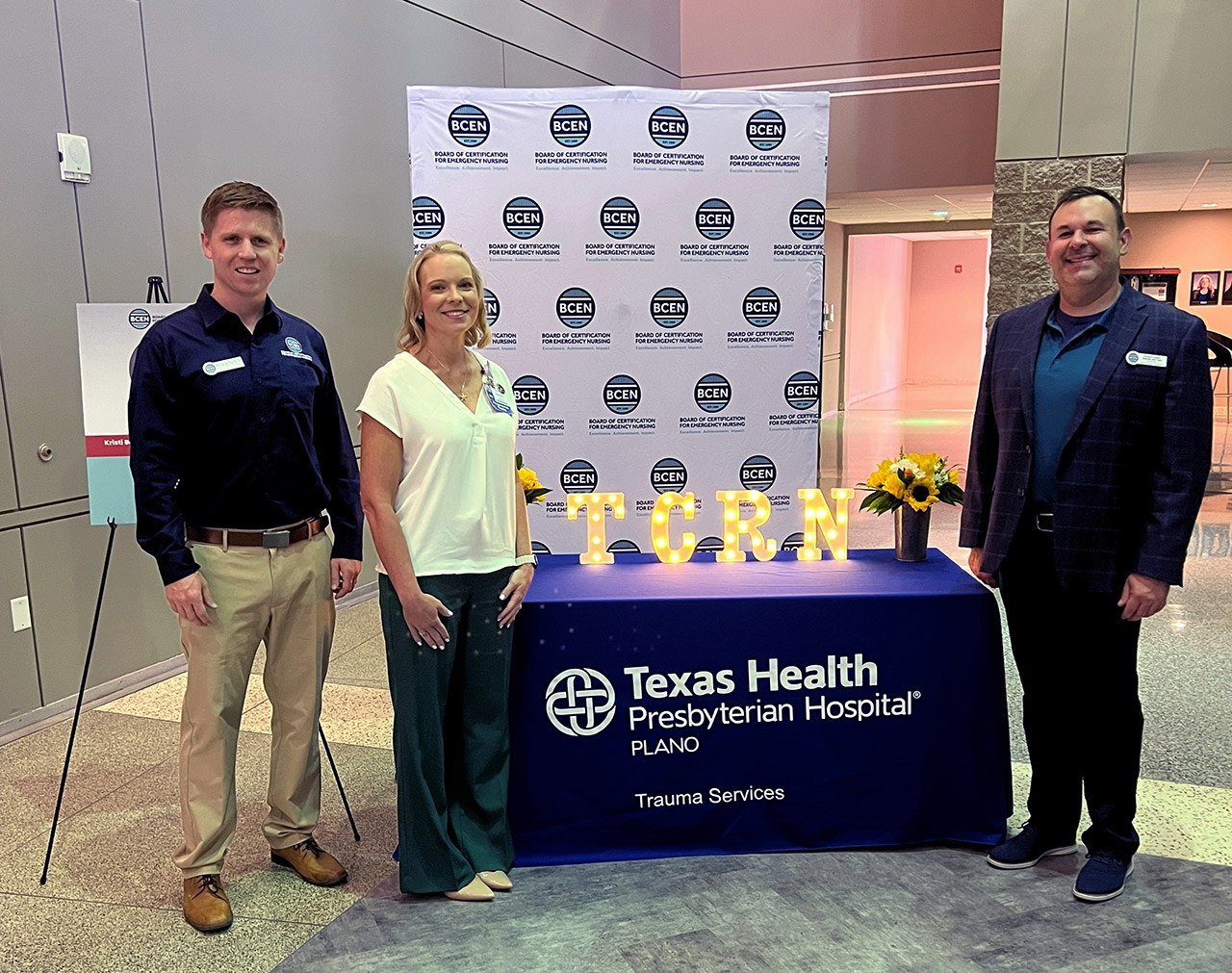
For Kristi Bonny, BSN, RN, CPHQ, TCRN, EMT-P, a trauma clinician at Texas Health Presbyterian Hospital Plano, obtaining the Trauma Certified Registered Nurse (TCRN) credential has given her deeper knowledge in trauma care, strengthened her leadership, and enhanced her ability to drive quality improvement throughout the trauma system.
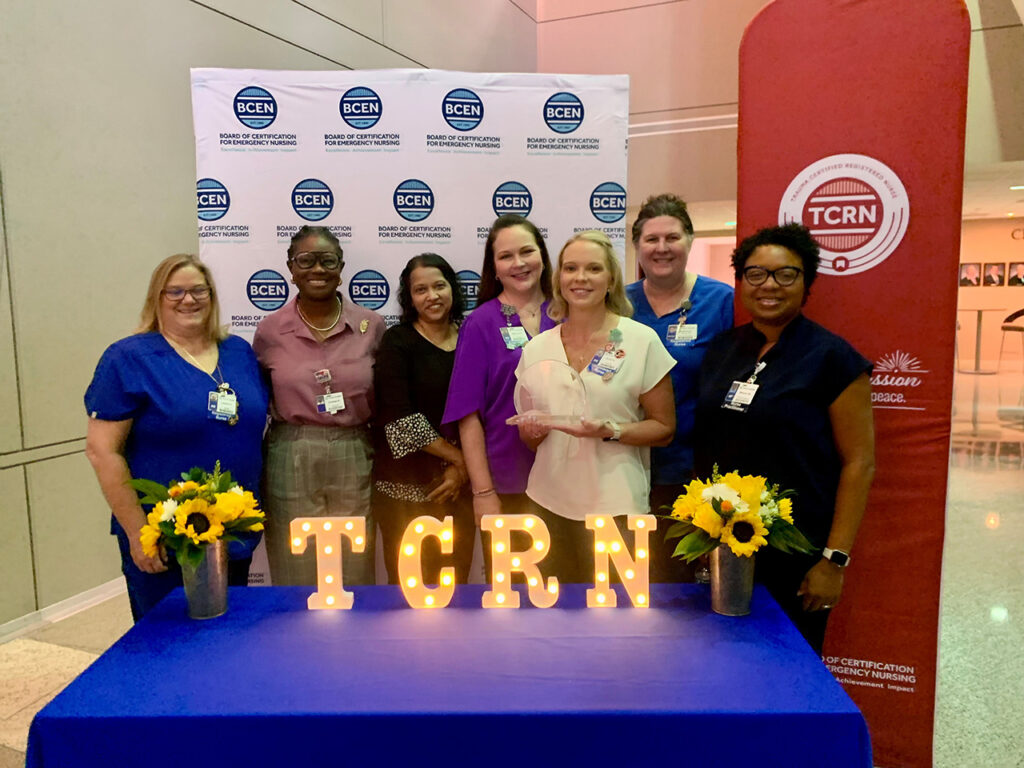
In 2025, her dedication to trauma care and performance improvement earned her national recognition as BCEN’s Distinguished TCRN Award winner.
Even now, she finds the honor humbling.
“There are so many amazing TCRNs out there,” Bonny says. “It’s still a bit awe-inspiring that I was named as the 2025 Distinguished TCRN. As nurses, I think we’re all inclined to go above and beyond and call it a ‘normal’ part of the job. To be recognized at such a high level is something I never imagined.”
Her nearly 20-year career spanning emergency medicine, critical care, and trauma services shows how certification can deepen a nurse’s impact on patient outcomes.
A Career Driven by Curiosity—and Improvement
Bonny was drawn to trauma nursing by its variety and commitment to improvement.
“The strong commitment to performance improvement motivates me every day to continue,” she says.
Earlier in her career, Bonny worked in the emergency department and critical care. When she began working more closely with quality management, her perspective expanded beyond individual cases to the systems behind trauma care.
“More than simply achieving a number below or above the target, I learned how to create change,” she explains.
Joining the trauma department allowed her to focus her work on a specific patient population while continuing to improve care across the trauma continuum.
“We have different challenges depending on the type of trauma, so there is always something to focus on doing better,” she says. “Whether it’s faster reversal of anticoagulation, transfusion of blood products, or introduction of palliative care.”
Much of her work involves analyzing data and clinical metrics, but Bonny never loses sight of the people behind those numbers.
“Sometimes the motivation is reinforced by looking at better numbers,” she says. “The true reward comes when I see the change delivered in real time for a person.”
Experience That Shapes Perspective
Bonny’s approach to trauma care is also influenced by her earlier work as a firefighter and paramedic.
Although prehospital medicine has advanced significantly over the past two decades, she says the realities first responders face remain largely unchanged.
“The interventions paramedics provide now are far beyond my training 25 years ago,” she says. “But the challenges they encounter in people’s homes or on scenes are still basically the same.”
That experience helps shape how she approaches patients arriving in the emergency department.
“Sometimes we expect to have all the history and ‘how’ available when a patient arrives by EMS,” she says. “My experience reminds me how unrealistic that can be.”
Instead, she approaches trauma care like assembling a puzzle.
“In my role, I am always putting pieces of the patient’s story together,” Bonny says. “I use my career experience from different roles to remain mindful of the unique challenges everyone faces.”
Why Trauma Certification Matters
Bonny earned her TCRN certification in 2018, crediting it with expanding her trauma knowledge, building her confidence in patient care, and improving her ability to advocate effectively for trauma patients at all stages of their treatment.
“There’s a strong focus on prehospital and ED trauma care because these phases set us up for later success,” she says.
But trauma care extends far beyond the emergency department.
“The TCRN certification prepares well-rounded nurses because it covers the entire continuum of trauma care,” Bonny explains.
That includes recognizing complications common in trauma populations, such as delirium or withdrawal, and helping families understand what to watch for during recovery.
“Explaining the signs and symptoms to patients and families can give them the tools to be alert for subtle changes early,” she says. “That allows the healthcare team to intervene sooner.”
Certification also deepened her understanding of the broader trauma system and the many professionals involved in patient recovery.
“The entire system of trauma care is more complex than I realized before earning the TCRN,” she says.
Improving Trauma Care Behind the Scenes
While trauma care is often associated with dramatic lifesaving moments, Bonny’s work also highlights the critical role of quality improvement behind the scenes.
At Texas Health Plano’s Level II trauma center, she designed and maintains a trauma scorecard that tracks key clinical metrics used to improve care.
Every data point, she says, represents a real patient.
“Every metric on a trauma scorecard and every trauma activation where we gave more crystalloid while waiting too long for blood products has a patient’s face behind it,” Bonny says.
“When the drive to make changes in numbers comes from the stories and faces of the patients who came before, the impact is greater.”
One initiative in particular dramatically changed trauma resuscitation timelines at her hospital.
After reviewing trauma cases, Bonny and her colleagues discovered that patients often waited 40 minutes or longer after arrival before receiving their first blood product.
During that time, clinicians frequently administered large volumes of IV fluids while waiting for blood products from the blood bank.
Working with multidisciplinary teams, Bonny helped develop a new process: a “Level 1 blood cooler” automatically delivered to the bedside for every Level 1 trauma activation.
Over time, the protocol evolved to include whole blood.
The results were significant.
“We’ve gone from first blood product 40 minutes after arrival and two or more liters of crystalloid to less than 10 minutes after arrival and less than one liter of crystalloid,” Bonny says.
Mentoring Future Certified Nurses
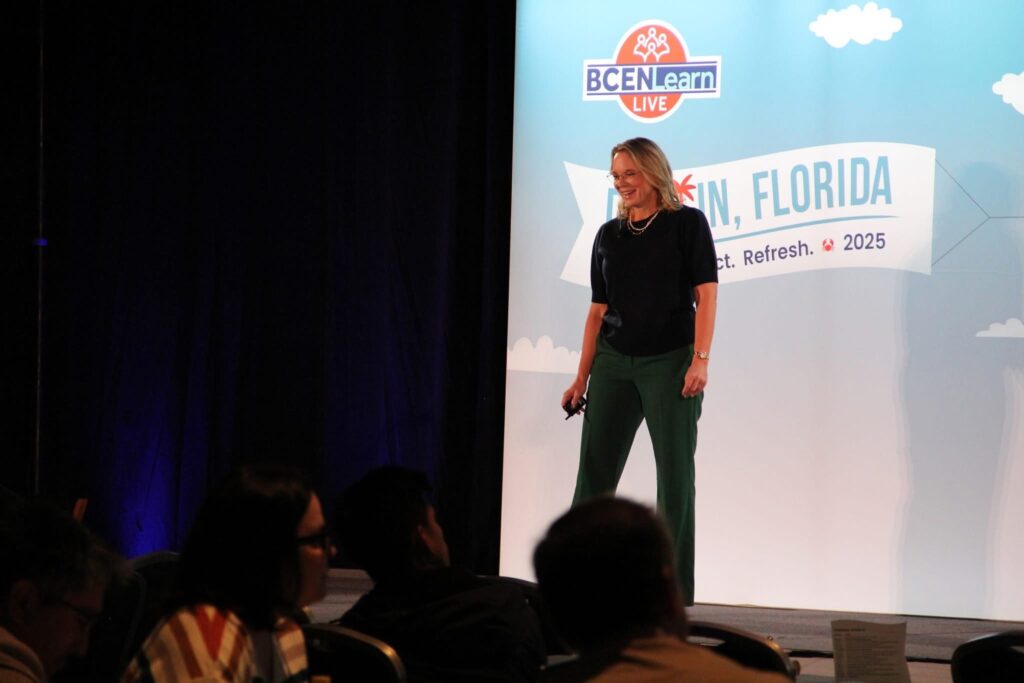
Bonny is also committed to encouraging other nurses to pursue specialty certification.
“All of the trauma clinicians at my Level II trauma center hold the TCRN credential,” she says.
She mentors colleagues preparing for certification by sharing study materials and pointing them toward resources from the Board of Certification for Emergency Nursing.
“The content outline is important for any type of specialty certification exam,” she says.
Certification also strengthens teamwork during trauma activations, where emergency physicians, surgeons, nurses, EMS providers, and critical care teams must work seamlessly together.
“Certification strengthens multidisciplinary collaboration by clarifying the role each type of provider has in the assessments and interventions provided during the trauma activation,” she says.
Clear communication becomes increasingly important as more clinicians join the patient’s care team.
A Life-Saving Moment
One moment in Bonny’s career stands out as a powerful reminder of why trauma expertise matters.
While working in the emergency department during a trauma activation, she became aware of a pediatric trauma patient being stabilized for transfer to a pediatric trauma facility.
Although the team had the situation under control, Bonny stepped in to assist the primary nurse while the transport team was en route.
Within minutes, she noticed something concerning on the monitor.
“I saw variability in the patient’s heart rate fluctuating between the 40s and 110s,” she recalls.
The pattern did not match the classic signs of Cushing reflex, but it raised enough concern for Bonny to speak up.
She shared her observation with the care team, and together they decided to cancel the transfer and call for additional resources.
The patient was rushed to the operating room for emergency surgery.
The outcome was remarkable.
“The patient had no complications and walked out of our hospital without any neurological deficits,” Bonny says.
For her, the moment reinforced the value of trauma certification.
“This was a true high-acuity, low-frequency situation,” she says. “I attribute my assessment that day to the knowledge I have through trauma certification.”
A Commitment to Better Outcomes
For Bonny, certification represents more than a professional milestone. It sharpens clinical decision-making, fosters collaboration, reinforces commitment to evidence-based practice, and ultimately helps nurses translate expertise into better patient outcomes at every step.
But perhaps most importantly, it reinforces a shared commitment across the profession.
“When we humanize our opportunities to do better,” she says, “we are more strongly driven to create change.”
And for trauma nurses like Kristi Bonny, that drive continues every day—one patient, one improvement, and sometimes one saved life at a time.
